The Boston Red Sox entered the final stretch of last season with clear aspirations of making a deep playoff run, but a major flaw in their roster construction ultimately held them back: a lack of established, reliable pitching depth. As the games increased in importance, the rotation became increasingly unstable, forcing the team to lean on pitchers who had little experience handling high-pressure, late-season environments. These weren’t necessarily bad players, and the situation wasn’t the sole reason Boston fell short of their goals, but it was an unmistakable weakness one that exposed the limits of their roster and underscored a lesson the front office cannot afford to ignore.
Throughout the season, the Red Sox attempted to patch things together, mixing prospects with backend arms to weather injuries and stretches of underperformance. But as contenders around the league rolled out battle-tested starters capable of consistently working deep into games, the contrast became impossible to miss. Boston’s rotation simply lacked the kind of depth that playoff-caliber rosters are built upon. When every game matters and mistakes are magnified, uncertainty on the mound often becomes the difference between winning and watching October baseball from home.
Recognizing how costly that deficiency proved to be, the Red Sox moved swiftly once the offseason opened. Their first major transaction sent a clear message about their priorities: they struck a significant trade with the St. Louis Cardinals to acquire veteran right-hander Sonny Gray an established, high-level pitcher capable of anchoring the front of a rotation. Gray brings durability, postseason experience, and the kind of competitive edge the Red Sox have been missing at the top of their staff. His arrival immediately raised the floor of the pitching unit and provided stability the team badly needed.
But inside the front office, the ongoing discussion appears to go well beyond simply adding one dependable arm. Gray’s acquisition solves part of the problem, but as the organization evaluates the broader American League landscape, they understand that one big upgrade won’t be enough to transform their rotation into a league-leading strength. The Red Sox are still aiming higher, and discussions around the league have linked Boston to additional frontline arms who could elevate the rotation into one of the most intimidating in the AL.
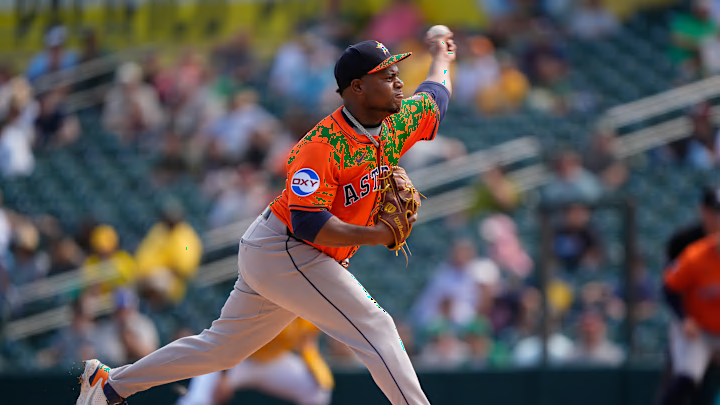
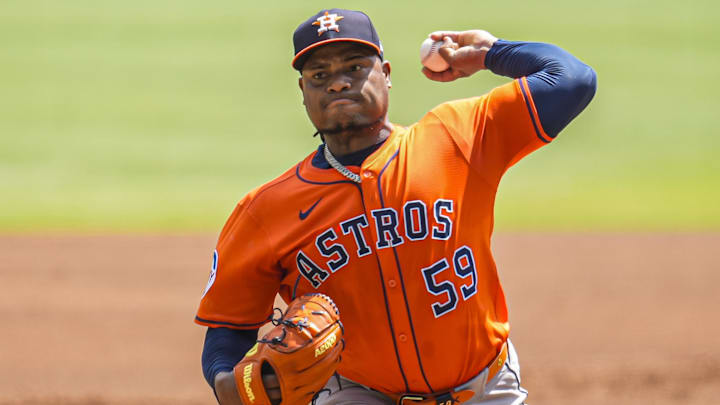
One of the most intriguing predictions surfaced recently from Andrew Tredinnick of NorthJersey.com, who suggested the Red Sox could position themselves as the eventual landing spot for Houston Astros ace Framber Valdez. Valdez, one of the most consistent left-handers in the sport, has built a strong reputation on his ability to induce ground balls, control innings, and dominate with a unique blend of movement and command. Tredinnick believes Boston is ready to take a big swing in free agency, and landing Valdez would represent another transformative move for the rotation.
Valdez is not expected to come cheap. According to Jim Bowden of The Athletic, the southpaw is projected to secure a contract in the neighborhood of $190 million, reflecting both his track record and the premium value placed on elite pitching. For a team like Boston, which has the financial resources to compete with the biggest spenders in the league, a long-term deal of this size is entirely feasible but it requires careful planning around payroll, especially given the team’s other needs this offseason.

Tredinnick wrote that signing Valdez would give Boston “another dynamic left-hander atop its rotation.” He also noted an interesting stylistic complement within the staff: Valdez tends to work “north-south,” meaning his pitch mix and movement profile attack different vertical zones in the strike zone, while Garrett Crochet, another elite left-hander the Red Sox have been linked to, attacks “east-west” with pitches that move more horizontally. Together, they would form a devastating one-two punch, giving opposing lineups dramatically different looks from two powerful southpaws. Combined with Sonny Gray, this would give Boston one of the most versatile and dangerous rotations in baseball.
From an organizational perspective, the Red Sox are fully capable of spending aggressively on elite pitching. Fenway Sports Group, the team’s ownership, has made it clear that returning to contention is a priority, and Boston’s payroll flexibility provides room to pursue high-end free agents. However, a potential complicating factor looms: the team’s situation with Alex Bregman, who remains a major piece of their offensive puzzle.

Bregman, who joined the Red Sox last offseason and delivered an impressive debut campaign in Boston, is now back in free agency after opting out of his contract. The front office has expressed interest in bringing him back, but his market is expected to be competitive, with multiple teams prepared to offer big money for his bat, versatility, and leadership. If the Red Sox prioritize retaining Bregman and there are strong arguments for why they should his contract could significantly limit how far they’re willing to go financially in the chase for Valdez.
Bregman’s importance to Boston’s offense cannot be overstated. Beyond his power and ability to drive in runs, he brings a disciplined approach that lengthens the lineup and raises the floor of the entire offensive unit. Losing him would leave a major gap that wouldn’t be easily replaced, particularly given the scarcity of high-quality infield bats in this year’s free-agent class. For that reason, the team must weigh whether it makes sense to commit nearly $200 million to a starting pitcher before addressing the stability of the lineup.

Still, the idea of adding both Bregman and Valdez remains captivating for Boston and its fan base. If the team finds a way to thread that needle retaining their star infielder while securing a frontline pitcher to pair with Gray their offseason would instantly transform from solid to spectacular. It would signal a dramatic shift in competitiveness, reinforcing the organization’s commitment not just to improvement, but to closing the gap on the American League’s elite contenders.
In a division that features powerhouse teams like the Yankees and Orioles, and with competition rising across the AL, Boston knows incremental improvements won’t be enough. They need impact players—difference-makers who alter the trajectory of a season. Sonny Gray is one. Framber Valdez would be another. And Bregman, if retained, remains an indispensable pillar of the lineup.
Adding Valdez would also bring intangible benefits. He has postseason experience, a calm demeanor under pressure, and the ability to pitch deep into games qualities Boston lacked during its late-season slide. His pitching style would also play well in Fenway Park, where generating ground balls helps neutralize the ballpark’s offensive-friendly dimensions. A Valdez-Gray-Crochet trio could potentially become the backbone of a World Series-caliber rotation.
There is, of course, risk in committing such a large portion of payroll to pitching. Long-term contracts for pitchers can be unpredictable. But the Red Sox are at a moment where aggressive action is required. Standing still would mean another season of wondering what might have been if the pitching staff had more strength at the top.
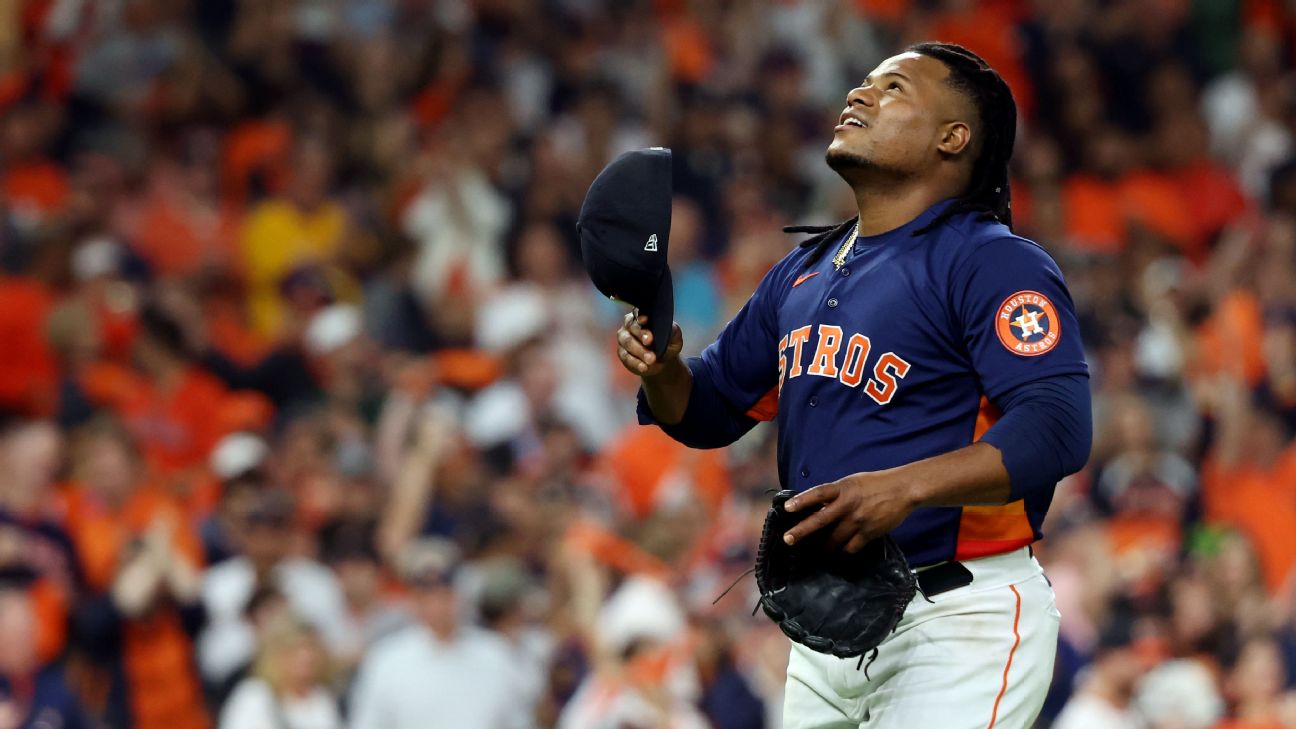
In the end, the upcoming offseason presents Boston with a rare opportunity. With a strong core, financial muscle, and a clear need at the top of the rotation, the Red Sox are positioned to make bold, franchise-defining moves. If they can manage to bring back Bregman and add an elite starter like Framber Valdez, their roster would be significantly more formidable than the one that stumbled late last year. It would show that the lessons learned from their pitching struggles were taken seriously and that the team is fully committed to returning to championship contention.
Such a combination of moves wouldn’t just improve the roster on paper it would reshape the perception of the Red Sox throughout baseball. It would declare that Boston is tired of rebuilding narratives and is once again ready to chase titles. For a fan base hungry for postseason success, and for a front office eager to turn the page, this is the kind of offseason that could define the next chapter of Red Sox baseball in a big, bold way.