The Philadelphia Phillies enter this offseason facing a complicated and pressure-filled situation. On one hand, they are equipped with one of the most talented cores in the National League—an established group that has proven capable of deep postseason runs. On the other hand, an unusually large portion of that talent is hitting the free-agent market all at once. That combination creates a challenging winter for president of baseball operations Dave Dombrowski and the rest of the Phillies’ front office.
The biggest headline, of course, is former MVP runner-up Kyle Schwarber. His power production, clubhouse influence, and postseason pedigree make him one of the most appealing sluggers available. But Schwarber is far from the only significant name departing Philadelphia. Longtime catcher J.T. Realmuto, postseason hero Ranger Suárez, and midseason addition Harrison Bader are also officially free agents. Losing any one of them would force the Phillies to reconfigure their roster, but losing several would create ripple effects throughout the lineup, rotation, and defensive structure.

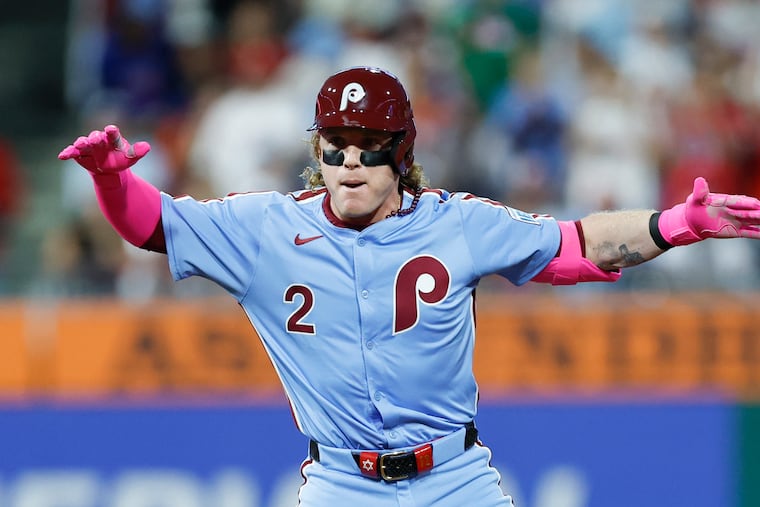
It is Bader, though, who might represent the most complicated decision among the secondary free agents. He is not the most famous name in the group, nor does he carry the star power of Schwarber or Realmuto, yet he fills an important role: stabilizing center field defense. The Phillies have struggled for years to find consistent defensive production in the middle of their outfield, and Bader brought exactly that after arriving at the trade deadline.
Despite Philadelphia’s interest in retaining him, league insiders believe Bader may have multiple suitors—especially among clubs looking for reliable defense and athleticism in a market not overflowing with elite outfield options. Bleacher Report’s Adam Wells recently projected that Bader could land a two-year contract worth around $30 million, predicting that the San Francisco Giants may emerge as a front-runner for his services.
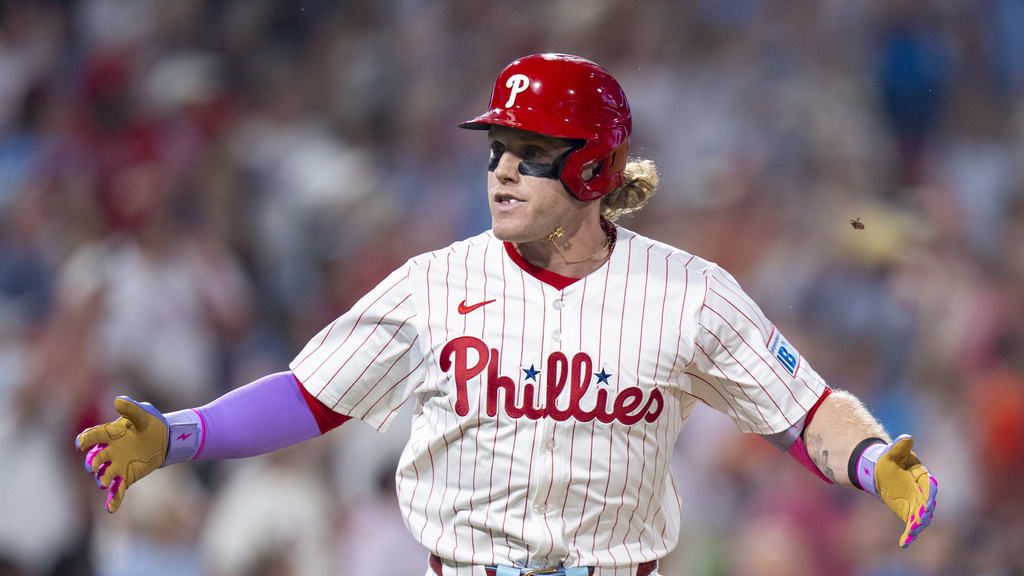
Wells cited reporting from Susan Slusser of the San Francisco Chronicle, who noted that Bader “piques” the Giants’ interest. The fit makes sense on several levels. San Francisco has been vocal about its need to reinforce the outfield, prioritizing players who can cover large amounts of ground in Oracle Park’s spacious terrain. Bader’s Gold Glove résumé and reputation as one of baseball’s best defensive center fielders make him a natural match.
Slusser also emphasized that Bader’s expected contract length—likely two or three years—may appeal to the Giants. They have spent the past few offseasons targeting major superstars but have often fallen short, either due to failed negotiations, medical concerns, or players choosing bigger markets. Adding high-impact defensive value without a massive financial commitment could represent a smart middle-ground move as they continue searching for long-term cornerstones.
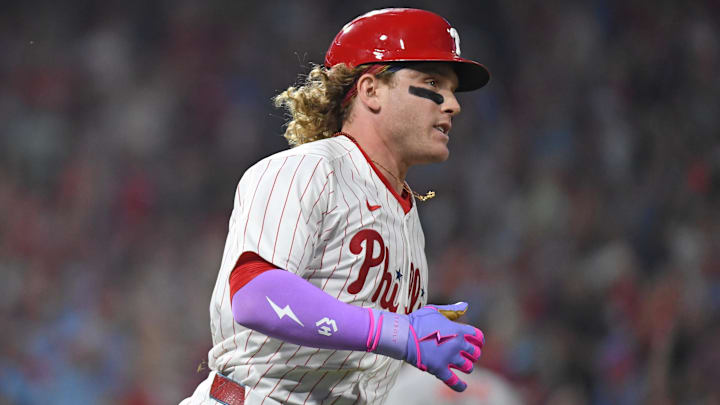
Meanwhile, Wells noted that Philadelphia still hopes to bring Bader back but hinted that he is not at the top of the Phillies’ priority list. The reason is clear: the team must sort out Schwarber’s future, determine its willingness to retain Realmuto as he moves into the back end of his career, and decide whether committing major money to Ranger Suárez is feasible. All three of those players occupy foundational roles on the roster, either in batting order construction, pitcher-catcher chemistry, or starting-rotation stability.
Because of those bigger decisions, Bader’s situation becomes more delicate. The Phillies value him, but they cannot commit early offseason money unless they have clarity on what their larger contract negotiations will require. That opens the door for more aggressive suitors—teams like the Giants—to step in with timely offers.

For San Francisco, Bader would fill several immediate needs. The Giants have not had a reliable everyday center fielder since Kevin Pillar in 2019. Injuries, underperformance, and inconsistent development from younger players have left the position in flux. With the Los Angeles Dodgers continuing to tower over the division—both financially and competitively—the Giants need to ensure they are not falling further behind. Adding Bader does not transform San Francisco into instant contenders, but it gets them closer to forming a credible defensive identity.
Defensively, few outfielders in baseball offer what Bader brings. His range, instincts, and fearlessness make him a perfect fit for the deep, tricky outfield in San Francisco. Oracle Park demands defenders who can cover the large gaps in right-center and track balls that linger in the marine air. Bader thrives in those environments. His strong defensive reputation dates back to his days with the St. Louis Cardinals, where he consistently ranked as one of the top defensive outfielders in the majors. Even in more recent seasons, when occasional injuries have hampered his offensive consistency, his glove has remained elite.

If the Giants were to sign Bader, he would instantly stabilize the center of their defense. That would allow the team to reconfigure players around him—moving younger outfielders to the corners, giving their pitching staff a reliable safety net, and freeing the front office to pursue more offensive-minded bats elsewhere. His presence also adds speed to a roster that has increasingly relied on power and pitching but has lacked dynamic athleticism.
Offensively, Bader is not the same type of impact player as Schwarber or Realmuto, but he brings enough value to be more than a defensive specialist. When healthy, he has shown flashes of above-average hitting, particularly in stretches where he barrels up fastballs and uses the gaps effectively. His postseason record with the Yankees—where he produced a burst of unexpected power—remains one of the highlights of his career. Teams believe there is still untapped offensive potential if he can maintain health and consistency.
For Philadelphia, losing Bader would mean returning to the drawing board for outfield defense. Their roster is built around sluggers and left-handed power threats, but strong defensive players have been harder to keep. Without Bader, the Phillies might be forced to move players out of position or seek alternative free-agent options, none of whom combine defense and affordability as effectively as Bader does.
Still, the Phillies cannot simply rush to meet the market. Their financial commitment to stars like Bryce Harper, Trea Turner, and Zack Wheeler means they must balance roster upgrades with long-term payroll considerations. Committing significant dollars to a defensive-first outfielder may not be possible until they know where Schwarber and Suárez stand in negotiations.
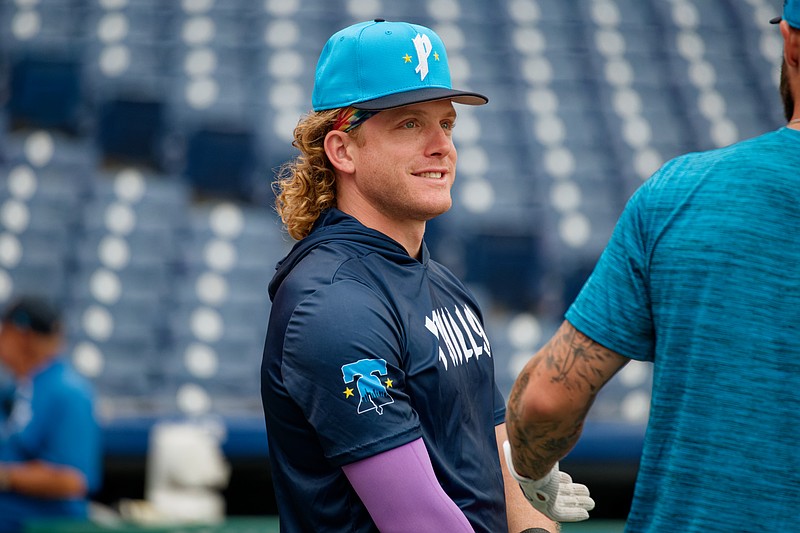
At the same time, they recognize how important defense in center field has become. Their recent postseason losses often highlighted defensive vulnerabilities, especially when opposing teams exposed gaps in their outfield coverage. That memory weighs heavily on the front office. Re-signing Bader would help address those concerns, but Philadelphia may need to outbid more motivated teams if they truly want him back.
The Giants, however, represent a franchise with both the need and the payroll flexibility to strike early. They have been eager to reshape their roster under Farhan Zaidi and Bob Melvin, and Bader fits the mold of a player who offers immediate impact without limiting future spending. He checks every box: defense, athleticism, clubhouse presence, and a contract length that does not hinder long-term plans.
If San Francisco wants to realistically compete with the Dodgers and Diamondbacks—both of whom are stacked with young talent and major financial resources—they must make incremental improvements in addition to chasing star players. Bader represents exactly the kind of smart acquisition that raises a team’s floor and brings reliability to a critical defensive position.
Ultimately, the Phillies face one of the most complex offseasons in recent memory. Their window to win remains wide open, but only if they successfully retain or replace the core players hitting the market. Bader may not be the marquee name, but his potential departure would leave a noticeable gap.
The Giants, recognizing an opportunity to improve without overspending, could be the team that capitalizes. If they offer Bader a deal in the range of two years and $30 million—as Wells predicts—it may be enough to tilt the balance and pull him away from Philadelphia.
Whether the Phillies respond aggressively or allow him to walk will depend on how the rest of their offseason priorities unfold. But for now, Bader stands as one of the most intriguing mid-tier free agents available, drawing interest from multiple teams while the Phillies try to navigate a tricky, high-stakes winter.