Over the past several seasons, the Philadelphia Phillies have firmly established themselves as one of Major League Baseball’s most competitive and consistently successful teams. They have made deep postseason runs, fielded rosters loaded with star talent, and positioned themselves as perennial contenders in the National League. Yet despite all of that success, one goal continues to elude them: winning another World Series championship. That unfinished business has defined much of the team’s recent narrative and has heavily influenced how the front office approaches each offseason.
This winter is no exception. The Phillies entered the offseason with clear priorities—maintain their status as a championship-caliber team while making strategic decisions that ensure both short-term success and long-term stability. One major box has already been checked. Philadelphia managed to “win” the Kyle Schwarber sweepstakes, locking up the powerful slugger on a new contract and ensuring that one of the team’s most important offensive pieces remains in the middle of the lineup. Schwarber’s return brought relief to fans and sent a strong message that the Phillies remain fully committed to contending.

However, while Schwarber’s situation has been resolved, other critical questions remain unanswered. Two of the most significant involve Ranger Suárez and J.T. Realmuto, both of whom were still available on the free-agent market as of Friday. Each player brings a unique and valuable skill set to the roster, but Realmuto, in particular, stands out as a cornerstone piece whose absence would leave a glaring hole. As a result, many around the league believe the Phillies must make re-signing at least one of these players a top priority—ideally Realmuto.
Philadelphia’s need to act decisively has not gone unnoticed by analysts and insiders. Zachary Rotman of FanSided recently predicted that the Phillies will ultimately re-sign Realmuto before the offseason comes to an end. That prediction reflects a widely held belief that allowing the veteran catcher to leave would create more problems than it would solve. Realmuto has been deeply embedded in the Phillies’ identity over the past several years, both on and off the field, and replacing his contributions would be far from easy.
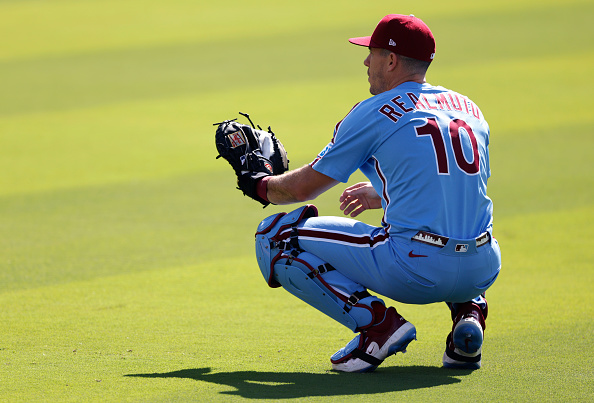
Financial projections also suggest that bringing Realmuto back may be more feasible than some might assume. Jim Bowden of The Athletic estimated that Realmuto could land a deal worth approximately $34 million in free agency. In today’s market, that figure is relatively modest, particularly for a player with Realmuto’s résumé. While he may no longer be producing at the elite offensive levels he reached earlier in his career, his overall value remains high due to his defensive excellence, athleticism, and leadership.
One of the central challenges facing the Phillies is balancing contract length with roster flexibility. Realmuto is reportedly seeking a longer-term deal, something the organization may be hesitant to offer given his age and the physically demanding nature of the catcher position. Catchers tend to decline more quickly than players at other positions, and long-term contracts for aging catchers often carry significant risk. Still, as Rotman pointed out, the alternatives are hardly appealing.
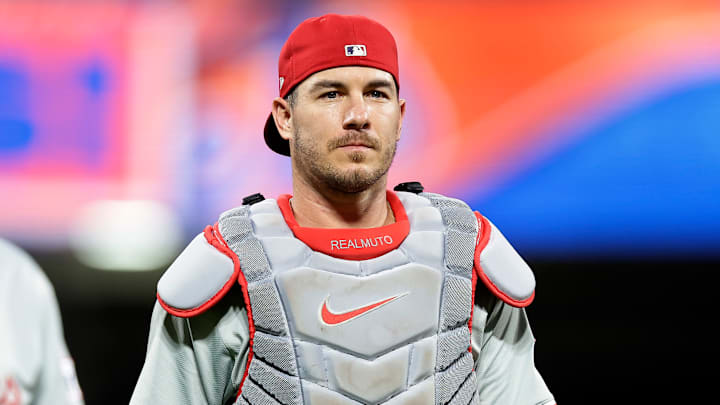
If the Phillies choose not to re-sign Realmuto, they would be left with Rafael Marchan and Garrett Stubbs as their primary catching options. While both players have their strengths, neither has demonstrated the ability to handle the full responsibilities of being a starting catcher on a team with championship aspirations. Relying on that tandem during a “win-now” season could severely undermine the team’s chances of competing at the highest level.
The free-agent market does not offer many attractive replacements either. Signing a lesser catcher would represent a clear downgrade and would likely force the pitching staff to adjust to a new dynamic behind the plate. Catcher-pitcher relationships are critical to success, and Realmuto has built strong connections with Philadelphia’s rotation over the years. Disrupting that chemistry could have ripple effects throughout the roster.
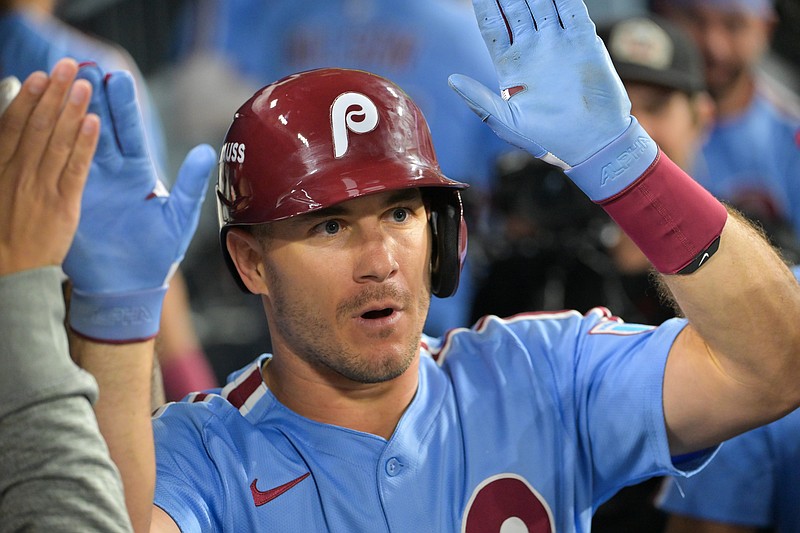
Trading for a catcher is another theoretical option, but it presents its own set of complications. Acquiring a proven catcher via trade would likely require surrendering valuable prospects or major-league talent, something the Phillies may be reluctant to do given their current depth and long-term plans. Moreover, there is no guarantee that a trade target would provide the same level of production or leadership as Realmuto.
For these reasons, even if re-signing Realmuto requires a slight overpay, many believe it would still be the most sensible course of action. Championship windows in baseball are fragile, and teams cannot afford to take unnecessary steps backward when they are so close to achieving their ultimate goal. Letting a key player walk without a clear and equal replacement often leads to regret, especially for teams that are built to contend immediately.

From a performance standpoint, Realmuto may not be the offensive force he once was, but his overall game remains well-rounded. He continues to be one of the best defensive catchers in the league, excelling at pitch framing, controlling the running game, and managing pitchers. His athleticism sets him apart, allowing him to contribute on the bases and handle the physical demands of catching better than most players at his position.
Beyond the measurable statistics, Realmuto’s leadership is perhaps his most underrated asset. He is widely respected in the clubhouse and serves as a stabilizing presence during high-pressure situations. For a team with championship ambitions, having experienced leaders who understand the grind of a long season and the intensity of postseason play is invaluable. Younger players, in particular, benefit from having veterans like Realmuto to model their approach after.

Financially, the Phillies are in a position to make this move. Realmuto is not expected to command an exorbitant salary, especially compared to other star free agents across the league. This gives Philadelphia the opportunity to retain a core piece of its roster without severely limiting its ability to make additional moves. In fact, a short-term deal could align perfectly with the team’s competitive timeline.
Many observers believe that a two- or three-year contract would represent the ideal compromise. Such a deal would provide Realmuto with security while minimizing long-term risk for the Phillies. It would also ensure continuity at one of the most important positions on the field during a period when the team is fully committed to winning now. Given Realmuto’s professionalism and durability, there is reason to believe he could remain highly effective over that span.
Ultimately, the Phillies’ decision regarding Realmuto will serve as a litmus test for how serious they are about maximizing their current championship window. They have already shown a willingness to invest in proven talent by re-signing Schwarber. Failing to do the same with Realmuto could send a mixed message to both fans and players about the organization’s priorities.
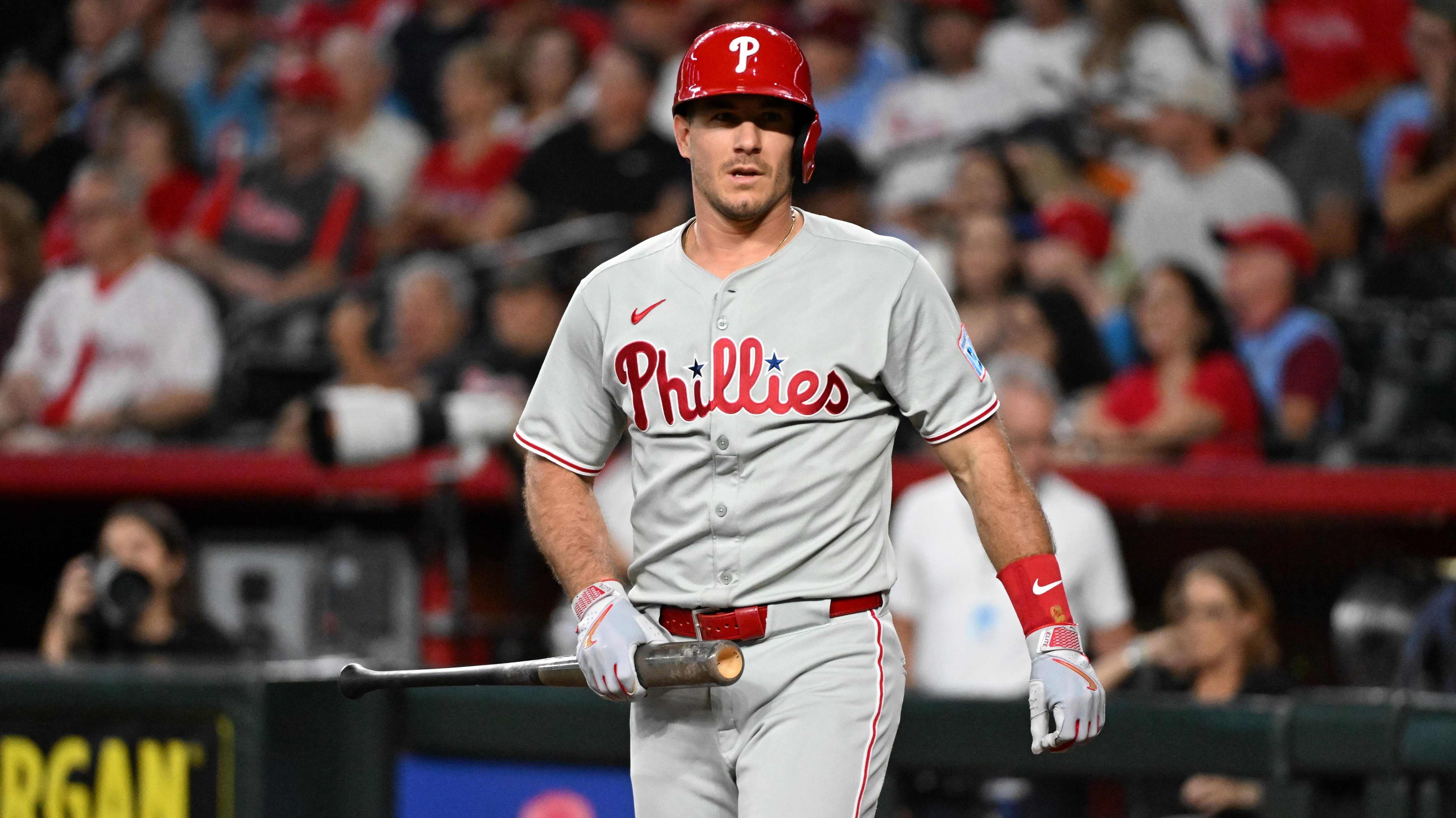
As the offseason continues, time remains for Philadelphia to finalize a deal. But with each passing day, the urgency grows. The Phillies have the pieces in place to contend for a title; now they must ensure they do not weaken their foundation by letting a critical contributor slip away. In the context of a team chasing its first World Series championship in years, re-signing J.T. Realmuto appears less like a luxury and more like a necessity.
If the front office takes the long view, the conclusion becomes clear. Even with some inherent risk, keeping Realmuto in Philadelphia offers stability, leadership, and competitive advantage—qualities that are essential for a team that believes its championship moment is within reach.