Most Kansas City Royals fans probably haven’t heard of minor leaguer Juan Olmos, but the early path of his professional baseball career is one that quietly reflects the complexity, uncertainty, and persistence that define life in the minor leagues. Olmos’ story is not about instant stardom or rapid ascension through a farm system. Instead, it is about experimentation, patience, setbacks, and the ever-present hope that a change of scenery—or a new role—can unlock untapped potential.
Olmos signed with the Royals as a 17-year-old catcher out of Colombia in 2022, joining an organization that has long invested in international talent. For players from baseball-growing countries outside the traditional pipelines of the United States, the Dominican Republic, and Venezuela, simply signing a professional contract is a significant milestone. It represents years of development, sacrifice, and belief that raw ability can one day translate into professional success. For Olmos, that opportunity came at a young age, and the Royals clearly saw enough promise in his athleticism and arm strength to bring him into their system.

Once signed, however, the real challenge began. Olmos spent the next three seasons in rookie ball, the lowest rung of the professional ladder, where development often moves slowly and competition can be unpredictable. Rookie leagues are filled with teenagers adjusting to professional life, older players trying to reinvent themselves, and long-shot prospects hoping for a breakthrough. Advancement is far from guaranteed, and progress is often uneven. For Olmos, despite multiple seasons of opportunity, he was unable to separate himself enough as a catcher to earn a promotion to a higher level.
Catching is one of the most demanding positions in baseball, requiring not only offensive production but also defensive polish, leadership, and an advanced understanding of pitching staffs. For a young international player, mastering those responsibilities while adjusting to a new culture and professional expectations can be especially difficult. After three years without meaningful upward movement, the Royals faced a familiar decision: continue developing Olmos in a role that wasn’t yielding results, or try something new.
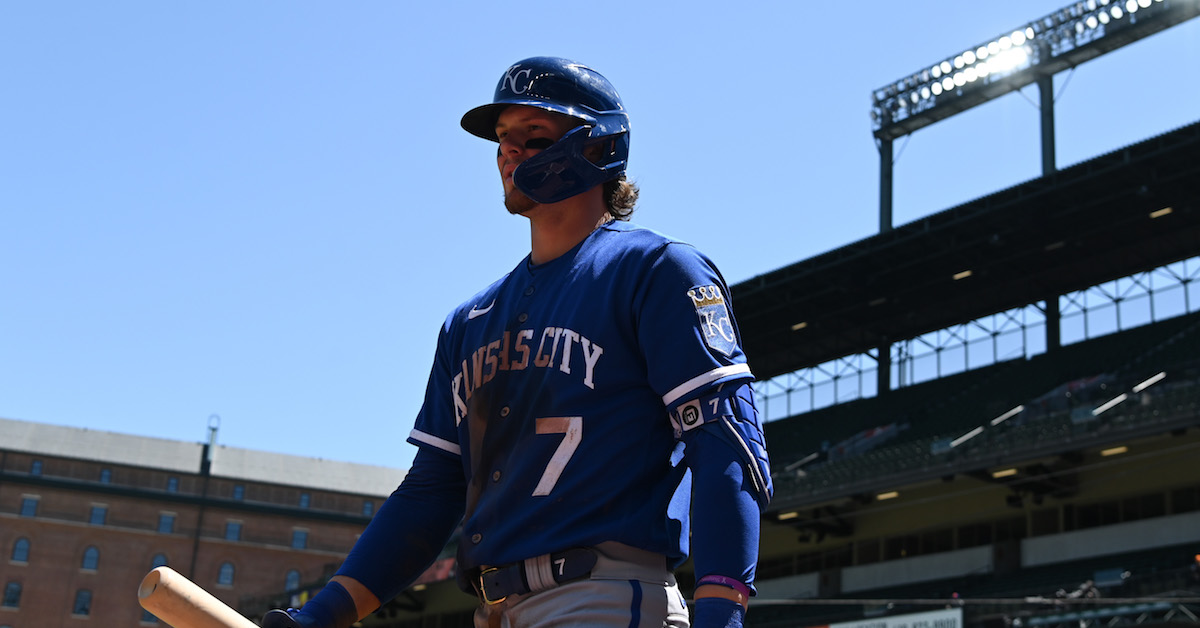
Ahead of the 2025 season, the organization chose the latter, converting Olmos from catcher to pitcher. Position changes like this are not uncommon in the minor leagues, particularly for players with strong throwing arms. Teams often believe that raw arm talent, even if unrefined, can be molded on the mound more effectively than at the plate. For Olmos, the switch represented both a fresh start and a last opportunity to prove he belonged in the system.
The transition, however, did not produce immediate success. Pitching development is notoriously difficult, especially for players who are still learning mechanics, command, and pitch sequencing. Olmos appeared in 12 games for the Royals’ Dominican Summer League affiliate, posting a 7.88 ERA. While ERA alone does not tell the full story, the underlying numbers highlighted significant challenges. In just 16⅓ innings, he walked 19 batters, leading to an elevated 2.31 WHIP. Control issues are common for young pitchers, but at the professional level, they can quickly derail a player’s chances of advancement.
By November, the Royals made the decision to release Olmos, bringing his four-year tenure with the organization to an end. For any player, release is a difficult moment. It represents the closing of one door and the uncertainty of whether another will open. Many minor leaguers never receive a second opportunity once they are let go, particularly those who have yet to reach full-season ball. In that sense, Olmos’ story could easily have ended there.
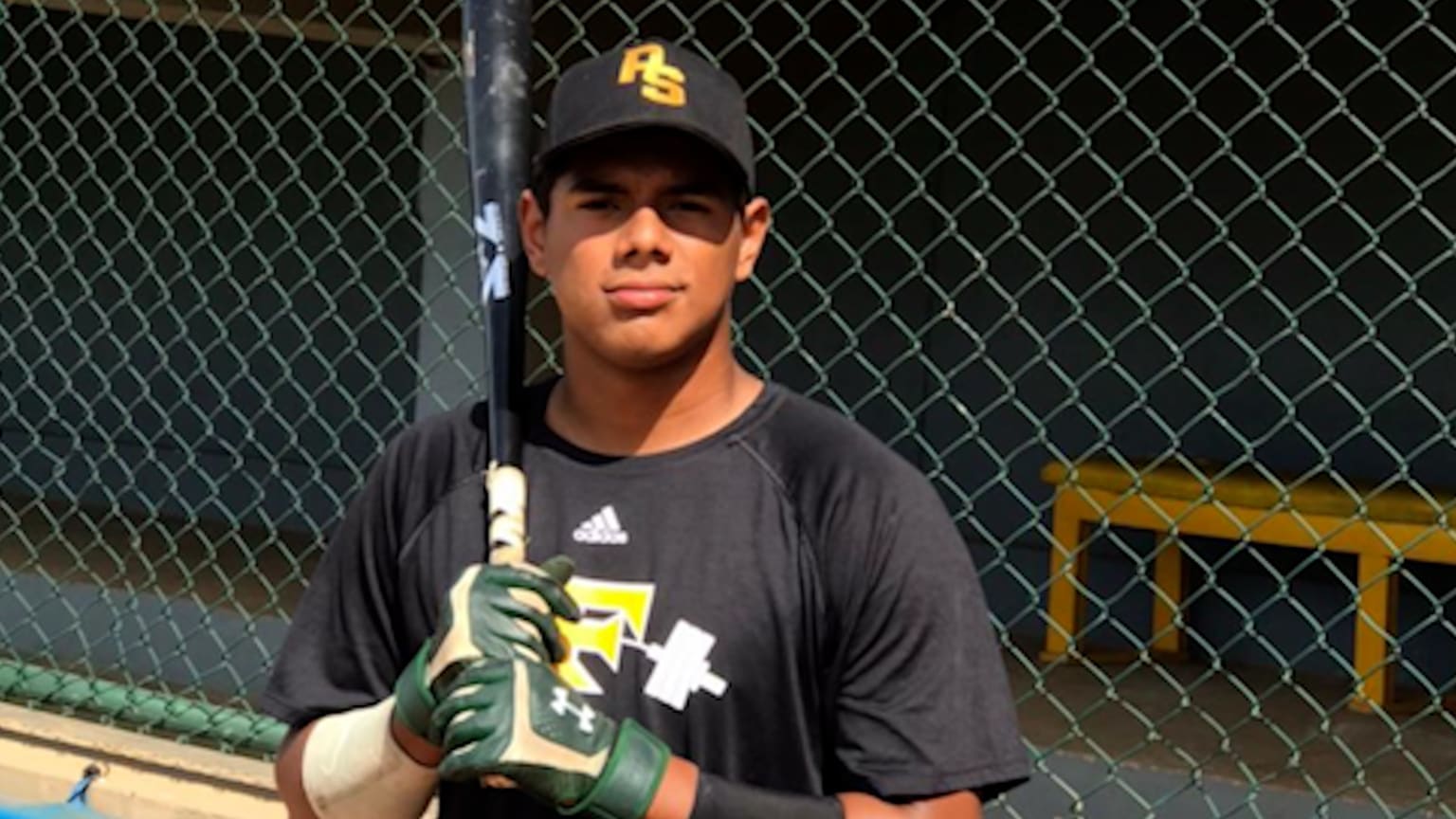
Instead, it took a new turn. According to the transaction history on his official roster page, Olmos signed a minor-league deal with the Atlanta Braves on Dec. 18. The move did not immediately appear in official logs, surfacing weeks later, a reminder of how quietly many minor-league transactions occur. There are no press conferences or headlines for these signings, just a brief line in a database indicating that a player’s professional journey will continue elsewhere.
For the Braves, signing Olmos represents a low-risk investment. Organizations frequently take chances on former prospects who struggled elsewhere, particularly those with physical tools that remain intriguing. Atlanta has a strong reputation for player development, especially with pitchers, and may see aspects of Olmos’ arm strength or athletic background that they believe can be refined over time. For Olmos, the change of scenery offers renewed hope and a clean slate.

Looking at his statistical profile, it is easy to identify where Olmos must improve. The walk rate stands out immediately, as issuing more walks than innings pitched is rarely sustainable at any professional level. Command, consistency, and confidence will be critical if he is to make progress as a pitcher. At the same time, it is important to note the limited sample size. Sixteen-plus innings is hardly enough to make definitive judgments about a player’s future, particularly one who is still adjusting to a new position.
At just 21 years old, Olmos remains a developmental project rather than a finished product. Many pitchers do not find their footing until years into their professional careers, and some do not truly break out until their mid-20s. The Braves may choose to slow his development, focusing on mechanics and control before pushing him into more competitive environments. Whether that approach pays off remains to be seen.
From the Royals’ perspective, Olmos’ departure is unlikely to have immediate consequences. Even if he eventually develops into a useful player in Atlanta’s system, it would likely take several years before he reaches the major leagues, if he reaches them at all. Still, there is always a sense of regret when a former prospect succeeds elsewhere, especially one who spent four seasons in an organization’s developmental pipeline. It raises inevitable questions about whether a different approach, timing, or opportunity could have produced a different outcome.

That said, stories like Olmos’ are far more common than fans might realize. Minor League Baseball is vast, with thousands of players competing for a limited number of major-league roster spots. For every success story, there are countless others who stall, shift roles, change organizations, or exit the game entirely. Development is not linear, and even the most well-run organizations cannot unlock every player’s potential.
The Royals will continue to sign dozens of players each year who resemble Olmos: young international prospects with raw tools and uncertain futures. Most will never reach the major leagues, but the hope is always that one or two will defy the odds. Olmos’ journey, whether it ultimately leads to success or not, serves as a reminder of how fragile and unpredictable a professional baseball career can be—and how perseverance often matters just as much as talent.