
The New York Mets may not have grabbed major headlines with their most recent pitching acquisition, but in many ways, that is exactly the point. In an era where the baseball media is dominated by blockbuster trades, instant-impact signings, and flashy free-agent moves, it can be easy to overlook quiet, calculated decisions—decisions that are designed not to make noise in the moment but to build value over years. The Mets’ signing of Jun-Seok Shim, a 21-year-old right-handed pitcher, is exactly that type of move: subtle, low-risk, and potentially high-reward. While it will not immediately reshape the major league roster, it speaks volumes about the organization’s long-term approach to pitching depth and player development.
At its core, this is a bet on talent, health, and opportunity. Shim is not expected to contribute at the major league level in 2026, and he is far from a finished product. His professional track record is extremely limited, and a series of injuries have interrupted his development at crucial stages. But the underlying skill set that made him an intriguing international prospect remains intact. For the Mets, investing in a player like Shim is less about immediate returns and more about planting a seed that could grow into something valuable in the years ahead. This is the kind of strategic depth-building that organizations focused on sustainable success prioritize over short-term headlines.

Jun-Seok Shim: Talent Interrupted
Shim’s story in professional baseball is unusual, but it is precisely this unusual trajectory that makes him intriguing. In 2023, he signed with the Pittsburgh Pirates as part of a strong international class, earning a $750,000 signing bonus. At the time, he was regarded as one of the more promising arms available on the international market. The promise he displayed at a young age was enough to attract attention from multiple teams, eventually leading to his signing by the Pirates. He would later be traded to the Miami Marlins, only to be released following a series of injuries that stalled the early stages of his career. While his professional résumé is short, the tools that initially attracted scouts remain worth exploring.

Shim has pitched only eight professional innings, all in 2023 with the Pirates’ Complex League affiliate. Across four starts, he posted a 3.38 ERA, striking out 13 while walking just three. While the sample size is undeniably small, the strikeout numbers immediately stand out. Even in such limited exposure, he demonstrated the ability to miss bats—a skill that is notoriously difficult to teach and often one of the strongest indicators of long-term potential for a pitcher. The lack of innings is not a reflection of talent; rather, it reflects circumstances—injuries and interrupted development—that prevented him from showing what he could do consistently over a larger body of work.
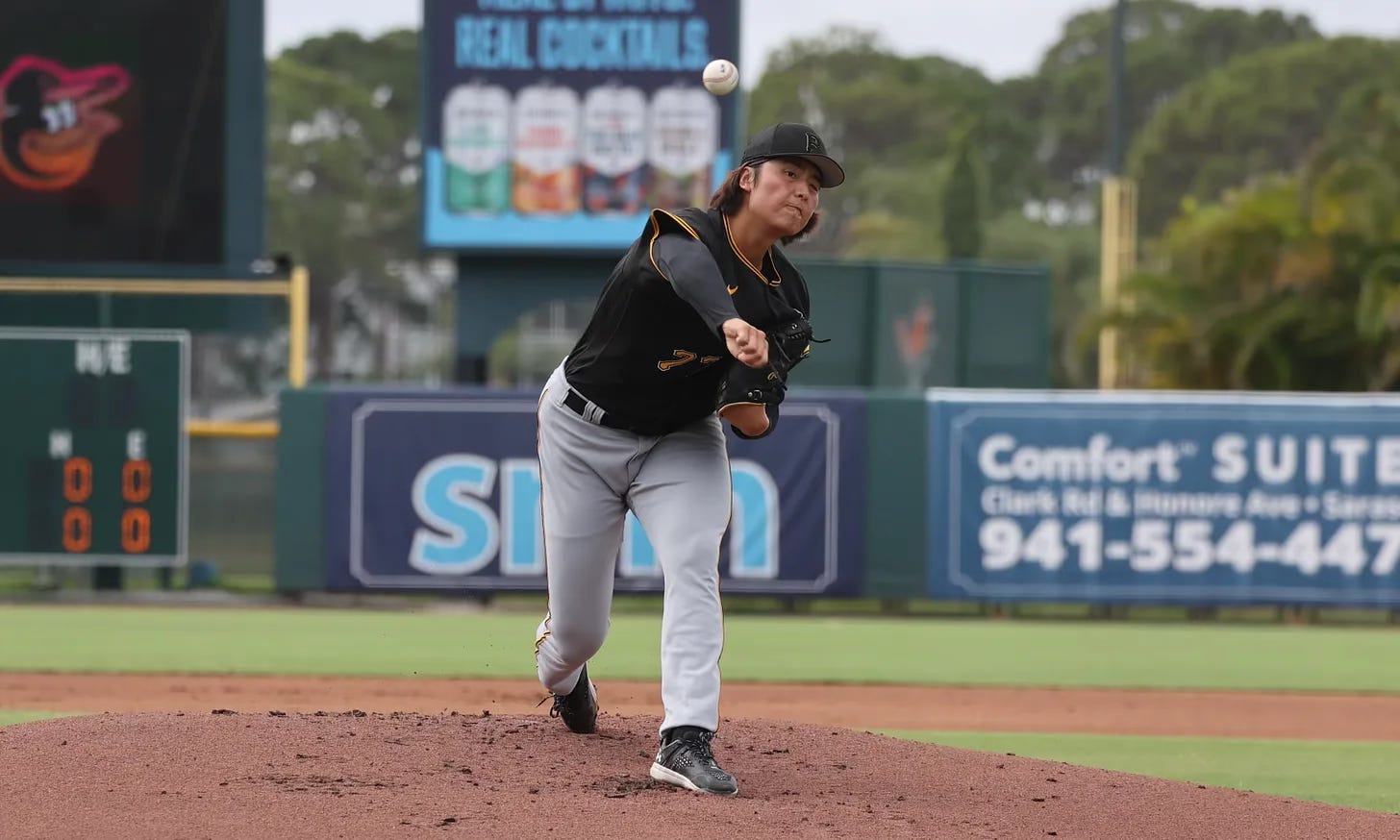
For the Mets, this distinction is critical. Shim is not a failed prospect. He is a player whose career path has been derailed by circumstances largely outside his control. The team’s interest in him is therefore a bet on the potential that still exists beneath those interruptions. This is not about salvaging a washed-up arm—it is about uncovering what could be a meaningful contributor if given the right environment and the time to recover fully.
The Appeal of Shim’s Arsenal
Shim’s skill set is what initially made him a sought-after international prospect, and it remains the reason teams like the Mets are willing to take a chance on him. At his core, he is a pitcher with a starter’s potential, possessing a mix of pitches that could allow for multiple developmental paths depending on how his velocity and mechanics progress. His curveball is perhaps the most notable pitch in his repertoire, showing true 12-to-6 movement. This is not a looping or inconsistent pitch, but one with defined shape, depth, and intent—qualities that make it a weapon capable of generating swings and misses at higher levels of competition.

Beyond the curveball, Shim has been working to develop a harder slider, providing a second breaking ball option, while his changeup has begun to show signs of becoming an effective fourth pitch. Together, these offerings suggest the foundation of a starter’s mix, even if it remains untested at higher levels. When healthy, Shim did not appear to be a pitcher searching for an identity; he was a pitcher whose tools were already forming a coherent arsenal. For organizations that prioritize scouting and player development, this is exactly the type of profile that warrants investment: raw talent paired with signs of polish and projection.
Shim’s delivery and physical profile also add to the intrigue. Reports indicate that he possesses a projectable frame and the mechanics necessary to generate both velocity and movement. While injuries have limited his ability to showcase his full potential, the underlying physical tools suggest that there is room for velocity to return and for his pitches to gain even more bite. In other words, the ceiling remains high precisely because he has not yet been able to test it fully.

Mets’ Philosophy: Patience and Depth
What makes the Mets’ signing of Shim particularly sensible is their organizational philosophy, which emphasizes depth, flexibility, and patient development. The team has made it clear that they want options—not just a handful of top prospects, but a broad pool of arms who can be nurtured and developed over time. In baseball, this approach is critical because pitching depth can make or break a season, particularly when injuries inevitably strike.
Shim fits perfectly into this framework. He is young, allowing time to rebuild both his body and his mechanics. Because he is largely untested at the professional level, his ceiling has not yet been capped by experience or repeated failure. If his velocity returns even partially, his repertoire could allow him to contribute either as a starter or as a reliever, depending on how development unfolds. Crucially, there is no pressure for him to deliver immediately. The Mets are offering opportunity, not expectation. This approach aligns with what organizations like the Mets have found to be effective: when a player is given the right environment to recover and develop, the probability of realizing potential increases significantly.
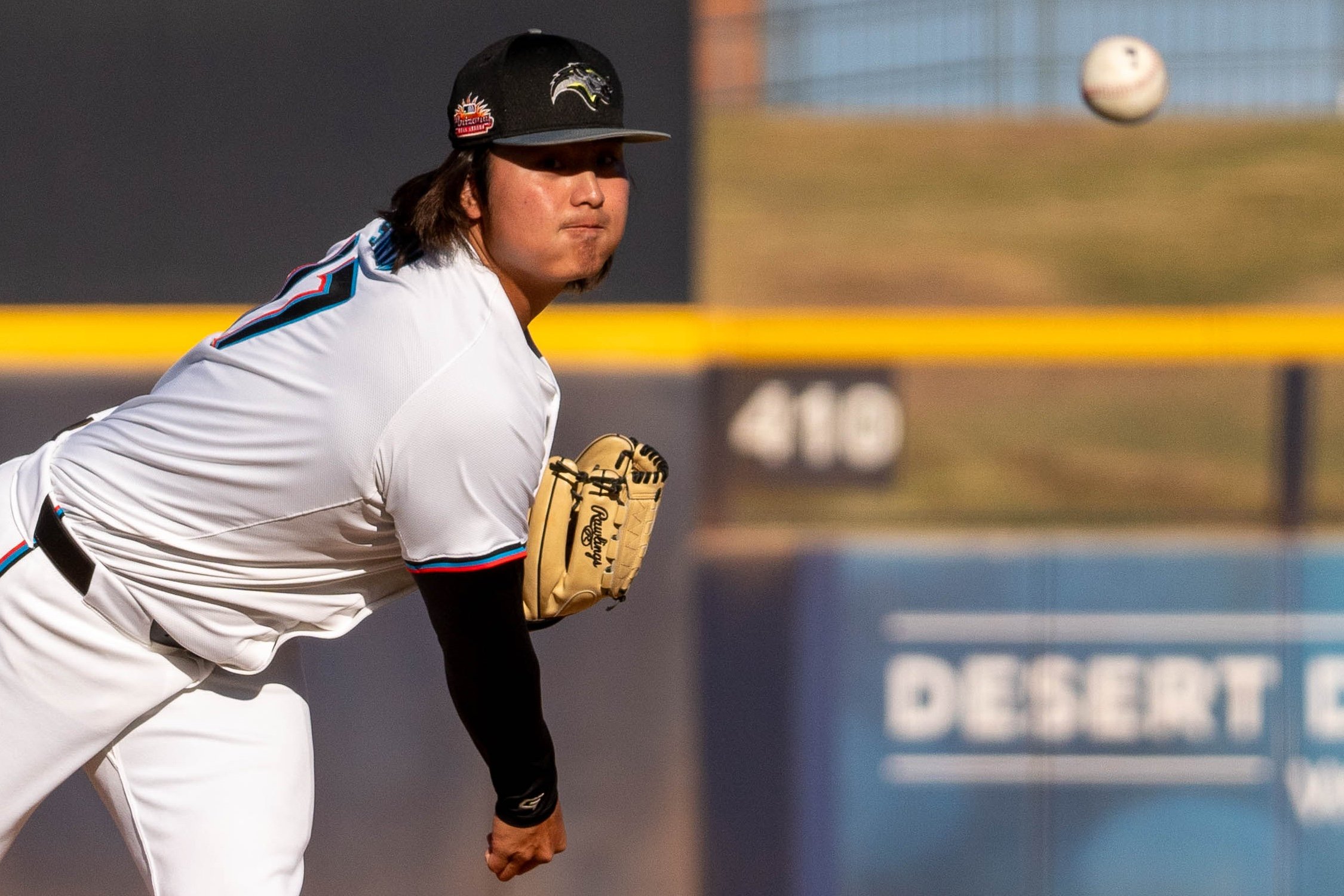
Historical Context: Players Who Returned from Setbacks
Shim’s trajectory may also be best understood in the context of other pitchers who faced early career setbacks. Baseball history is filled with examples of pitchers who were overlooked or derailed early, only to emerge later once health, mechanics, and opportunity aligned. Players like Mark Appel, Michael Fulmer, and more recently, Jordan Hicks, demonstrate the unpredictable nature of development. Some recovered and reached high ceilings, while others never realized their potential—but in all cases, teams that invested patiently often reaped the benefits.
Shim is not guaranteed to follow a successful path, but the framework exists for it to happen. He has demonstrated elite tools, he is young enough to rebuild, and he is entering an organization that prioritizes long-term development. For the Mets, this is a calculated gamble: low financial risk, high potential upside. Even if Shim never reaches the majors, he contributes to the organizational depth chart, providing flexibility and a potential trade asset down the road.

The Developmental Path Forward
Shim’s immediate priority will be regaining health and building innings. The Mets will likely prioritize careful monitoring of his mechanics and workload, ensuring that velocity returns safely and that his secondary pitches continue to develop. In addition, the team will focus on refining his approach to hitters and strengthening the mental and physical conditioning necessary for a professional career.
Patience will be essential. Shim’s career thus far has been characterized by stops and starts, so rushing his development would likely be counterproductive. By allowing him the time to rebuild, the Mets are creating a scenario in which his talent can translate into consistent results. Over the next few seasons, the team will assess whether he can emerge as a starter capable of handling multiple innings, a reliever who can dominate with a short arsenal, or a depth piece who provides flexibility within the system.
Low-Risk, High-Upside

The beauty of this signing lies in its low-risk nature. Shim’s minor league contract requires a modest financial commitment, while the potential payoff—if he can return to form—is significant. Baseball is inherently unpredictable, and pitchers often face setbacks that can derail their careers. But when a player with high-end tools is given the right environment, coaching, and opportunity, the potential reward can justify the risk. For the Mets, this is precisely the type of signing that embodies strategic thinking in player development: patience over immediate results, depth over headlines, and calculated risk over certainty.
Shim’s signing also reflects a broader truth about modern baseball. In an age where top prospects are scrutinized down to spin rate, velocity, and minor league strikeout rate, it can be easy to overlook players whose paths have been interrupted. Yet these players often offer hidden upside precisely because they are under the radar. A player like Shim represents both a challenge and an opportunity: a chance to discover untapped potential in someone who, on paper, was once considered a top international talent.
Ultimately, the Mets’ acquisition of Jun-Seok Shim is emblematic of a quiet but strategic philosophy that prioritizes long-term value over immediate headlines. Shim is far from a finished product, and he is not expected to make an impact in 2026. What he does offer, however, is potential: a young arm with a starter’s arsenal, high strikeout ability, and a chance to rebuild his body and mechanics in a patient, supportive environment.
For a team focused on sustainable success, this is the kind of signing that can pay off in ways that are difficult to quantify at the moment but invaluable over time. Depth, flexibility, and patience are the cornerstones of modern roster construction, and Jun-Seok Shim represents an investment in all three. The Mets are betting not on immediate results, but on the opportunity for a talented young pitcher to realize the potential that first drew scouts’ attention.
READ MORE HERE: BREAKING: Mets Acquire Two All-Star Pitchers from Brewers in Exchange for Top Prospects
In a league where high-profile trades and instant-impact free-agent signings dominate the conversation, the quiet acquisition of Shim reminds fans and analysts alike that smart roster construction often happens behind the scenes. The Mets are not expecting Shim to be anything today. They are giving him the chance to become something in the future—and in the unpredictable world of baseball, that is often the smartest bet of all.
Shim may not make headlines now, but if he reaches even a fraction of the potential that initially made him a coveted international prospect, the quiet signing could turn out to be a pivotal moment in the Mets’ rebuilding process. Patience, development, and depth—these are the real victories of modern baseball, and Jun-Seok Shim represents a perfect illustration of that philosophy in action.