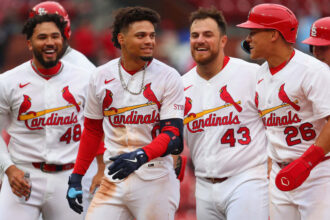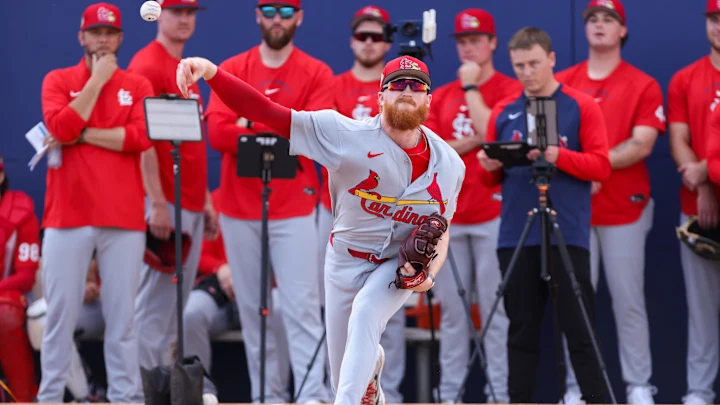
The St. Louis Cardinals made it pretty clear this offseason that they are entering a new phase. After years of trying to straddle the line between competing and retooling, the organization has now committed to a full-scale reset. A wave of veteran players was moved out in trades, signaling a shift toward youth, development, and long-term sustainability. The front office appears intent on building around its farm system, placing its faith in prospects and controllable talent rather than established stars on expensive contracts.
And yet, even in the midst of what looks like a deliberate rebuild, the Cardinals still dipped into free agency. The spending wasn’t extravagant by league standards—roughly $16 million total—but for a team preaching patience and internal development, it was a noticeable investment. Most of that money went toward one player: right-handed pitcher Dustin May, who signed a one-year deal worth $12.5 million.
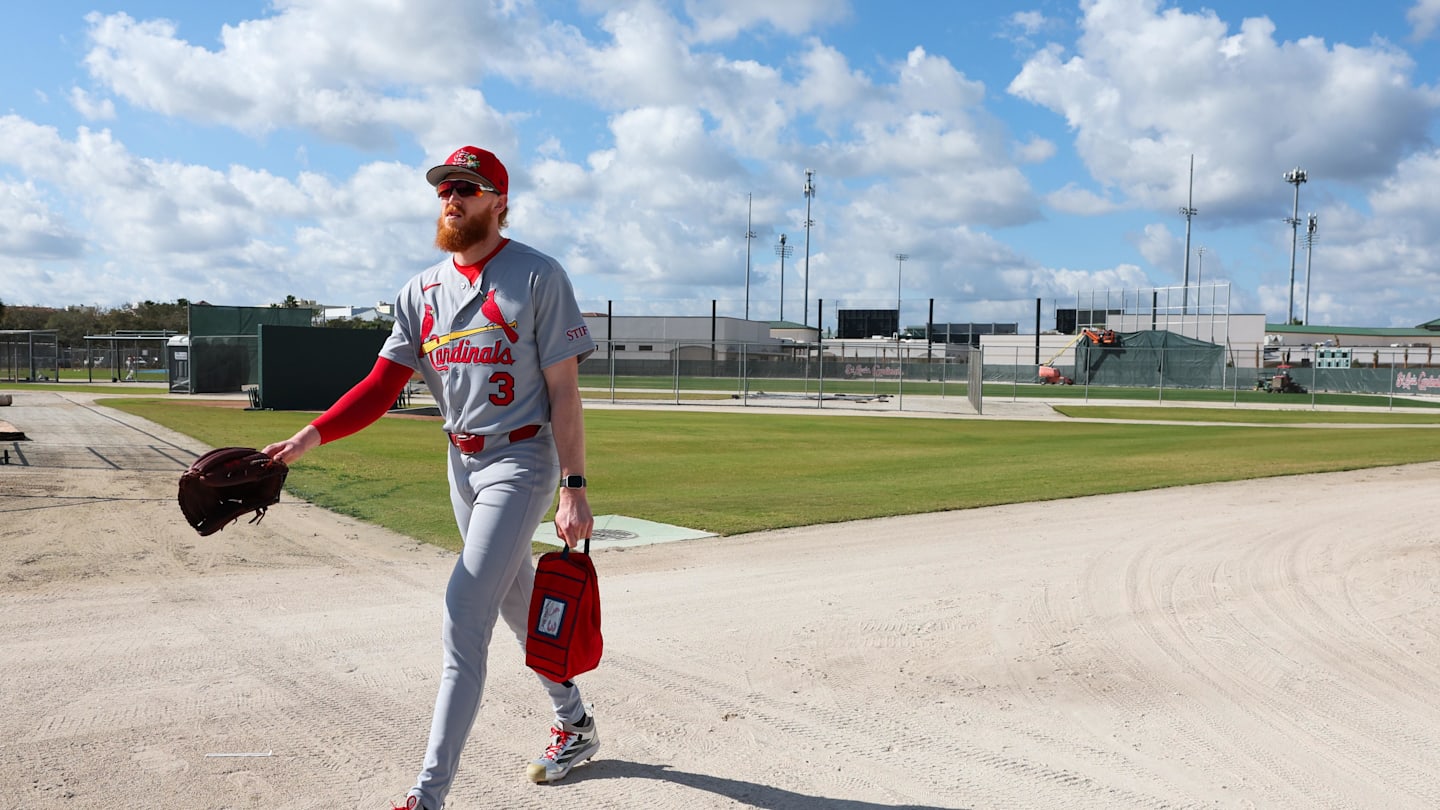
That signing has drawn some skepticism.
Bleacher Report’s Tim Kelly recently evaluated several offseason moves around the league and suggested that St. Louis’ decision to bring in May could end up being one of the riskiest—and potentially most disappointing—investments of the winter. While acknowledging that the move carries some upside, Kelly framed it as a gamble that might not pay off.
On paper, the logic behind signing May is understandable. A rebuilding team can afford to take calculated risks, especially on players with clear talent but uncertain trajectories. May fits that description perfectly. He’s still just 28 years old, possesses electric stuff, and has shown flashes of being a high-impact starter at the major-league level. For a team not expected to contend immediately, taking a one-year flyer on that kind of arm isn’t inherently reckless.

But that doesn’t mean the move is without significant downside.
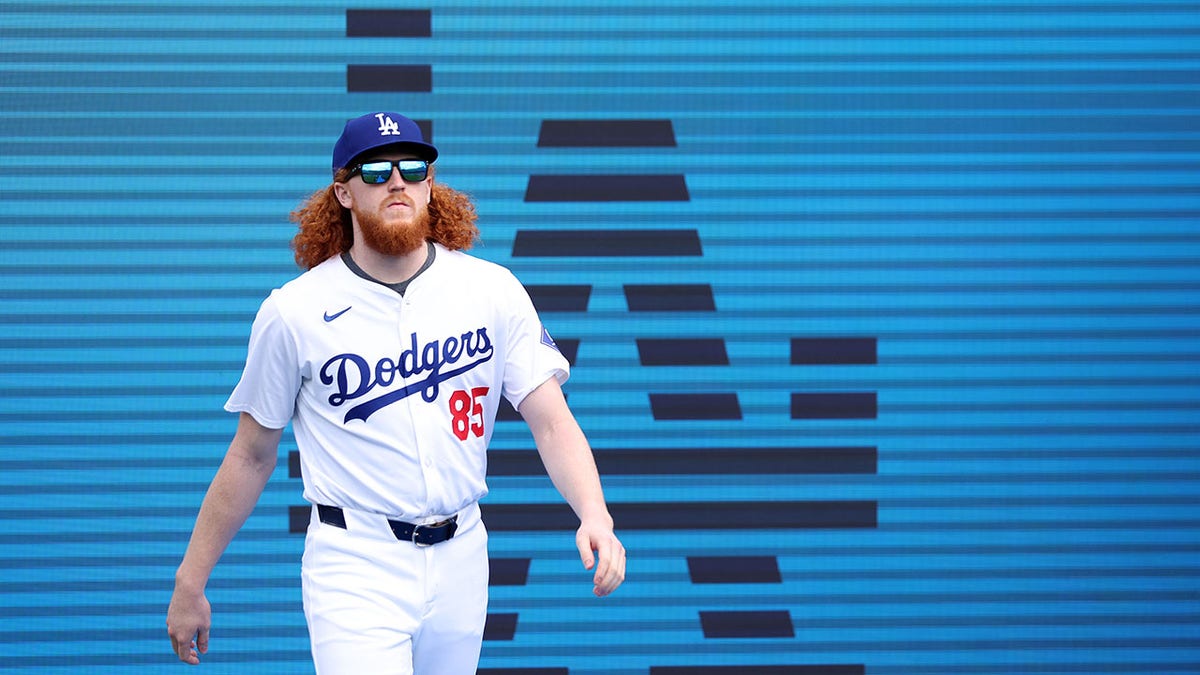
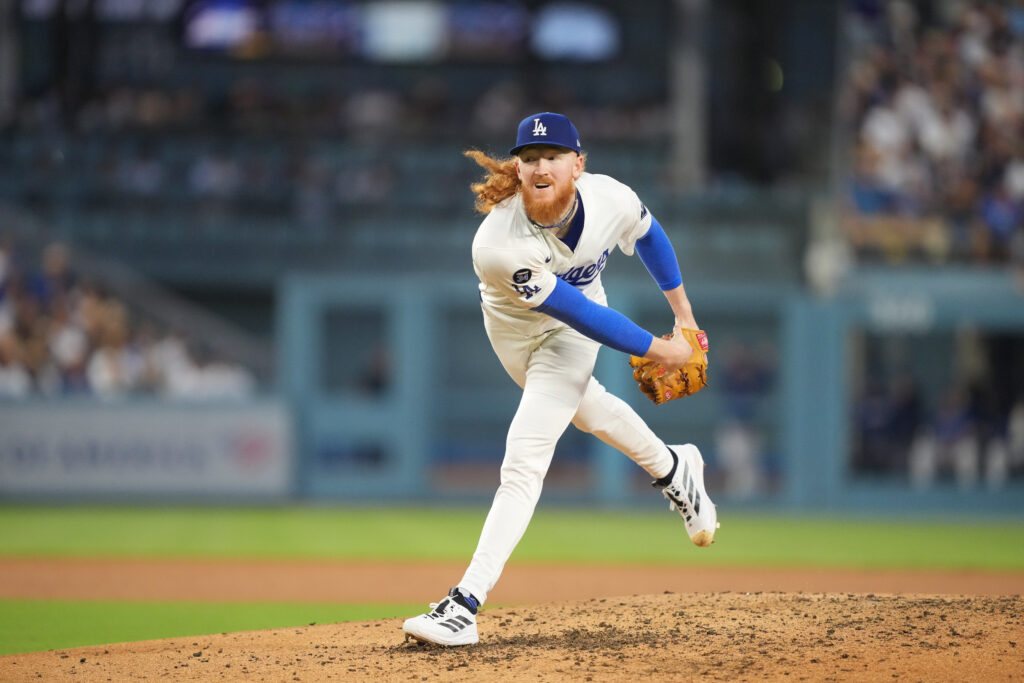
May reached free agency this offseason after accumulating enough service time, despite having an injury-marred career. Over his first six seasons in the majors—most of which he spent with the Los Angeles Dodgers—he threw only 324 innings. That’s a relatively light workload across such a lengthy span, and it underscores the durability concerns that have followed him. Arm injuries, surgeries, and lengthy stints on the injured list have repeatedly interrupted his development and limited his availability.
When healthy, May has demonstrated why teams remain intrigued. His career ERA sits at a respectable 3.86, which suggests he has been an effective pitcher overall. His arsenal, headlined by a heavy sinker and a sharp cutter, has often produced ground balls and weak contact. Scouts have long praised his raw stuff, and at times he has looked like a potential mid-rotation or even top-of-the-rotation arm.

However, last season complicated that narrative.
In 2025, May logged a career-high 132.1 innings split between the Dodgers and the Red Sox. On the surface, that workload might seem like a positive sign—proof that he can handle a starter’s schedule. But the underlying metrics were less encouraging. According to FanGraphs, both his sinker and cutter posted negative pitch values, meaning those offerings were less effective compared to league averages. For a pitcher who relies heavily on those two pitches, that’s a troubling trend.
Beyond that, his overall performance dipped enough to make him a negative WAR (Wins Above Replacement) player last season. In other words, by advanced metrics, he contributed less value than a readily available replacement-level pitcher. That’s not what a team hopes for when committing eight figures to a player, even on a short-term deal.

Kelly’s concern centers largely on May’s health history. There’s a very real possibility that the right-hander could spend a significant portion of his one-year contract on the injured list. If history is any guide, that scenario feels more plausible than remote. Repeated arm issues tend to linger, and pitchers with similar track records often struggle to string together fully healthy seasons.
From the Cardinals’ perspective, though, the risk calculus is different than it would be for a contender. St. Louis isn’t all-in on 2026. They’re not trying to squeeze every marginal win out of the roster in pursuit of a postseason berth. Instead, they’re evaluating talent, developing younger players, and trying to identify pieces that could be part of their next competitive core.

In that context, signing May becomes less about immediate returns and more about upside. If he stays healthy and regains his form, the Cardinals could benefit in multiple ways. He could stabilize the rotation, mentor younger pitchers, and even reestablish himself as a valuable trade asset by midseason. A strong first half might allow St. Louis to flip him to a contender at the deadline for prospects, effectively turning money into future capital.
On the other hand, if he struggles or gets hurt again, the damage is relatively contained. It’s a one-year commitment. There’s no long-term financial burden hanging over the franchise. In a rebuilding year, a missed bet doesn’t derail championship aspirations because those aspirations are already set further down the road.
Still, critics argue that even short-term deals matter. Allocating $12.5 million to a player with such an uneven health history could be seen as inefficient, especially for a team that claims to be tightening its belt and prioritizing development. That money might have been spread across multiple lower-cost arms or used to bolster other areas of need.
There’s also the question of opportunity cost in terms of innings. A rebuilding team often benefits from giving younger pitchers extended looks at the major-league level. If May occupies a rotation spot but fails to perform—or spends time rehabbing—it could disrupt the evaluation process for prospects who need consistent opportunities.
At the same time, there’s an argument to be made that May’s presence doesn’t block anyone long term. Because the contract is just one year, he doesn’t impede the organization’s timeline. In fact, he could buy time for younger arms to develop at their own pace rather than being rushed into high-leverage roles before they’re ready.
The Cardinals appear to be betting that the version of May seen earlier in his career can resurface. When he first broke into the league, he displayed premium velocity and movement, generating excitement about his ceiling. For stretches, he looked like a pitcher capable of dominating lineups. Those flashes are hard to ignore, and they often drive front offices to take chances on reclamation projects.
Injuries, however, have a way of reshaping careers. Even if May returns to full health, there’s no guarantee his stuff will play the same way it once did. Pitchers frequently lose a tick of velocity or feel after repeated arm troubles. And as last season’s negative pitch values suggest, hitters may have begun to adjust to his arsenal.
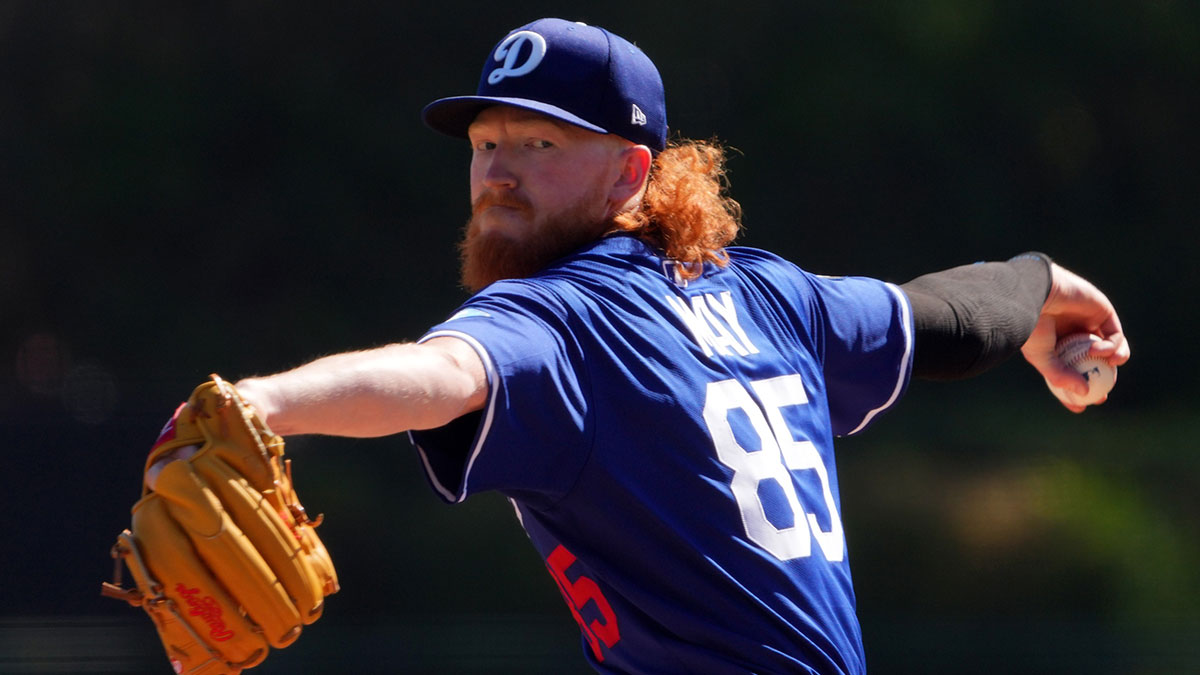
Still, age remains on his side. At 28, he’s not a fading veteran clinging to past glory. There is room for adjustment and refinement. A new coaching staff, a fresh environment, and less intense expectations could all contribute to a rebound. The pressure cooker of pitching for perennial contenders like Los Angeles or Boston can weigh heavily, especially for someone trying to prove he can stay healthy.
In St. Louis, the spotlight may not be quite as blinding this season. The team isn’t projected to dominate its division, and that could allow May to focus more on refining his mechanics and rebuilding confidence rather than carrying playoff hopes on his shoulders.

Ultimately, the signing represents the kind of move that can look either savvy or shortsighted depending on the outcome. If May delivers 150 solid innings with an ERA in the mid-threes, the Cardinals will look smart for seizing a discounted opportunity on a talented arm. If he lands back on the injured list and contributes little, critics will point to the warning signs that were present all along.
For now, it’s a calculated risk taken by a franchise in transition. The Cardinals have acknowledged that they’re building for the future, but that doesn’t mean they’re unwilling to take short-term swings in hopes of uncovering value. May embodies both the promise and the peril of that approach.
In a rebuilding year, the margin for error is wider. The stakes aren’t as immediate. That reality may make the gamble easier to justify internally, even if outside observers remain skeptical.
Whether the move ultimately pays off or becomes a cautionary tale will depend largely on May’s health and his ability to rediscover the effectiveness that once made him such an intriguing talent. For a team reshaping its identity, the signing is less about certainty and more about possibility—and sometimes, during a rebuild, possibility is worth the price.