Philadelphia Phillies infielder Dylan Moore, who is striving to extend his Major League Baseball career, has reportedly decided to exercise the opt-out clause in his minor league deal with the team. According to a report by Will Sammon of The Athletic on March 19, Moore has the opportunity to become a free agent on March 21 if the Phillies do not add him to their 40-man roster within the next two days. The move underscores the precarious nature of roster competition in Major League Baseball, particularly for players like Moore, who are highly versatile defensively but have yet to fully establish themselves as consistent offensive contributors. It also opens the door for other teams, particularly in the National League East, to show interest if the Phillies opt not to retain him.
Moore, who enjoyed a productive season in 2024 with the Seattle Mariners, has become well-known for his defensive flexibility. Over the course of that season, he played six different positions on the field, an attribute that has significantly enhanced his value in the eyes of teams that prioritize roster versatility. His defensive prowess was officially recognized with a Gold Glove Award, an accolade that highlights his elite ability to contribute on the field beyond the batter’s box. However, despite his defensive skills, Moore has struggled at the plate, a factor that could complicate his path to securing a permanent spot on the Phillies’ roster.

In the ongoing 2026 Grapefruit League games, Moore’s offensive numbers have been modest. Through 13 spring training games, he has posted a slash line of .226/.324/.258. While these statistics reflect a player who is capable of getting on base and contributing occasionally, they do not suggest the kind of offensive impact that would guarantee him a roster spot. Nevertheless, Moore has shown flashes of productivity, such as his performance on March 18 against the Atlanta Braves, where he went 2-for-2, recorded two RBIs, and drew a walk. While this is a small sample size, it serves as a reminder of the potential upside that a versatile, veteran infielder like Moore can bring to a team seeking depth.
The Phillies’ current roster situation has created both opportunity and competition for Moore. Outfielder Johan Rojas recently received an 80-game suspension for a performance-enhancing drug violation, leaving an unexpected vacancy on the Phillies’ Opening Day roster. This development has had a ripple effect on bench competition, as the team’s management seeks to fill the void while maintaining flexibility and balance across the roster. Veteran infielder Edmundo Sosa and rookie Otto Kemp are projected to claim two of the three available spots on the bench. Consequently, Moore finds himself effectively competing for the remaining position, a scenario that has made the decision about his opt-out clause particularly significant.

Moore’s versatility remains his greatest asset. Among the Phillies’ camp players, few can match his ability to defend multiple positions at a high level. This quality is particularly valuable over a long season when injuries and strategic substitutions require teams to rely on utility players who can seamlessly move across the field. Despite this, the potential decision by the Phillies not to promote Moore to the 40-man roster may hinge on his offensive performance. While defensive skills are crucial, Major League teams often require a baseline level of production with the bat, and Moore’s struggles in spring training could give management pause about committing a roster spot to him.
Adding another layer to the decision-making process, right-handed hitter Felix Reyes has shown impressive results during spring training, posting a .303/.324/.606 slash line. Despite this strong showing at the plate, Reyes was reassigned to the Phillies’ minor league camp on Wednesday, highlighting the difficult roster choices teams must make when balancing offensive potential against experience, defensive versatility, and contract considerations. For Moore, this creates both pressure and an opportunity: if he can continue to demonstrate improvement at the plate in the final Grapefruit League games, he might persuade the Phillies to add him to the 40-man roster before the opt-out deadline.

If the Phillies choose not to promote Moore, Sammon suggested that the New York Mets could be a likely destination. The Mets’ infield, however, is currently crowded, presenting a different kind of challenge for Moore should he opt out. Corner infielder Mark Vientos, who had an OPS of .837 (134 OPS+) just two seasons ago, is projected to begin the season on the bench despite hitting just .040 in spring training. Because Vientos is out of minor league options, the Mets may opt to keep him on the bench while hoping he rebounds offensively during the season. This dynamic indicates that while Moore could be an attractive addition to the Mets’ roster, he would still face stiff competition for meaningful playing time.
Beyond the Mets, other teams could also benefit from Moore’s versatility if he becomes a free agent. Sammon highlighted the Baltimore Orioles and Houston Astros as potential fits. Both organizations have a history of valuing multi-positional players who can fill gaps and provide flexibility over a long season. The Orioles, in particular, could use a player like Moore to strengthen their bench and cover for injuries, while the Astros have consistently demonstrated a willingness to deploy utility players in strategic roles to maximize roster efficiency. Moore’s ability to play multiple positions and contribute defensively at a high level makes him an attractive candidate for these organizations, even if his offensive production remains inconsistent.
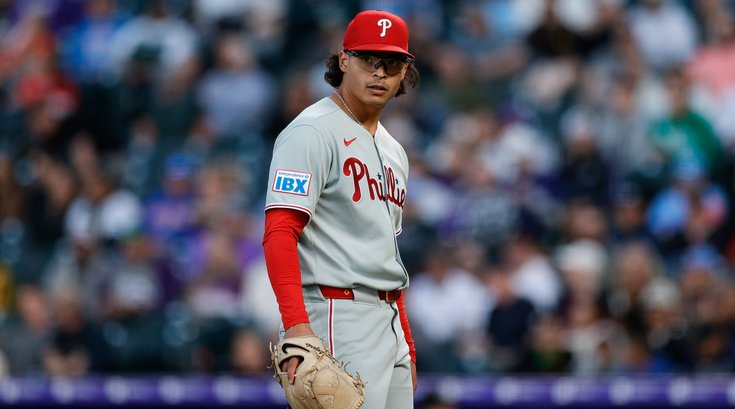
From Moore’s perspective, exercising the opt-out clause is a calculated move designed to maximize his value in the free-agent market. While he could remain in the Phillies’ organization in a minor league capacity, the opt-out gives him leverage to seek opportunities elsewhere where a 40-man roster spot may be more attainable. For players like Moore, whose defensive capabilities are elite but offensive output is uneven, timing and opportunity are critical. Waiting too long in a minor league system without a clear path to the majors could limit his options, whereas entering free agency now allows him to explore teams that have immediate needs for a versatile infielder.
The decision also illustrates the complex strategic calculations teams must make during spring training. For the Phillies, adding Moore to the 40-man roster would guarantee him a spot on the Opening Day bench, but it would also require them to commit a roster spot that might otherwise go to a younger prospect or a player with a higher offensive ceiling. Additionally, any roster move must consider long-term flexibility, including potential midseason trades, injury replacements, and September call-ups. In this context, the Phillies’ management faces a classic dilemma: prioritize defensive versatility and proven experience in Moore, or retain flexibility for other roster adjustments.

Moore’s case is further complicated by the broader trends in baseball regarding bench construction. Modern MLB teams increasingly prioritize players who can contribute in multiple ways: defensively, offensively, and on the basepaths. While Moore’s defense is arguably elite, his offensive numbers do not yet match the standards expected of a utility player who will see regular at-bats. This discrepancy creates tension between his value as a versatile defender and the need for consistent production at the plate, a tension that is especially pronounced during spring training when roster decisions must be made quickly and under the scrutiny of the front office.
If Moore does opt out and joins another team, his path will remain challenging. Even organizations actively seeking a versatile infielder will likely have multiple candidates for any given bench spot, each with their own mix of skills and contract considerations. For Moore, success in spring training and early-season performance will be critical to establishing himself as a regular contributor. Teams such as the Mets, Orioles, or Astros could offer opportunities, but his ability to secure a roster spot will hinge on a combination of offensive improvement and continued elite defense.

Historically, players in Moore’s position—veteran utility players who excel defensively but struggle at the plate—have found mixed results when seeking new opportunities. Some have leveraged their defensive versatility to secure critical bench roles, while others have had to accept minor league deals or limited playing time. Moore’s Gold Glove recognition certainly strengthens his case, as teams value proven defensive reliability in high-leverage situations. However, roster spots are limited, and teams must balance defense with offensive contributions, particularly in the context of the competitive National League East, where depth and flexibility are at a premium.
In conclusion, Dylan Moore’s decision to exercise his opt-out clause represents a strategic attempt to maximize his opportunities in Major League Baseball. While the Phillies have the chance to add him to their 40-man roster and secure his services for the season, Moore’s offensive inconsistencies and the presence of other candidates create uncertainty. If he opts out, teams like the New York Mets, Baltimore Orioles, and Houston Astros are potential suitors, each offering different opportunities and challenges. Ultimately, Moore’s path forward will depend on a combination of timing, performance, and the ever-changing roster needs of teams across the league.
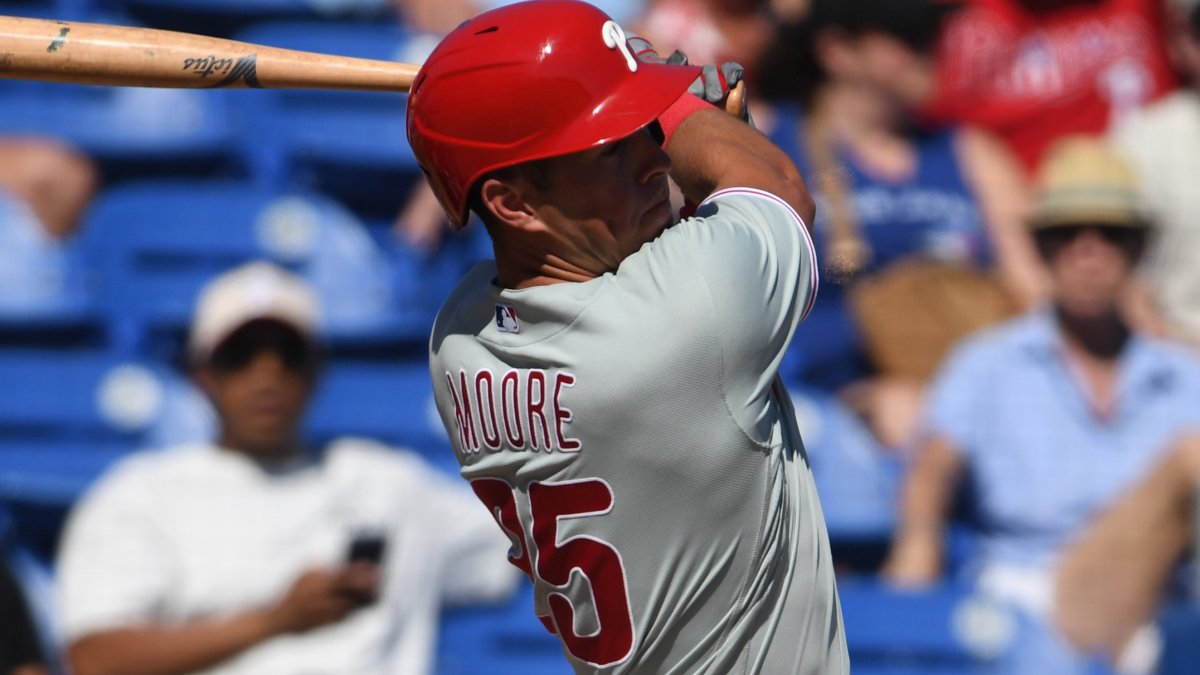
Moore’s situation also serves as a microcosm of the broader dynamics of MLB roster management: the interplay between defensive versatility, offensive performance, minor league options, and the strategic needs of teams. As spring training winds down and the opt-out deadline approaches, both Moore and the Phillies must make decisions that could have long-term implications for their respective seasons. For Moore, the decision to pursue free agency could open doors to new opportunities, while for the Phillies, the choice to retain him—or allow him to leave—reflects the constant balancing act of talent evaluation, roster flexibility, and competitive strategy.
In the final analysis, Dylan Moore’s story highlights the precarious balance faced by utility players striving to carve out meaningful roles in today’s Major League Baseball landscape. While his defensive talent is undeniable, the challenge remains to translate that skill into a consistent and productive role at the plate. Whether with the Phillies or another organization, Moore’s next steps will be closely watched by front offices, teammates, and fans alike, offering a compelling case study in the complexities of modern baseball roster construction.
Read More