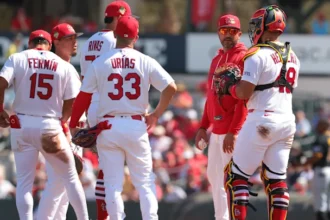
The Los Angeles Angels currently find themselves in a challenging position when it comes to their bullpen. As of this spring, they don’t have a particularly deep roster of proven and reliable relief pitchers, which has prompted the team to spend the preseason actively auditioning various arms for several key bullpen roles. Among the most critical of these roles is the closer position, a spot that requires not just skill but consistency under pressure. Despite these efforts, the team’s search for dependable late-inning relievers has yielded mixed results, leaving fans and analysts alike uncertain about how the Angels will stabilize their bullpen heading into the regular season.
In the midst of this audition process, the Angels made a surprising and somewhat puzzling move by releasing reliever Hunter Strickland. Strickland, who had a notably productive spring training, was let go despite showing promising numbers during the Cactus League games. According to a report from Mark Polishuk of MLBTradeRumors.com, this decision has raised eyebrows in the baseball community, as it runs counter to conventional expectations, especially given Strickland’s recent performance.

To provide some context, Strickland’s spring numbers were impressive, though based on a limited sample size. Over five innings pitched in the Cactus League this year, he managed to post an earned run average (ERA) of just 1.80. On the surface, these statistics suggest that Strickland was in strong form, capable of contributing effectively to the Angels’ bullpen. However, evaluating relievers during spring training is inherently tricky. Because relievers rarely accumulate many innings during these early games, small sample sizes can be misleading. Performance over five innings, while encouraging, may not fully reflect a pitcher’s long-term consistency or ability to handle high-pressure situations in a Major League season.
This uncertainty places significant weight on the subjective evaluations made by the team’s coaching staff. Angels manager Kurt Suzuki and pitching coach Mike Maddux are likely considering factors beyond the raw statistics when deciding on roster spots. Elements such as mechanics, pitch command, velocity, and the ability to execute in high-leverage situations play a crucial role in these assessments. While Strickland’s ERA and strikeout numbers paint a positive picture, the coaching staff’s observations during the spring may have influenced their decision-making in ways that numbers alone cannot capture.

Another factor that might explain the Angels’ decision involves Strickland’s history with the team. According to Polishuk, this was technically his fourth stint with the Angels, meaning he has been part of the organization on multiple occasions. In some cases, repeated returns can create a sense of familiarity that leads teams to look for fresh options. From a management perspective, cycling through players can be a way to explore new talent or address specific needs within the roster. This dynamic could have contributed to the decision to release Strickland despite his solid spring performance.
However, there’s also a possibility that the move was strategic rather than purely performance-based. Some reports suggest that the Angels might be using this release as a procedural maneuver to navigate around Strickland’s contract structure. Specifically, the 37-year-old reliever has a first opt-out date in his contract, and releasing him could allow the team to re-sign him to a minor league deal. Such a move would give the Angels flexibility while retaining a pitcher they are familiar with. Of course, for Strickland to agree to this arrangement, he would need to understand that there is a strong likelihood of being called back up to the majors relatively quickly. Without that assurance, he might find more attractive opportunities with other organizations.
Looking at Strickland’s career numbers provides additional context for his potential value to the Angels. Over the past two seasons, he has pitched 95 1/3 innings for Los Angeles, posting an ERA of 3.30. While these numbers are respectable, Polishuk notes that his strikeout rate of 18.8 percent and walk rate of 8.8 percent are “nothing special.” This suggests that while Strickland may not be dominant, he is a capable, serviceable option in the bullpen, particularly in a relief corps that currently lacks depth and certainty.
An important consideration is Strickland’s health history. He missed a portion of the 2025 season due to a shoulder injury, which naturally raises concerns about durability and performance consistency. The Angels themselves are dealing with various injury challenges within their pitching staff, so relying on a pitcher with a recent injury history carries inherent risks. That said, Strickland appeared healthy throughout spring training, showing no apparent limitations or setbacks. In addition, the current market environment favors pitchers like him. Teams across Major League Baseball are actively seeking experienced arms to fill minor league contracts, often with the potential for rapid promotion to the major league roster if a need arises.

When examining the broader bullpen situation, it becomes clear why Strickland’s status is particularly intriguing. As of now, only a handful of pitchers have secured spots in the Angels’ bullpen for the start of the season. These include Kirby Yates, Drew Pomeranz, Jordan Romano, and Brent Suter. While each of these pitchers brings experience to the table, the group as a whole is relatively unremarkable, especially for a team that aspires to compete at a high level. One of these pitchers is expected to assume the closer role, while the others might participate in a “closer-by-committee” approach, a setup that can be unpredictable and requires flexibility.
Given the tenuous nature of this bullpen composition, the release of Strickland raises questions about the Angels’ strategy. It’s plausible that the team is attempting to manage roster flexibility while keeping a familiar, capable arm within reach. If Strickland were to re-sign on a minor league deal, the Angels would have the option to call him up quickly if injuries, performance issues, or other roster needs arise. In a sense, this move could be seen as an insurance policy, allowing the team to navigate the uncertainties inherent in early-season bullpen management.
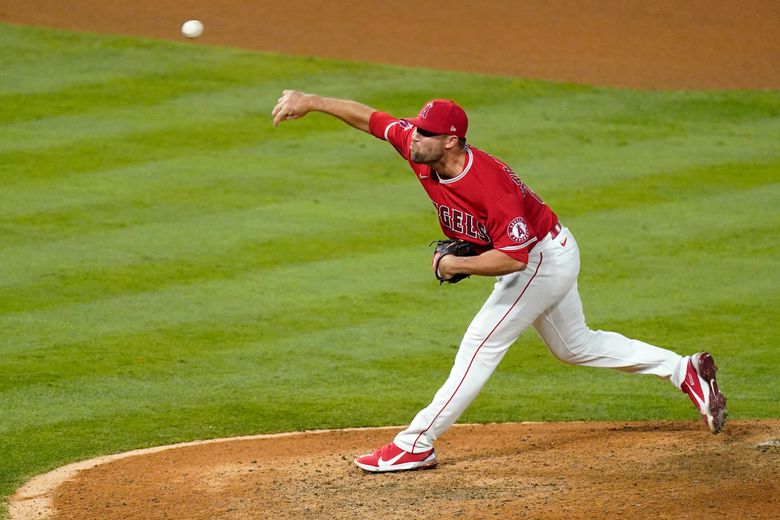
From Strickland’s perspective, the situation is equally nuanced. Accepting a minor league contract with the Angels would carry the expectation of a quick path back to the majors. For a veteran pitcher at this stage of his career, this could be a viable route to staying with a team he knows and potentially contributing meaningfully. Conversely, exploring opportunities with other teams could provide immediate major league roles, particularly since many organizations are still finalizing their bullpen structures and recognizing gaps in their late-inning pitching. Strickland’s prior performance, durability this spring, and familiarity with the league make him an attractive option for several teams, not just the Angels.
The spring training evaluations themselves highlight the difficulty in making bullpen decisions. Unlike starting pitchers, relievers typically see only a few innings during the preseason, which makes statistical analysis challenging. A pitcher may perform well in limited innings yet still struggle with consistency over a full season. Conversely, a pitcher with slightly less impressive numbers in spring could be a more reliable option once the grind of a major league season begins. Coaches must therefore rely heavily on scouting reports, observations of mechanics, and assessments of how pitchers handle various situations, from mound presence to pitch sequencing under pressure.
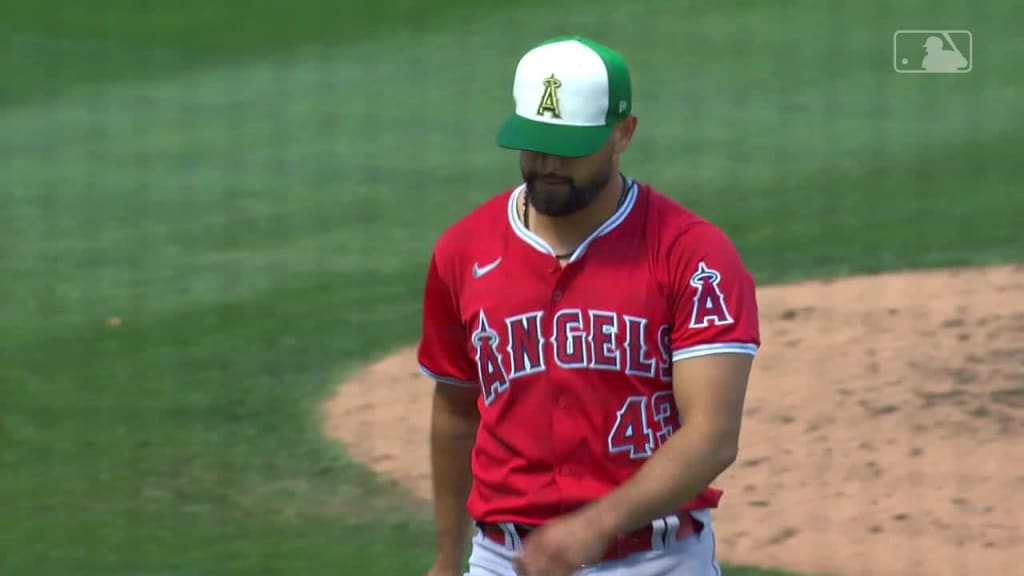
Strickland’s case illustrates the complex interplay between statistical evaluation, scouting insight, and roster management strategy. On paper, he has produced solid numbers in limited spring appearances, as well as over the past couple of seasons. Yet, considerations such as injury history, repeated stints with the team, and the need for roster flexibility all factor into the Angels’ decision-making process. Moreover, this scenario underscores the broader challenges that teams face in constructing a bullpen capable of sustaining success over the course of a season.
The Angels’ situation also reflects trends in modern baseball management, where teams frequently experiment with multiple bullpen arms and rotate players through minor league contracts to maintain strategic flexibility. The closer-by-committee approach, for instance, has become more common in recent years as teams navigate the unpredictability of late-inning performance. While this method can be effective, it requires a pool of reliable arms to rotate, making the presence of veterans like Strickland potentially valuable.
Additionally, Strickland’s release highlights the delicate balance between player performance and contractual considerations. Teams often have to make decisions that extend beyond pure on-field performance, factoring in options, opt-out clauses, and potential minor league flexibility. In Strickland’s case, the timing of his release may be less about immediate spring performance and more about positioning the team to retain him under favorable terms while keeping the roster adaptable. This approach demonstrates the strategic maneuvering that front offices often undertake to manage both player personnel and contractual obligations simultaneously.
Looking ahead, Strickland’s situation will be one to watch closely as Opening Day approaches. If he signs a minor league deal, he could quickly find himself back in the major league bullpen, especially given the ongoing uncertainty surrounding the Angels’ relief corps. Alternatively, he may pursue opportunities with other teams that offer a more immediate path to a major league role. Either way, his experience, past performance, and demonstrated health make him a pitcher of interest in a market that values seasoned relievers capable of contributing effectively under pressure.
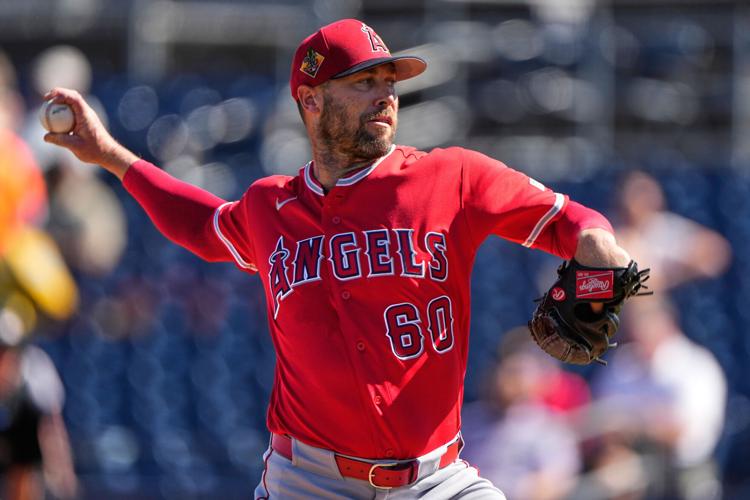
In summary, the Los Angeles Angels’ current bullpen landscape is marked by uncertainty and experimentation. Despite a strong spring showing from Hunter Strickland, the team chose to release him, a decision that may be influenced by a combination of performance evaluation, roster management strategy, and contractual considerations. Strickland’s prior experience with the team, coupled with his historical performance and demonstrated health, make him a valuable potential asset in a relief corps that lacks proven depth. The move may ultimately be strategic, allowing the Angels flexibility while retaining the option to bring him back quickly if needed. As the season approaches, Strickland’s status—and the broader composition of the Angels’ bullpen—will be key elements to monitor, with implications for both team performance and the veteran reliever’s career trajectory.
Read More