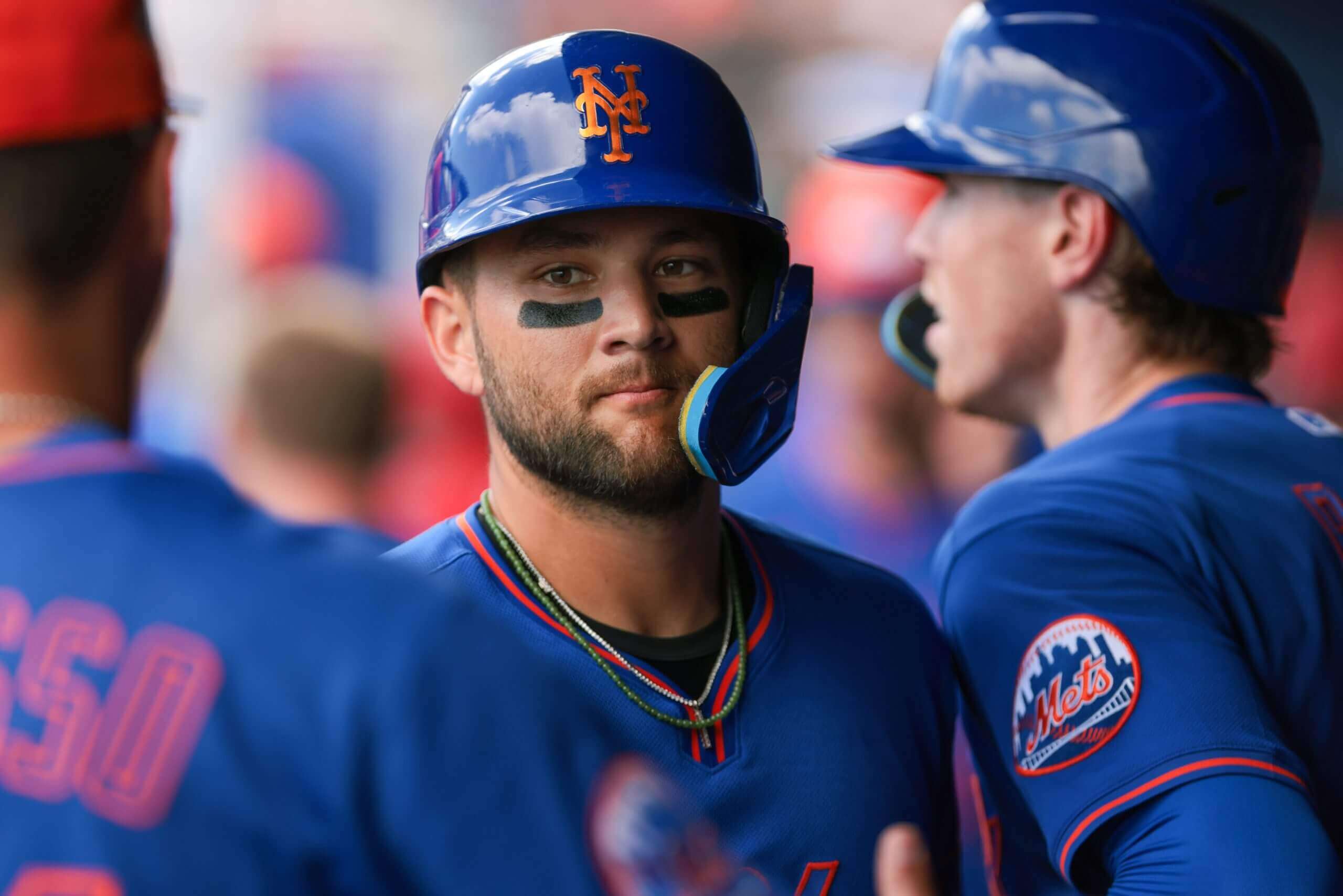
An article that originally appeared in The Sporting News has sparked conversation around one of baseball’s ongoing debates: the relationship between traditional instincts and modern analytics. At the center of the discussion is Bo Bichette, the talented shortstop now playing for the New York Mets in Major League Baseball.
Bichette has long been recognized as one of the most productive infielders in the league. While he may not consistently appear at the very top of league-wide rankings, many analysts and observers still consider him among the most reliable offensive players at his position. If a list of the league’s top players were assembled today, Bichette might land somewhere around the top 50 overall — not necessarily among the absolute elite tier but still clearly among the game’s most valuable contributors.

However, what has drawn attention recently is not just his on-field performance but his perspective on analytics. In an era when data analysis influences nearly every aspect of professional baseball — from player evaluation to contract negotiations — Bichette openly admitted that he does not focus much on advanced metrics.
For some fans and analysts who strongly believe in the importance of statistical analysis, his comments may seem surprising or even frustrating. But when examined more closely, his perspective reflects a mindset that many players across baseball still hold: trusting instincts and personal feel over spreadsheets and algorithms.
Bichette’s Approach to the Game
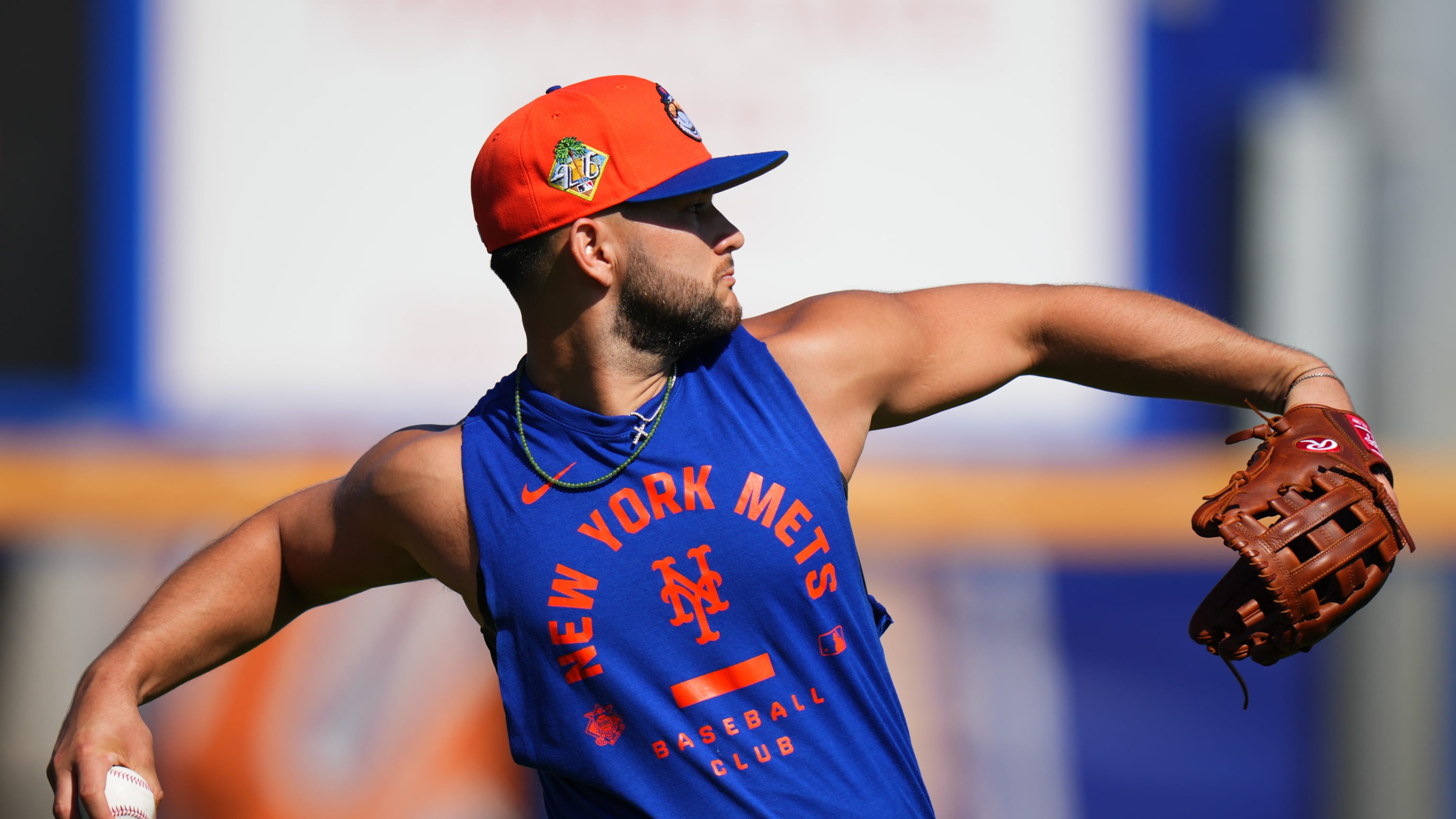
When discussing how he views himself as a player, Bichette made it clear that he identifies first and foremost as a competitor who relies on his natural baseball ability.
Rather than structuring his game around statistical indicators, he prefers to play based on instinct, preparation, and the feel he has developed over years of professional experience.
“I see myself as simply a baseball player,” Bichette explained. “I’ve never really chased analytics or tried to shape my approach around those kinds of numbers. I understand that those metrics play a big role in how players are evaluated and paid today, but my focus has always been on playing the game the way I know how.”
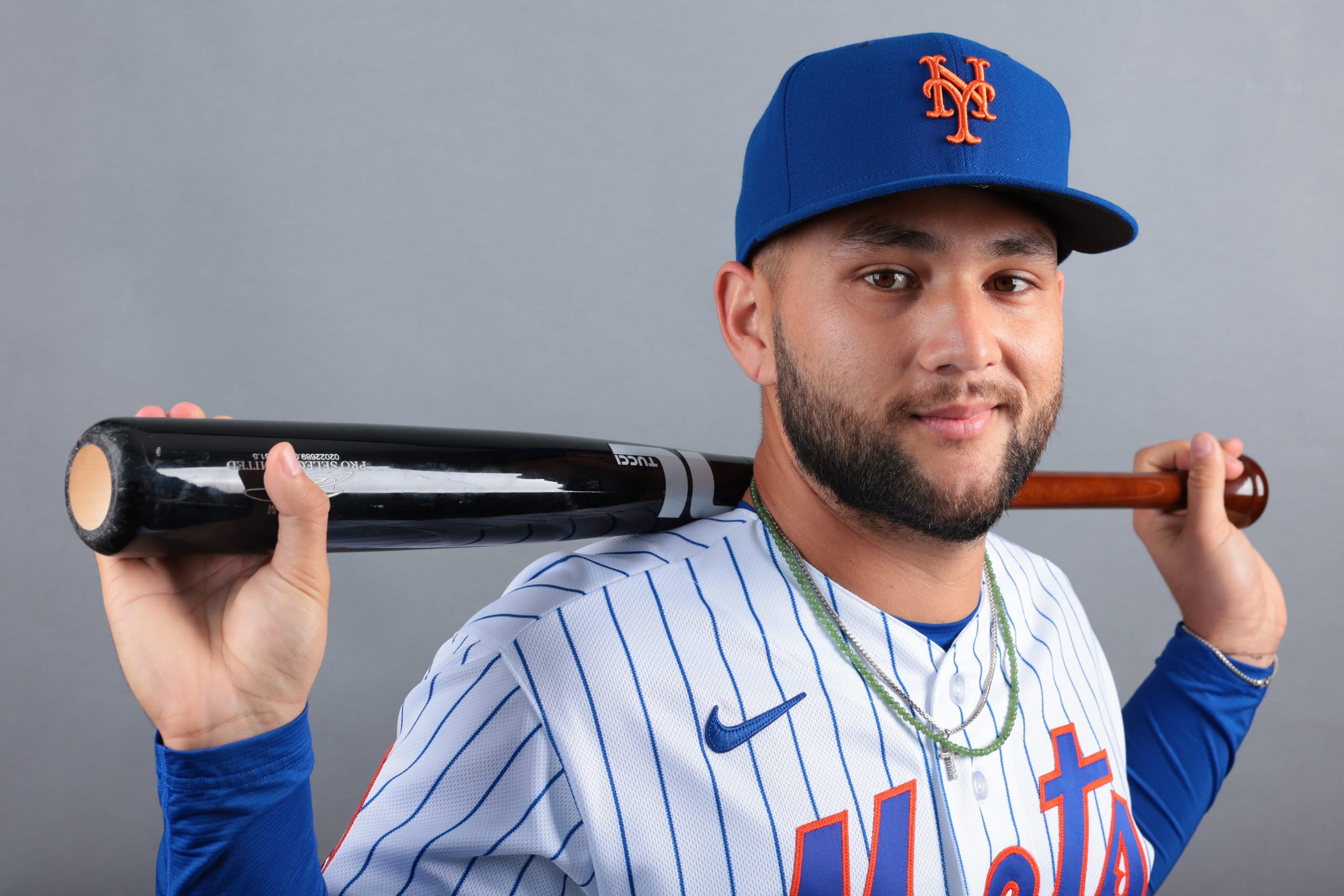
That statement alone was enough to ignite discussion across the baseball world. Over the past decade, analytics have become deeply embedded in how teams operate. Organizations now examine everything from launch angle and exit velocity to spin rate and swing decisions when evaluating players.
These metrics often influence how hitters adjust their swings, how pitchers refine their arsenals, and how teams determine the financial value of players in contract negotiations.
Because of this shift, many fans — especially those who closely follow analytics — may view Bichette’s remarks as somewhat dismissive of the modern analytical approach. But his perspective may simply reflect a philosophical difference rather than outright rejection of data.

The Modern Data-Driven Era of Baseball
Over the last 15 to 20 years, the influence of analytics in Major League Baseball has grown tremendously. Teams now employ entire departments of data analysts who examine player performance using advanced metrics that were barely known to the public two decades ago.
Statistics such as launch angle help determine how hitters optimize contact with the ball. Exit velocity measures how hard the ball leaves the bat. Advanced defensive metrics track fielding performance more precisely than traditional error counts or fielding percentages ever could.

These tools have fundamentally changed how organizations evaluate players. Front offices rely heavily on underlying data trends when projecting future performance or deciding which players deserve major financial investments.
Because of this analytical revolution, some observers found Bichette’s comments somewhat ironic.
Even if he personally chooses not to focus heavily on the numbers, the reality is that analytics likely played a role in the New York Mets decision to sign him to a significant contract. Teams rarely commit large financial resources to players without carefully studying the data behind their performance.

In other words, while Bichette may rely primarily on instinct and traditional baseball feel, the organization that employs him likely sees his value through a more data-driven lens.
Why the Mets Believe in Bichette
Despite the debate surrounding analytics, there is no question that Bichette’s offensive production remains his greatest strength.
Throughout his career, he has consistently demonstrated the ability to hit at a high level. His approach at the plate allows him to generate solid contact and produce hits in a variety of situations. That kind of reliability is highly valuable, especially for a team looking to build a strong lineup.
The New York Mets likely evaluated Bichette’s overall offensive profile when deciding to bring him aboard. Even if his approach does not revolve around optimizing specific analytical metrics, his underlying numbers still show a player capable of producing consistent offensive results.
Teams understand that not every hitter needs to fully embrace the analytics revolution in order to succeed. Some players naturally produce the kinds of numbers that analytics departments appreciate, even if the players themselves are not actively studying those statistics.
That may be exactly the case with Bichette.

Confidence in His Standing Among the Game’s Best
In addition to discussing his approach to analytics, Bichette also spoke candidly about how he views his place among baseball’s top players.
While he acknowledged that labeling someone as “the best player in the game” is ultimately subjective, he made it clear that he believes he belongs in the conversation among the league’s elite performers.
According to comments reported by Will Sammon of The Athletic, Bichette expressed confidence in his abilities.

“I think it’s difficult to say anyone is definitively the best player in the sport because that’s a matter of opinion,” Bichette said. “But I do believe I’m capable of being among the best. In fact, I think I already am one of the best players in the game. I just believe that over time more people will recognize that.”
Statements like this often draw mixed reactions from fans. Some appreciate the confidence and competitiveness that professional athletes display. Others may interpret such remarks as overly bold.
However, confidence is often essential at the highest levels of sports. Players who compete in Major League Baseball face immense pressure, and believing in one’s own abilities can be a key factor in maintaining high performance.
Evaluating Bichette’s Performance
When examining Bichette’s career statistics, it becomes clear why he views himself as a high-level player.
Offensively, he has been remarkably consistent for a shortstop. His ability to generate hits and contribute to run production places him among the more reliable offensive infielders in the league.
Shortstop is traditionally a defense-first position, but Bichette’s offensive output provides significant value to whichever team he plays for. In modern baseball, teams increasingly prioritize players who can contribute offensively while still providing acceptable defense at premium positions.
That said, one area where Bichette’s game has drawn criticism is defense.

The Defensive Question
While Bichette’s bat has earned widespread respect, his defensive performance has not always received the same level of praise.
Advanced defensive metrics and observational scouting reports have occasionally suggested that his fielding may lag behind some of the top defensive shortstops in the league. This aspect of his game has been a point of discussion among analysts and fans alike.
Bichette himself has acknowledged that defense remains an area where improvement is possible. Recognizing weaknesses is often the first step toward growth, and many players evolve defensively over the course of their careers.
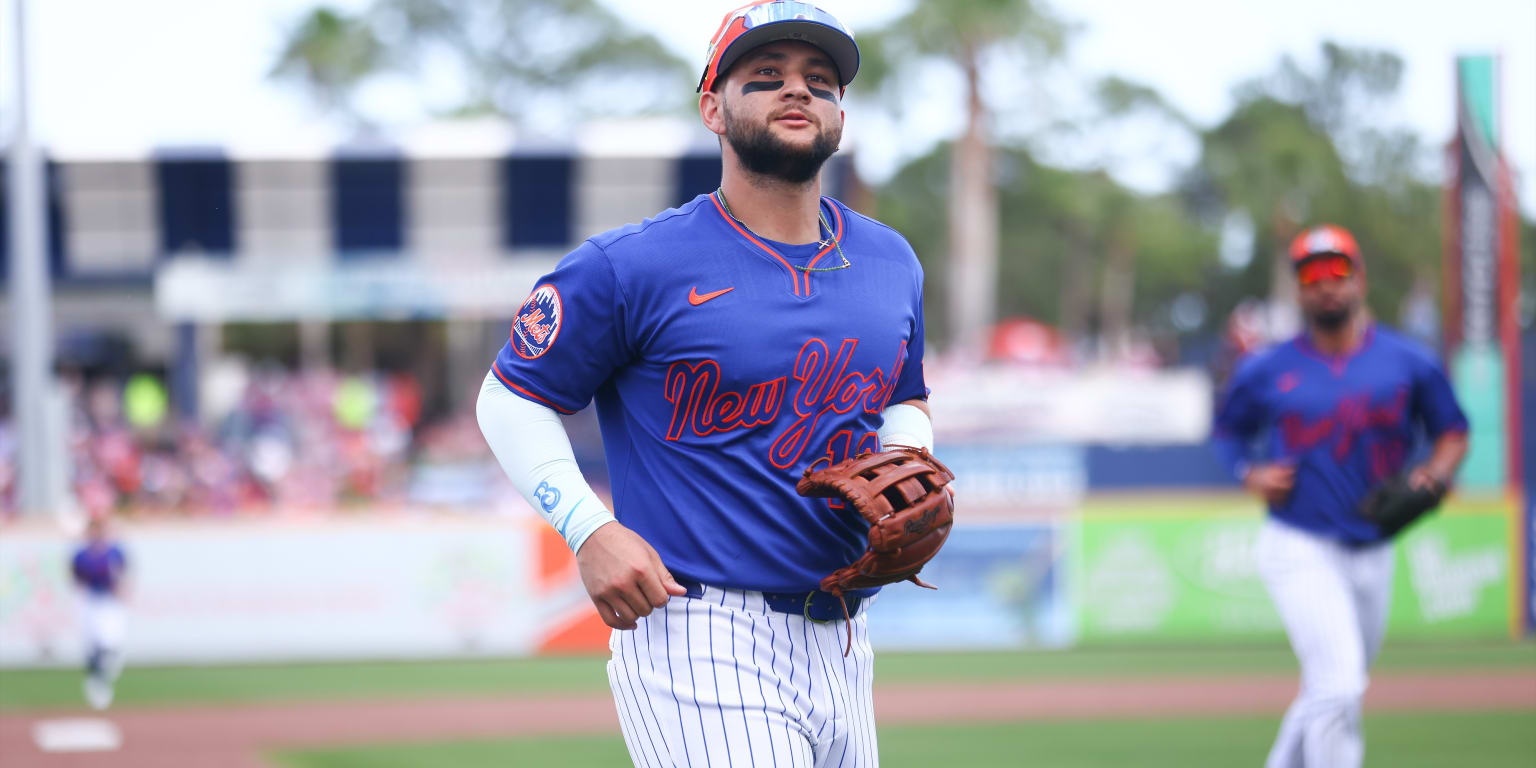
If he can make strides in this part of his game, his overall value as a player could increase significantly.
Why Offensive Production Still Matters Most
Even with defensive concerns, the New York Mets clearly believe that Bichette’s offensive contributions outweigh any potential shortcomings in the field.
Baseball teams often evaluate players by considering their total impact on winning games. A player who consistently produces runs at the plate can still be extremely valuable even if his defense is not elite.
As long as Bichette continues to perform offensively at a high level, the Mets and their fans will likely remain satisfied with what he brings to the roster.

Of course, defensive struggles could become a greater concern if they begin to overshadow his offensive production. But for now, the balance of his overall performance still leans strongly in his favor.
The Ongoing Debate: Analytics vs. Instinct
Bichette’s remarks ultimately highlight a broader philosophical debate that continues to exist within baseball.
On one side are analysts, statisticians, and front offices that rely heavily on data to shape strategies and evaluate players. On the other side are players who prioritize instinct, experience, and feel for the game.
In reality, the modern version of baseball likely requires a combination of both perspectives.
Analytics can provide valuable insights into patterns and trends that might otherwise go unnoticed. At the same time, the human element of the game — including instincts, adjustments, and competitive drive — remains impossible to quantify completely.
Players like Bichette demonstrate that success does not always require a deep personal engagement with analytics. Some athletes simply trust their preparation and natural abilities, letting their performance speak for itself.
As Bichette begins this chapter of his career with the New York Mets, expectations will naturally remain high.
Fans will watch closely to see whether he continues to produce at the plate and whether improvements in his defensive game follow. Meanwhile, his candid comments about analytics may continue to spark debate among fans who view the sport through a statistical lens.
Regardless of where one stands in the analytics conversation, there is little doubt that Bichette remains an impactful player in Major League Baseball.
If he maintains his offensive consistency and continues to refine other aspects of his game, his belief that he belongs among the league’s top players may become increasingly difficult to dispute.
For now, his remarks serve as a reminder that baseball remains a blend of old-school instincts and modern analytical thinking — a balance that continues to shape the sport’s evolution.
READ MORE