In baseball, depth is more than just a buzzword—it’s an essential component of a successful organization. Teams at the Major League level often appear glamorous, with star players in the spotlight, highlight-reel plays, and winning streaks dominating headlines. However, much of a team’s sustained success hinges on the less-visible layers beneath the surface: the depth of the roster. Depth matters particularly in the minor leagues, which act as the foundation for any Major League club. In the minors, teams cultivate talent, nurture prospects, and maintain a pool of players ready to step in when injuries strike or performance declines at the Major League level. Essentially, depth ensures that a team never has to compromise its competitiveness, even when unforeseen circumstances arise.
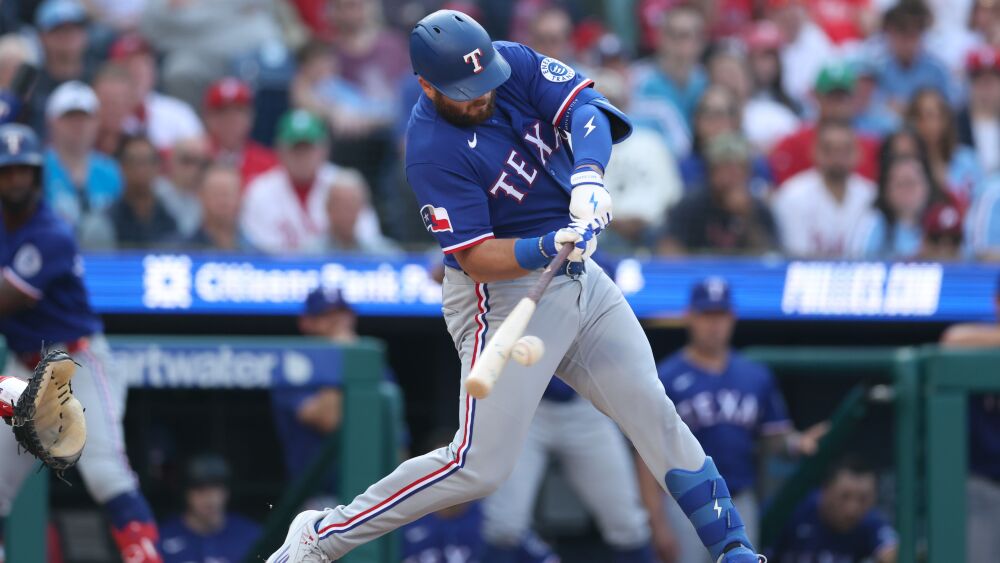
For organizations like the Texas Rangers, the importance of depth cannot be overstated. Spring training, often perceived by casual fans as a warm-up period filled with exhibition games, actually serves a much deeper strategic purpose. While managers and coaches are certainly looking at individual performances, spring training is also a critical evaluation period to determine the overall organizational depth. The Rangers, in particular, focused heavily on building this depth during their most recent spring training sessions, with a special emphasis on strengthening their Triple-A affiliate in Round Rock. Triple-A teams play a unique role: they are essentially the first line of reinforcement for the Major League roster. When the Rangers find themselves in need of a reliever or a utility player due to injury, fatigue, or a slump, they are likely to look first to the Round Rock roster for immediate solutions.

This approach highlights why decisions surrounding player acquisitions and roster moves, even minor ones, carry significant weight. A seemingly small signing or return of a veteran player can have long-term implications for the organization’s flexibility and readiness. Such is the case with the Texas Rangers’ recent move to bring back veteran reliever Ryan Brasier. While Brasier did not have an impressive spring training performance, the decision to re-sign him to a minor league deal demonstrates the team’s focus on depth and experience. According to his profile on MLB.com, Brasier was signed by the Rangers on a minor league contract after being released earlier in the week—a move that may seem puzzling to those who only focus on spring training statistics, but becomes clearer when viewed through the lens of organizational depth and strategic planning.
Brasier’s potential role with the Rangers illustrates why teams value veteran presence, even at the minor league level. Relief pitchers, in particular, are a commodity that tends to rotate frequently throughout the season. Injuries, dips in performance, and the constant demand for fresh arms often result in frequent promotions and demotions for relievers. When a team has access to a seasoned reliever with extensive Major League experience, it creates a valuable safety net. Brasier, who boasts 325 career Major League appearances, 67 holds, and 10 saves, represents a wealth of experience that the Rangers can deploy strategically. In a system where relievers are often shuffled in and out of the roster, having a player who has proven himself as a reliable set-up man provides stability. Beyond statistics, Brasier’s experience includes winning two World Series rings, first with the Boston Red Sox in 2018 and more recently with the Los Angeles Dodgers in 2024. That championship experience is invaluable, particularly when considering the unpredictable nature of playoff baseball or high-pressure situations during the regular season.
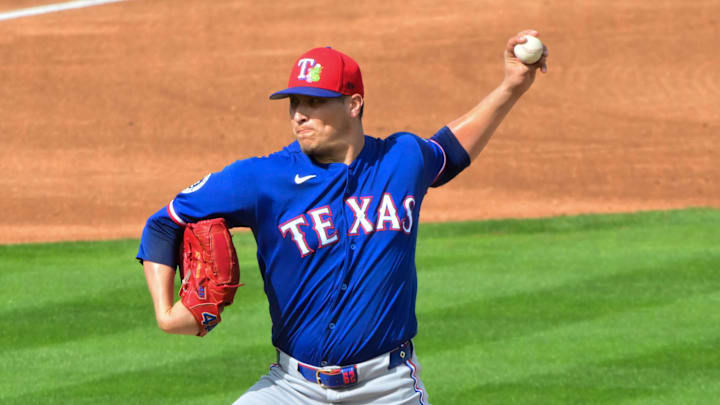
Yet, there is also a reason the Rangers released Brasier initially. His spring training performance left much to be desired. The 38-year-old right-hander, who hails from Wichita Falls, Texas, and played college baseball at Weatherford College, struggled in eight appearances, posting a 7.36 ERA. He struck out only two batters over 7.1 innings while allowing 12 hits and seven runs, six of which were earned. Although he did not walk a batter, his inability to limit hits and runs highlighted that he was not yet ready to contribute at the Major League level. In short, he was far from being an option for opening day, and his release made sense from a performance standpoint.
However, the Rangers’ decision to bring Brasier back suggests that the organization sees potential beyond immediate results. The team is likely betting on the idea that additional work in the minors will allow him to regain the form he displayed during his successful 2024 season with the Dodgers. That year, Brasier recorded a 1-0 record with a 3.54 ERA over 28 innings, striking out 25 batters and walking only five while earning six holds. His postseason performance further reinforced his value as a reliable and effective reliever. The Rangers appear to be taking a long-term view, anticipating that with a month or two of seasoning in Round Rock, Brasier can return to a level where he is a meaningful contributor, either on the Major League roster or as a tradable asset.

The strategic reasoning behind this move is twofold. First, if Brasier rediscovers his form, he provides immediate depth for the Rangers’ bullpen. Injuries and slumps are inevitable over a long season, and having a veteran reliever ready to step in at a moment’s notice is a tangible advantage. Second, if Brasier performs well in the minors but the Major League roster remains stable, he becomes an asset that could be traded to another team in need of a proven reliever. This dual potential—both as a plug-in solution and as a tradable commodity—underscores why organizations are willing to take calculated risks on players with high upside and valuable experience, even after a disappointing spring.
Brasier’s career, however, has not been without its ups and downs. While his 2024 season with the Dodgers was impressive, his 2025 campaign with the Chicago Cubs was less so. That year, he recorded an 0-1 record with a 4.50 ERA over 28 games, striking out 20 batters and walking five in 26 innings. These mixed results highlight the inherent risk in investing in a veteran player whose recent performances have been inconsistent. Nevertheless, the Rangers’ decision to bring him back is a reflection of a broader philosophy in baseball: depth and experience often outweigh short-term statistics, especially when those statistics come from small sample sizes like spring training games.
In many ways, Brasier’s situation exemplifies the delicate balance that organizations must maintain between performance and potential. Baseball is a sport defined by its long season, the unpredictability of injuries, and the variance in player performance. Teams that succeed consistently are those that prepare not just for immediate challenges but also for the long-term demands of the season. Depth, therefore, is not merely about filling bench spots or having extra players on the roster; it’s about creating a system that allows the organization to remain competitive regardless of circumstances. Veterans like Brasier are valuable precisely because they provide reliability, mentorship for younger players, and the flexibility to adjust to changing conditions.

Furthermore, the decision to utilize Round Rock as the site for Brasier’s development highlights another important aspect of depth management: timing. While Brasier may not have been ready for opening day, the Rangers are banking on the possibility that consistent innings at Triple-A will allow him to regain his effectiveness. This approach underscores the broader strategy of using the minor leagues as a buffer and a developmental tool. Teams can afford to take calculated risks with veteran players at this level, providing them with an opportunity to refine mechanics, rebuild confidence, and demonstrate their readiness for the next challenge. In turn, this strengthens the overall organizational depth, ensuring that the Major League team has a pool of players who are capable of contributing when called upon.
It’s also worth noting that depth has implications beyond the immediate roster. The presence of experienced players like Brasier in the minors can have a mentoring effect on younger pitchers. Minor league teams are often filled with talented prospects, many of whom are still learning the nuances of pitching at a professional level. A veteran reliever can offer guidance on approach, strategy, and mental preparation, providing intangible benefits that go beyond on-field performance. In this sense, Brasier’s return to the Rangers organization serves multiple purposes: it addresses immediate strategic needs, preserves future trade options, and enhances the developmental environment for younger players.
Ultimately, the move to re-sign Brasier represents a low-risk, high-reward scenario for the Rangers. If he performs well, the team gains a versatile and experienced reliever who can be deployed in multiple situations. If he does not perform, the organization loses very little, having invested primarily in opportunity rather than guaranteed performance. This kind of strategic thinking is emblematic of how successful organizations manage their resources, balancing the desire for immediate success with the need for sustainable depth and flexibility.
In summary, depth in baseball is not simply a luxury—it is a critical component of long-term success. For the Texas Rangers, building depth during spring training, particularly at their Triple-A affiliate in Round Rock, is a deliberate and strategic approach designed to ensure organizational resilience. The decision to bring back Ryan Brasier, despite his underwhelming spring performance, reflects this philosophy. Brasier offers experience, championship pedigree, and the potential to contribute both on the mound and as a mentor to younger players. By providing him with an opportunity to regain form in the minors, the Rangers maintain a versatile option for their bullpen, preserve trade potential, and reinforce the overall strength of their organization. In a sport where injuries, slumps, and unexpected challenges are constants, depth is more than just numbers—it is the invisible backbone of a team’s ability to compete, adapt, and succeed over the course of a long and demanding season.
READ MORE