Even though the official opening of the college basketball transfer portal is still about a week away, the movement behind the scenes has already begun. Players across the country are getting ahead of the curve by publicly declaring their intentions to enter the portal, setting off early speculation about where they might land next. Programs, especially high-profile ones, are not sitting idle either. Coaching staffs are actively evaluating potential additions, identifying needs, and quietly preparing their recruitment strategies before the portal formally opens.
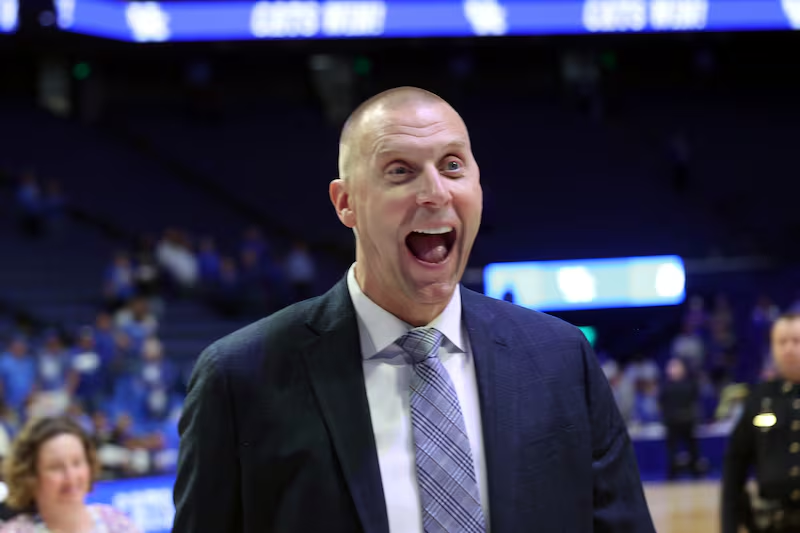
One of the teams already doing its homework is Kentucky, led by head coach Mark Pope. The Wildcats are expected to be aggressive in the transfer market this offseason, and it’s clear they are already tracking multiple players who could help reshape their roster. Among the names that have surfaced recently is Butler guard Finley Bizjack, who reportedly caught Kentucky’s attention. However, he may not be the only guard on their radar. Another intriguing prospect who could soon emerge as a target is Central Arkansas standout Camren Hunter.

Hunter’s journey through college basketball has been anything but straightforward, yet it’s precisely that experience that makes him such an interesting option. Standing at 6-foot-3, he began his collegiate career at Central Arkansas, where he made an immediate impact. As a freshman, Hunter showed flashes of offensive potential, averaging 14 points per game and establishing himself as a promising young guard. His ability to score early in his career hinted at a player with significant upside.
Unfortunately, his progression hit a setback when he missed an entire season due to injury. That kind of interruption can derail many players, both physically and mentally, but Hunter remained determined to continue developing his game. After recovering, he made the decision to transfer to Wisconsin, likely seeking a higher level of competition and greater exposure in a major conference.
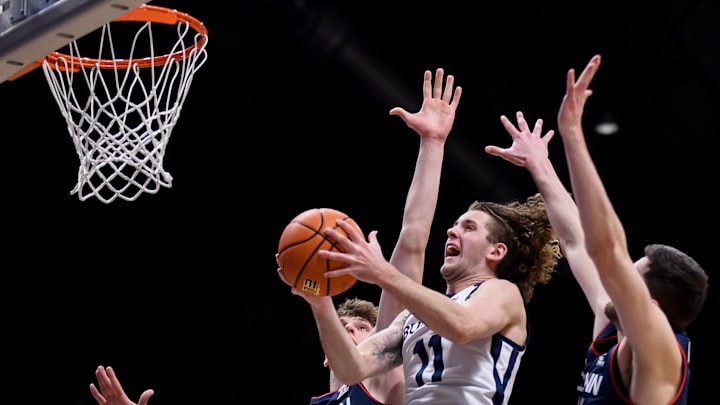
However, his stint at Wisconsin did not unfold as planned. Hunter struggled to find consistent playing time, which limited his ability to showcase his skills and build momentum. For many players, such a situation can be frustrating, as limited minutes make it difficult to get into rhythm or demonstrate full potential. Recognizing the need for a better fit, Hunter ultimately chose to return to Central Arkansas, a move that would prove beneficial for his career.
Back at Central Arkansas, Hunter rediscovered his form and confidence. In his most recent season, he delivered an impressive performance, averaging 21 points and 4 rebounds per game. Those numbers reflect not just volume scoring, but also consistency and a central role within his team’s offense. He became a go-to option, someone capable of creating his own shot and carrying a significant scoring load.
In addition to his scoring ability, Hunter also showed efficiency from beyond the arc. He converted 37% of his three-point attempts, a solid percentage that suggests he can be a reliable perimeter threat. In today’s game, where spacing and outside shooting are critical, that skill set makes him particularly valuable. A guard who can both score in volume and stretch the floor tends to attract attention from top programs looking to bolster their offensive versatility.
According to a report from Jacob Polacheck of Kentucky Sports Radio, Kentucky is expected to pursue Hunter once the transfer portal officially opens on April 7. This indicates that the Wildcats are not just casually monitoring him, but may have genuine interest in bringing him into their system. Of course, there is a key factor that could influence whether this move is even possible: Hunter’s eligibility status.
Having already completed four years of college basketball, Hunter would need to be granted an additional year of eligibility in order to transfer and play immediately. Such waivers are not uncommon, especially in cases involving injuries or unique circumstances, but they are not guaranteed either. Kentucky’s potential pursuit of Hunter may hinge on whether he is able to secure that extra year.
Meanwhile, Kentucky itself is preparing for what could be a significant period of change. The Wildcats are coming off a season that did not meet expectations, and that disappointment often leads to adjustments in roster construction and overall team strategy. Compounding that is the evolving landscape of college athletics, particularly with financial considerations and name, image, and likeness (NIL) opportunities playing a larger role than ever before.
All of these factors suggest that Kentucky could experience substantial roster turnover in the coming months. Players may depart for various reasons—graduation, transfers, or professional aspirations—while the coaching staff looks to bring in new talent to fill the gaps. In this environment, the transfer portal becomes an essential tool for quickly reshaping a team and addressing immediate needs.
For Kentucky, adding experienced players like Hunter could be especially appealing. Unlike incoming freshmen, transfer players often bring a level of maturity and game experience that can translate more quickly to on-court success. Hunter’s background, which includes overcoming adversity, adapting to different programs, and ultimately thriving in a leading role, could make him a valuable addition to a team looking for stability and production.

It’s also worth noting that Kentucky’s interest in guards like Hunter and Bizjack may reflect a broader strategy. In modern college basketball, guard play is often the foundation of successful teams. Skilled guards who can handle the ball, create scoring opportunities, and shoot from distance are essential in both half-court and transition offense. By targeting multiple backcourt players, Kentucky may be aiming to strengthen this critical area.
At the same time, Hunter’s profile aligns with what many programs seek in a transfer: proven scoring ability, shooting efficiency, and the capacity to step into a significant role. His 21-point average is not just a statistic—it represents a player who has carried offensive responsibility and delivered consistently. For a team like Kentucky, which may be looking to replace departing scorers, that kind of production is highly attractive.
As the transfer portal opening approaches, the situation remains fluid. Players will officially enter their names, programs will make contact, and recruitment battles will begin in earnest. For now, much of the activity remains speculative, based on reports and early indications of interest. However, those early signals often provide valuable insight into how teams are planning for the future.
Kentucky’s apparent interest in Hunter is one such signal. It suggests that the Wildcats are actively identifying players who can contribute immediately and help elevate the team’s performance next season. Whether or not Hunter ultimately ends up in Lexington will depend on several factors, including his eligibility status, other offers he may receive, and how he fits into Kentucky’s overall plans.

In the broader context, this situation highlights the ever-changing nature of college basketball. The transfer portal has transformed roster building, allowing players greater mobility and giving programs new ways to adapt quickly. For players like Hunter, it presents an opportunity to find the right environment to maximize their talents. For teams like Kentucky, it offers a pathway to retool and remain competitive at a high level.

As more details emerge in the coming days and weeks, the picture will become clearer. Additional players will enter the portal, new targets will surface, and decisions will start to take shape. For now, though, Camren Hunter stands out as a name to watch—a talented guard with a compelling story and the potential to make an impact wherever he lands.
Kentucky fans, and college basketball observers in general, will be keeping a close eye on how this unfolds. The combination of roster changes, transfer portal activity, and strategic recruiting will ultimately determine how the Wildcats position themselves for the next season. And if Hunter does become part of that equation, he could play a key role in shaping the team’s future.
For the moment, all eyes are on April 7, when the portal officially opens and the next phase of college basketball’s offseason begins. Until then, speculation will continue, and programs like Kentucky will keep preparing behind the scenes, ready to make their moves when the time comes.
READ MORE