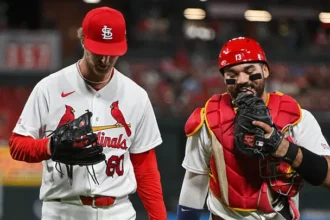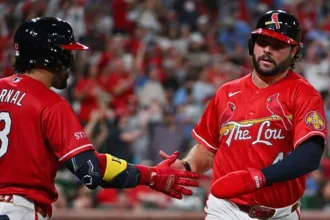
The Seattle Mariners have officially added depth to their catching corps by signing veteran catcher to a one-year contract, a move announced on Tuesday. According to MLB.com’s Daniel Kramer, the deal carries a value of approximately $1 million, a modest investment for a player who brings both experience and defensive versatility behind the plate. Knizner, 30, enters his eighth professional season having spent the previous year with the San Francisco Giants, where he primarily served as a backup to the defensively adept Patrick Bailey.
Knizner’s 2025 campaign with the Giants was a mix of minor league seasoning and limited exposure at the major league level. After being promoted from Triple-A in June, he appeared in 33 games and recorded a batting average of .221. His on-base percentage was .299, while his slugging percentage mirrored his OBP at .299, reflecting a modest offensive contribution. Over 88 plate appearances, he tallied one home run, five RBIs, seven walks, and 10 strikeouts. Despite showing flashes of competency both at the plate and behind it, the Giants chose not to tender him a contract following the season, making him a free agent and paving the way for Seattle’s acquisition.

Over the course of his MLB career, Knizner has accumulated 323 games across stints with the Giants, St. Louis Cardinals, and Texas Rangers. His cumulative statistics include a .211 batting average, a .281 on-base percentage, a .316 slugging percentage, and a .596 OPS. He has also contributed 19 home runs and 90 RBIs throughout his career. While these numbers may not immediately leap off the page, they reflect a player who has consistently been capable of stepping into backup roles and providing reliable defensive work behind the plate. Knizner has also spent time in the organizations of the Washington Nationals and Arizona Diamondbacks, giving him a well-rounded perspective on different pitching staffs and clubhouse dynamics.
Hailing from Glen Allen, Virginia, Knizner has demonstrated particular skill in pitch framing, a crucial attribute for a catcher tasked with managing pitching staffs and guiding games from behind the plate. Over the last two MLB seasons, he has graded slightly above average in this aspect, recording a combined +3 catcher framing runs over 68 games. This metric indicates his ability to subtly influence the strike zone and improve pitchers’ outcomes, a talent that is often undervalued but essential in high-leverage situations.
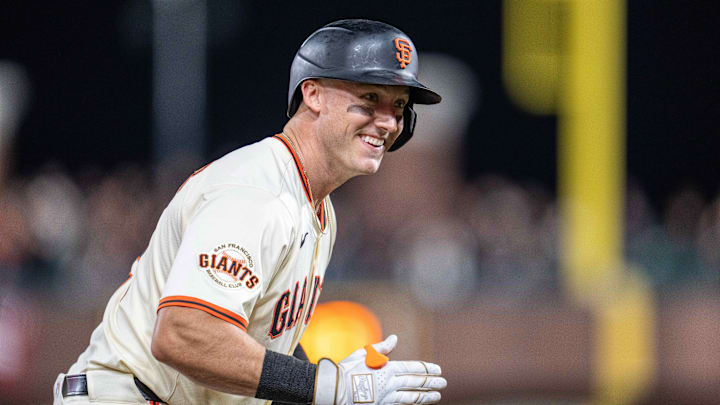
Offensively, Knizner’s most productive season came with the St. Louis Cardinals in 2023. In 70 games, he posted a .241 batting average with a .712 OPS, contributing 10 home runs and 31 RBIs. While his offensive profile has been generally modest, this season demonstrated that he possesses occasional pop and the ability to drive in runs when given consistent playing time. The combination of defensive acumen, experience, and sporadic offensive contribution makes him a valuable depth piece for a Mariners team that recently parted ways with their presumed backup catcher.
Earlier this month, Seattle traded Harry Ford, a young catcher who was expected to serve as Cal Raleigh’s backup, to the Washington Nationals. This move left a gap behind Raleigh, and Knizner’s signing addresses that immediate need. While Knizner is unlikely to supplant Raleigh, he provides a reliable veteran presence behind the plate and offers Seattle’s pitching staff a competent and experienced option to manage games. Cal Raleigh, who finished as the American League MVP runner-up in 2025, hit an unprecedented 60 home runs last season, setting an MLB record for catchers and switch-hitters. The significance of having a seasoned backup to support a record-setting starter cannot be overstated, as it ensures the Mariners can manage workload, prevent injury, and maintain offensive production behind the plate.

Knizner’s versatility and experience across multiple MLB organizations will also allow him to serve as a mentor to younger pitchers and catchers in the Mariners’ system. Having spent time in both large-market and small-market organizations, he has seen a variety of pitching philosophies, coaching approaches, and clubhouse cultures. This breadth of experience is likely to translate into a steady presence in the Mariners’ clubhouse, particularly during high-pressure situations in the long grind of a 162-game season.
The move is part of a broader strategy for the Mariners this offseason to shore up depth across key positions while maintaining payroll flexibility. By signing a veteran backup like Knizner to a one-year, $1 million contract, Seattle ensures it has insurance behind Raleigh without committing significant long-term financial resources. This approach aligns with the team’s broader roster-building philosophy, which emphasizes balancing high-end talent with competent, low-cost depth options.
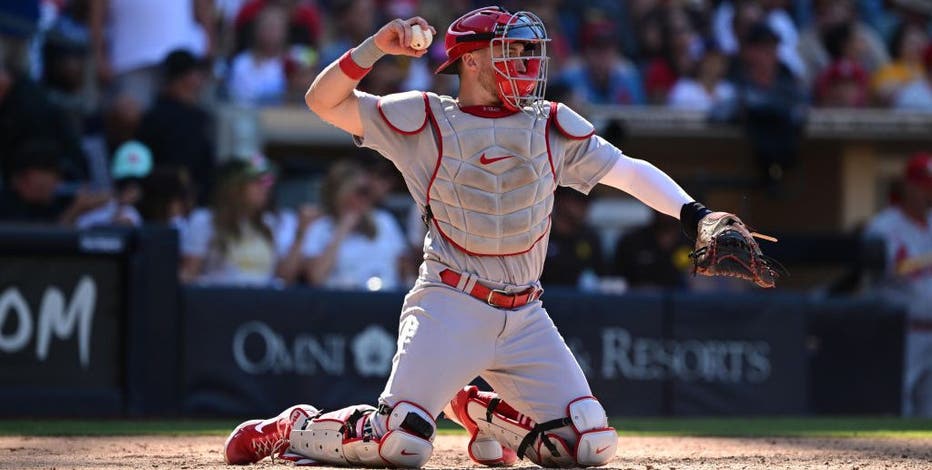
Seattle’s roster construction at catcher has drawn attention because of Raleigh’s historic 2025 campaign. With 60 home runs in a single season, Raleigh is not only the team’s offensive centerpiece but also a critical factor in the Mariners’ success. However, catchers endure one of the most physically demanding positions in baseball, making depth behind Raleigh a necessity rather than a luxury. The addition of Knizner means that the Mariners now have an experienced player capable of handling the rigors of catching duties should Raleigh need rest, get injured, or be strategically rotated for matchups.
Knizner’s presence may also indirectly benefit the Mariners’ pitching staff. Veteran catchers often help guide pitchers through challenging outings, offering insights on pitch selection, sequencing, and opponent tendencies. Knizner’s seven seasons in the majors, combined with his years in high-level minor leagues, have likely afforded him a wealth of knowledge that could prove invaluable to Seattle’s pitchers, particularly in high-leverage scenarios and late-game situations. In an era where pitching performance can make or break a season, having a reliable and knowledgeable catcher in the backup role is a critical piece of team infrastructure.
Additionally, Knizner’s experience in multiple organizations could bring a subtle competitive edge. Having played for franchises with differing offensive and defensive philosophies, he likely understands a range of strategic approaches, from situational hitting to defensive alignments. This knowledge can help the Mariners adapt to varying opponents and game contexts throughout the season. Moreover, his time with both contending and rebuilding teams may allow him to act as a stabilizing force in the clubhouse, providing mentorship and perspective to younger players navigating the pressures of a major league season.
From a developmental standpoint, Knizner could also serve as a bridge for younger Mariners’ prospects, particularly those in Triple-A Tacoma who may be on the cusp of the majors. His ability to mentor, share experience, and provide guidance during at-bats, bullpen sessions, and defensive drills could accelerate the growth of these prospects, ensuring the Mariners maintain a strong pipeline of talent behind the plate.
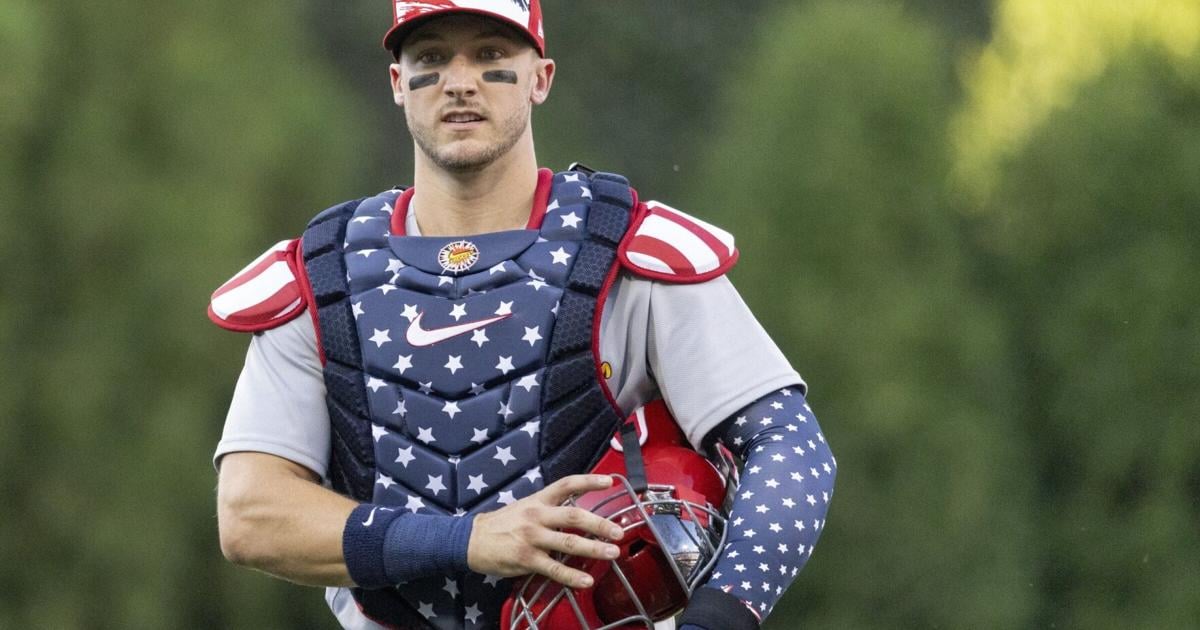
Seattle’s offseason strategy at catcher reflects an understanding of both immediate and long-term needs. While the team has arguably one of the most potent offensive catchers in the league in Raleigh, relying solely on a single player is risky. Injuries, fatigue, or slumps are inevitable over a 162-game season. By signing a proven veteran like Knizner, the Mariners are mitigating this risk, ensuring they have a capable hand ready to step in when needed, without jeopardizing overall team performance.
Knizner’s track record indicates that while he may not be a primary offensive contributor, he offers stability, defensive reliability, and knowledge-based contributions that are often underappreciated. His skill as a pitch framer, in particular, can subtly enhance the performance of Seattle’s pitching staff, potentially turning close calls into outs and improving overall pitcher confidence. In a league where runs are hard to come by and every advantage counts, these small but meaningful contributions can influence the outcome of games and, ultimately, the season.
Looking ahead, Knizner is expected to be the Mariners’ primary backup for Raleigh in 2026, likely seeing action in spot starts, doubleheaders, or strategic pinch-hitting situations. His ability to adapt, combined with his prior experience in various MLB systems, makes him well-suited for the role. While his offensive ceiling may be modest, the combination of defensive acumen, pitch-framing skill, and clubhouse presence provides the Mariners with a well-rounded, reliable option to support their record-setting catcher.
In conclusion, Andrew Knizner’s signing by the Seattle Mariners represents a strategic move to strengthen the team’s depth behind the plate while maintaining financial prudence. His prior experience with multiple MLB organizations, defensive skill set, and proven ability to mentor younger players make him a valuable addition to the roster. As the Mariners prepare for the 2026 season, Knizner’s role as Cal Raleigh’s backup ensures that Seattle has both insurance against fatigue or injury and a steadying presence to support the team’s pitching staff and clubhouse culture. With a one-year, $1 million contract, the Mariners have secured a player who may not be a headline-grabbing star but who could quietly provide crucial contributions over the course of a long season, helping to maintain balance and consistency behind one of the league’s most historically productive catchers.