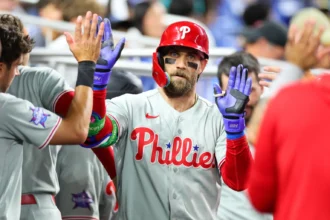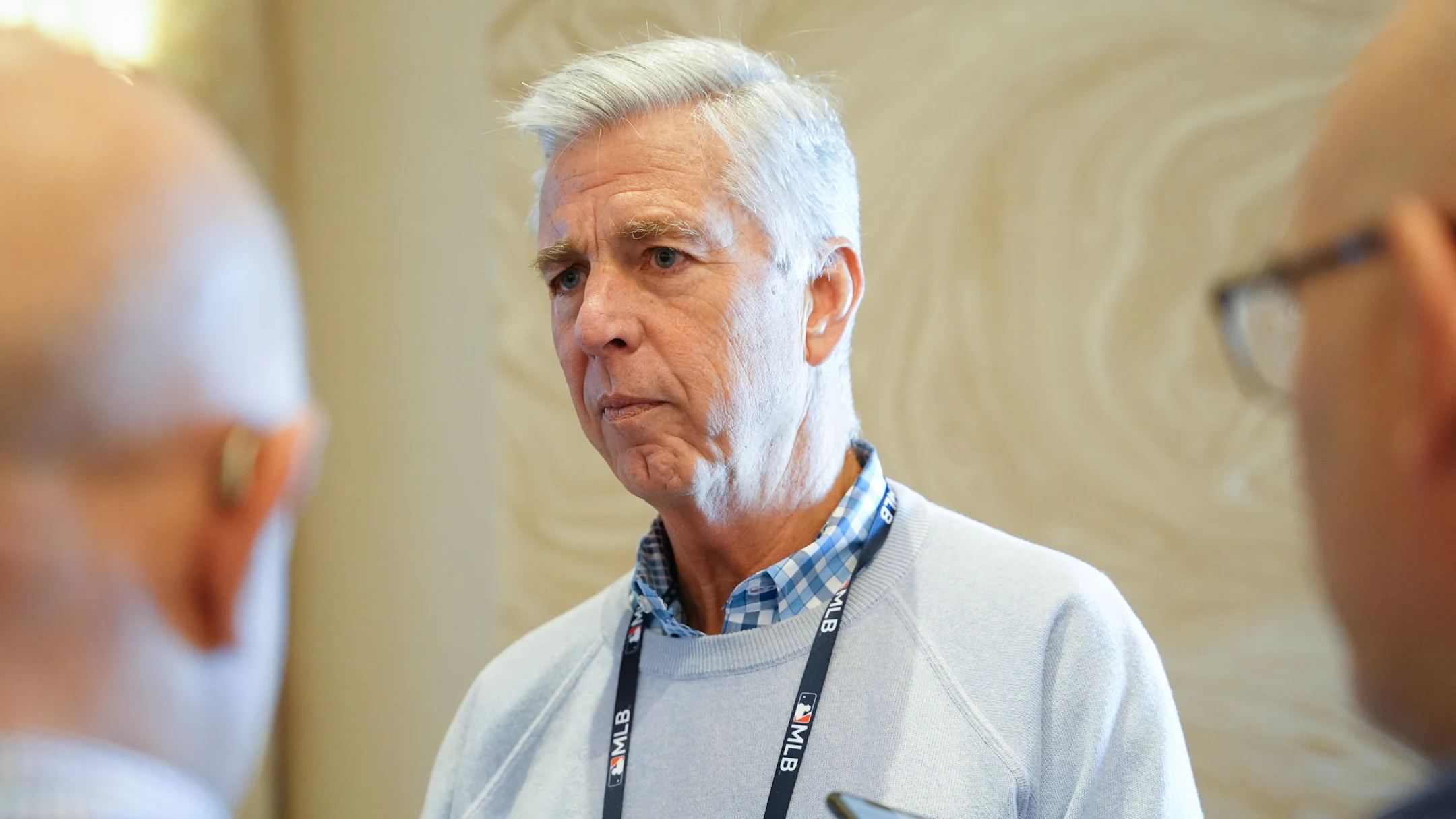
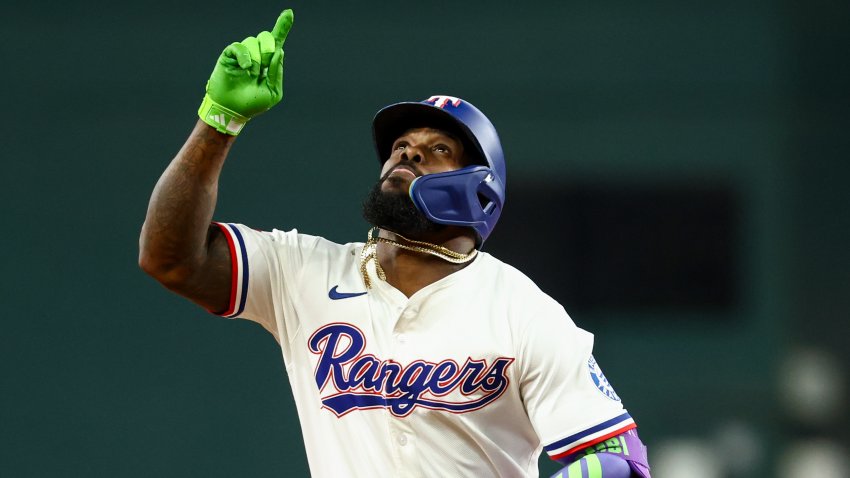
The Philadelphia Phillies entered the offseason with a clear mission: upgrade their outfield to push deeper into the postseason. After a strong regular season, the team identified weaknesses in their defensive alignment, particularly in the corners and center. Turning to the free agent market, they struck a deal on December 15 for outfielder Adolis García, agreeing to a one-year contract worth $10 million. At 32 years old, the former Texas Rangers standout steps in as the presumptive starting right fielder for 2026, bringing power-hitting prowess and playoff experience to Citizens Bank Park.
García’s acquisition addresses a glaring need. Last season, the Phillies’ right field production lagged behind expectations, with injuries and inconsistencies plaguing the position. García, a 2023 All-Star and World Series hero, offers immediate impact. His career slash line hovers around .240/.292/.488, fueled by elite exit velocities and a knack for clutch home runs—evident in his 39-homer, 107-RBI explosion during Texas’s championship run. This short-term pact minimizes long-term risk while maximizing upside, aligning with Phillies president of baseball operations Dave Dombrowski’s pragmatic approach to roster building.
Pursuit of Center Field Help Falls Short
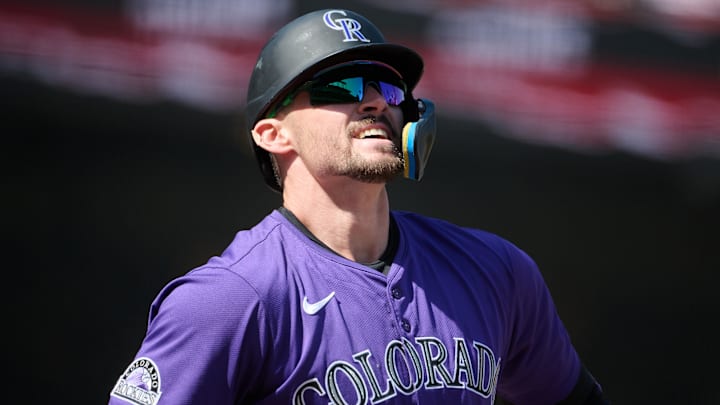
Before locking in García, Dombrowski aggressively explored trades for a center fielder to solidify the lineup’s core. League sources indicated Philadelphia engaged in discussions for several intriguing outfielders: Colorado Rockies’ gold glove wizard Brenton Doyle, Chicago White Sox’s injury-plagued speedster Luis Robert Jr., and Houston Astros’ steady defender Jake Meyers. Each player represented a different flavor of upside—Doyle’s elite defense (he led MLB in defensive runs saved in 2024), Robert’s five-tool potential when healthy, and Meyers’ reliable glove work in a hitter-friendly park.
These talks fizzled not due to mismatched valuations or salary concerns, but a fundamental gap in Philadelphia’s asset portfolio. The Phillies’ farm system, once a strength under previous regimes, has been systematically depleted through years of contention-window moves. High draft picks and international signings have been flipped for major-league talent, leaving the minors light on trade chips that other teams crave.
Pitching Prospects: The Missing Piece in Negotiations
At the heart of the failed deals was Philadelphia’s scarcity of quality, trade-ready pitching prospects. As detailed by The Athletic’s Matt Gelb, the Phillies “poked around on potential trades for center fielders, including Brenton Doyle, Jake Meyers, and Luis Robert Jr.,” but lacked the young arms to sweeten offers. “The Phillies do not have young pitching to trade,” Gelb noted. “That diminished their hand. After years of depleting the farm system, they preferred to deal from their big-league roster. That has complicated some trade talks.”
This isn’t hyperbole. MLB Pipeline ranks the Phillies’ system 22nd overall entering the offseason, down from top-10 status a few years ago. The organization’s win-now mentality—bolstered by stars like Bryce Harper, Zack Wheeler, and Ranger Suárez—has prioritized immediate contention over future stock. Trading established veterans like Alec Bohm or Nick Castellanos might net outfield help, but Dombrowski rightly hesitates to undermine the core that reached the NLDS.

The crown jewel, of course, is right-hander Andrew Painter, Philadelphia’s No. 1 prospect and a top-20 talent league-wide. Painter, still just 22, boasts a mid-90s fastball, wipeout slider, and plus command, projecting as a No. 2 starter. Dombrowski has repeatedly declared Painter untouchable, a stance rooted in the pitcher’s Tommy John recovery timeline—he could debut in 2026 as a rotation cornerstone. No selling team would accept lesser pieces without Painter in the mix.
Deadline Deals Exacerbate the Depth Issue
Philadelphia’s pitching pipeline took another hit at the 2025 trade deadline. To fortify their bullpen for a deep playoff run, they sent right-hander Mick Abel and catcher prospect Eduardo Tait to the Minnesota Twins for flamethrowing closer Jhoan Durán. Abel, 24, ranked as the Phillies’ No. 4 overall prospect and earned International League Pitcher of the Year honors in 2025. His Triple-A dominance—sub-3.00 ERA, high strikeouts—highlighted mid-rotation potential, despite walk and homer tendencies.
In hindsight, retaining Abel might have opened doors this winter. Could he have headlined a package for Doyle or Meyers? Quite possibly. Abel’s polish and proximity to the majors made him a coveted asset; teams like Colorado (rebuilding with Brenton) or Houston (needing arms post-Verlander era) would salivate. The Phillies might not have needed Durán’s services had they re-signed free agents Carlos Estévez or Jeff Hoffman last winter, or if Jordan Romano had recaptured his 2023 form after joining midseason. Romano’s velocity dip and command woes turned a potential internal solution into an external necessity, costing Abel and further thinning the system.
This pattern underscores a broader Phillies dilemma: balancing contention with sustainability. Deadline acquisitions like Durán (elite stuff, but control issues) provide short-term edges but erode long-term leverage. Without Abel, trade partners know Philadelphia can’t match their hauls—think the Padres’ pitching depth in deals or the Orioles’ endless arms.
Assessing the Farm’s Pitching Depth
Beyond Painter, the Phillies’ pitching ranks offer quantity but scant quality for 2026 impact. MLB Pipeline slots these standouts:
-
No. 4: Gage Wood – A 6’4″ righty with a heavy sinker and emerging changeup. Solid mid-rotation projection, but Double-A command lags.
-
No. 7: Cade Obermueller – Converted position player turned starter. High-90s heat and slider bite excite, yet he’s raw after a short pro career.
-
No. 8: Moisés Chace – Electric stuff pre-Tommy John (mid-90s fastball, curveball), but 2026 readiness is iffy post-rehab.
-
No. 10: Matthew Fisher – Left-handed deception with a plus curve. College polish helps, but velocity tops out at 93 mph.
-
No. 11: Jean Cabrera – International signee with projectable frame and lively arm. Years away from Camden Yards.
None project as big-league ready next year. Wood might sniff Triple-A, but Chace’s surgery clouds his timeline, and the rest need seasoning. Contrast this with powerhouses like Cleveland or Tampa Bay, whose systems brim with MLB-caliber arms, fueling endless trades.
Pivoting to Internal Options
With trades off the table, Dombrowski shifted gears post-García. Prospect outfielder Justin Crawford, son of Carl and the Phillies’ No. 2 overall farmhand, earns the center field nod for 2026. Crawford’s plus-plus speed (30-40 stolen bases in the minors) and contact skills evoke a young Dee Strange-Gordon, though power remains a question mark. At High-A, he’s hit .320 with elite on-base skills, positioning him for a leap if spring training impresses.

This pivot buys time but underscores opportunity costs. A center fielder like Doyle (career .250/.325/.450, Gold Glove caliber) or Robert (when healthy: 30-30 threat) could have transformed the outfield into an elite unit alongside Brandon Marsh in left and García right. Depth pieces like Johan Rojas or Weston Wilson fill gaps, but injuries exposed vulnerabilities last year.
Strategic Implications and Future Outlook
The Phillies’ offseason saga reveals a classic contender’s bind: depleted farms limit splashy trades, forcing free agency or promotions. Dombrowski’s track record—building Tigers, Red Sox, and Marlins juggernauts—suggests he’ll navigate it. García’s deal is savvy cap management ($10M for 25-30 homers), preserving payroll for extensions (Trea Turner?) or rotation depth.
Yet, without pitching replenishment, outfield upgrades stall. The Rule 5 Draft or midseason flips could help, but 2026 hinges on Painter’s health, Crawford’s readiness, and bullpen stability. If Abel thrives in Minnesota or Chace rebounds, regret might linger—but Phillies fans prioritize rings over rankings.
Philadelphia remains NL East favorites, blending star power with savvy tweaks. García plugs a hole; internal growth covers center. Still, a richer farm might have delivered Doyle’s glove or Robert’s pop, elevating them from contenders to dynasty threats.