The long-anticipated Mets signal finally appeared—just not quite on the timeline many expected. Still, when the dust settled, there was plenty for the New York Mets to celebrate.
On Tuesday, the organization officially announced the signing of infielder Bo Bichette to a three-year contract, a move that instantly reshaped the club’s roster and reinforced its championship aspirations. Bichette will be formally introduced at a press conference at Citi Field on Wednesday at 1 p.m. ET. According to a source cited by MLB.com’s Mark Feinsand, the deal is valued at $126 million and includes player options for the 2027 and 2028 seasons, giving Bichette significant flexibility and underscoring the Mets’ willingness to invest heavily in elite talent.
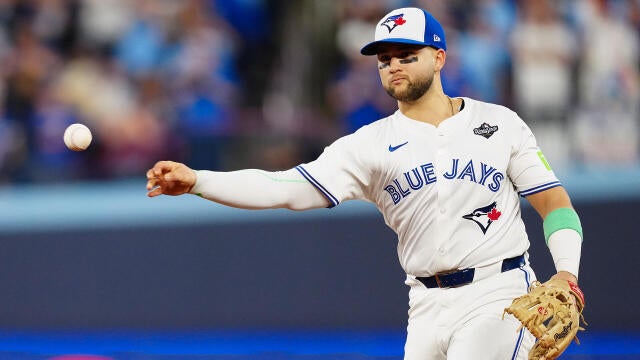
The agreement had first surfaced publicly the previous Friday, roughly 18 hours after Mets owner Steve Cohen posted a cryptic message on social media: “Let me know when you see smoke.” At the time, Cohen’s comment was widely interpreted as a reference to ongoing negotiations with star outfielder Kyle Tucker, who was believed to be weighing multiple massive offers. Ultimately, Tucker chose to sign with the Los Angeles Dodgers, agreeing to a four-year, $240 million deal late Thursday night. Reports indicated the Mets had made a competitive push, offering Tucker a four-year contract worth $220 million, but fell just short.
Rather than linger on the disappointment, New York pivoted quickly—and decisively. Within hours of Tucker’s decision, the Mets redirected their focus to Bichette, one of the most consistent and respected hitters in Major League Baseball. The speed with which the deal came together highlighted both the front office’s preparedness and its determination to remain aggressive in a fiercely competitive market.

A New Position, A New Chapter
Bichette’s arrival in Queens brings with it an intriguing positional shift. Though he has spent his entire Major League career at shortstop, multiple reports indicate that he is expected to transition to third base with the Mets. While such a move may seem unconventional, the organization has shown a willingness to think creatively. Projected first baseman Jorge Polanco, for instance, has never previously played first base at the Major League level either.
The move places Bichette in direct competition—or perhaps succession—with Brett Baty, the Mets’ incumbent third baseman. Baty enjoyed a career year in 2025, setting personal bests with 18 home runs and 50 RBIs across 130 games. His season ended prematurely, however, when he suffered a right oblique injury during the final week of the regular season. Whether Baty remains a regular contributor, shifts roles, or becomes part of future trade discussions remains to be seen, but Bichette’s presence undoubtedly alters the infield dynamic.

A Rebound Year That Answered Every Question
Entering the 2025 season, there were lingering doubts surrounding both Bichette and the Toronto Blue Jays. After a frustrating 2024 campaign marked by injuries and inconsistency, and following Toronto’s last-place finish in the American League East, many wondered whether Bichette’s best years were behind him—or if a resurgence was imminent.
Those questions were answered emphatically.
Bichette returned to peak form, reestablishing himself as one of baseball’s premier offensive forces. Over the three-season stretch from 2021 through 2023, he led the American League in hits, and in 2025, he once again resembled that player. At the same time, the Blue Jays surged back to prominence, winning the AL East and coming within a single victory of reaching the World Series.
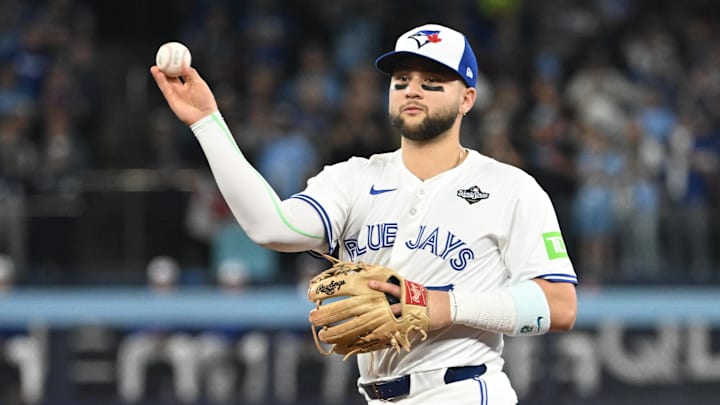
Following the season, Toronto extended a qualifying offer to Bichette, valued at $22.025 million for the 2026 season. Bichette declined the offer, a decision that tied him to draft-pick compensation and set the stage for his eventual departure.
As a result of the signing, Toronto will receive a compensatory pick in the 2026 MLB Draft after the fourth round. For the Mets, the cost was significant but acceptable: they will forfeit their second-round pick (No. 57 overall), their fifth-round pick, and $1 million from their international bonus pool. Additionally, they lose the fourth-round compensation pick (No. 137 overall) they previously received after closer Edwin Díaz signed with the Dodgers.

Baseball Pedigree and Relentless Production
Bo Bichette’s baseball roots run deep. He is the son of Dante Bichette, a former Major League outfielder who spent 14 seasons in the big leagues. Yet Bo has carved out his own identity—not through flash alone, but through relentless consistency and toughness at the plate.
In 2025, Bichette posted an impressive .311/.357/.483 slash line, clubbing 18 home runs and driving in 94 runs. Despite missing much of the final month of the regular season due to injury, he still collected 181 hits, just four shy of leading all of Major League Baseball. That production speaks not only to his skill but also to his durability and day-to-day impact when healthy.

Pitchers across the league know that facing Bichette is rarely an easy assignment. He is disciplined, patient, and difficult to put away. Statistically, he ranked among the top 14 percent of hitters in strikeout rate at just 14.5 percent, and placed in the top 17 percent in whiff rate at 18.4 percent. These numbers reflect an approach built on contact and control rather than pure power.
Advanced metrics further reinforce his value. Bichette finished in the 99th percentile in expected batting average (.307), the 84th percentile in expected weighted on-base average (.364), and the 83rd percentile or higher in both hard-hit rate (48.8 percent) and sweet-spot rate (37.9 percent). Simply put, when Bichette makes contact, it is frequently loud and well-placed.

A Master of the Two-Strike Battle
One of Bichette’s defining traits is his adaptability at the plate. With two strikes, he dramatically alters his stance—widening his base, removing his leg kick, and shortening his swing. This approach allows him to stay balanced, spoil tough pitches, and extend at-bats until he finds something he can drive.
He is a classic gap-to-gap hitter, capable of spraying line drives to all fields. His willingness to foul off pitch after pitch frustrates opposing pitchers and elevates pitch counts, often forcing early bullpen usage. For a Mets lineup that has occasionally struggled with strikeouts in recent seasons, Bichette’s presence could be transformative.
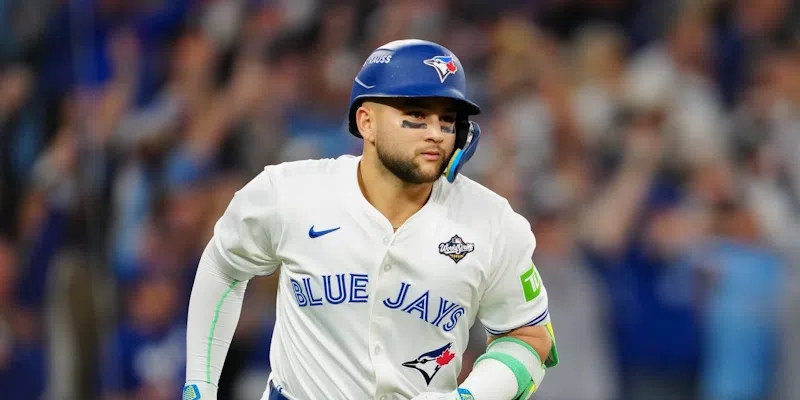
Playing Through Pain on the Biggest Stage
Late last September, Bichette suffered a significant setback when he injured his left knee while sliding into home plate. The injury sidelined him for the remainder of the regular season and forced him to miss the first two rounds of postseason play. Though he eventually returned for the World Series, he did so at less than full strength.
Even limited physically, Bichette rose to the occasion.
Against the Dodgers in the World Series, he delivered a remarkable performance, posting a .348/.444/.478 slash line and driving in six runs. His most memorable moment came in Game 7, when he launched a towering 442-foot home run to dead-center field, a swing that showcased his strength, timing, and competitive fire despite the compromised knee.

What Bichette Means for the Mets
By signing Bo Bichette, the Mets have done more than add an elite bat—they have sent a clear message. This franchise is committed to winning now. The combination of financial commitment, positional flexibility, and offensive upside makes Bichette a cornerstone piece as New York pushes toward October.
While the smoke may have appeared later than expected, when it finally did, it revealed something substantial: a star player, a bold move, and a renewed sense of momentum. For the Mets and their fans, Bo Bichette’s arrival represents not just a consolation prize—but a defining moment in the club’s pursuit of a championship.