Roster turnover has defined the St. Louis Cardinals’ offseason, shaping not only the direction of the franchise but also the tone of spring training. Even though expectations around the team remain modest heading into the new season, the sheer volume of uncertainty has created a competitive environment internally. With jobs up for grabs and few guarantees beyond the core pieces, players across the roster are entering camp knowing nothing can be taken for granted.
Nowhere is that competition more intense than in the infield. While the Cardinals may not be projected as postseason contenders, the fight for roster spots promises to be one of the most compelling storylines of the spring. Veterans are trying to hold onto their roles, younger players are looking to establish themselves, and top prospects are knocking loudly on the door. The result is a crowded, high-stakes battle where performance, positional versatility, and organizational priorities will all play decisive roles.
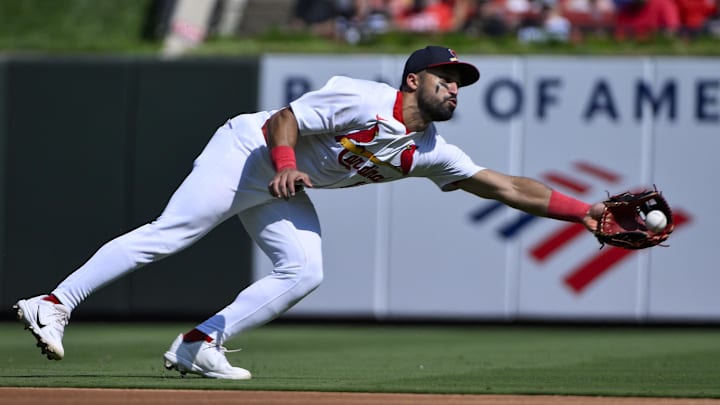
One of the biggest factors shaping this competition is the Cardinals’ decision—at least for now—to retain All-Star second baseman Brendan Donovan. Donovan’s name has surfaced in trade rumors throughout the offseason, and many around the league assumed he could be moved as part of the team’s broader reshuffling. However, with spring training approaching and Donovan still firmly in place, his presence has complicated the picture for several younger and less-established infielders.
Donovan’s versatility and consistent production make him an automatic part of the roster, but he also limits opportunities elsewhere. Every inning he plays, every at-bat he takes, reduces the available workload for those trying to carve out roles behind him. As a result, the margin for error for fringe players has grown razor-thin.
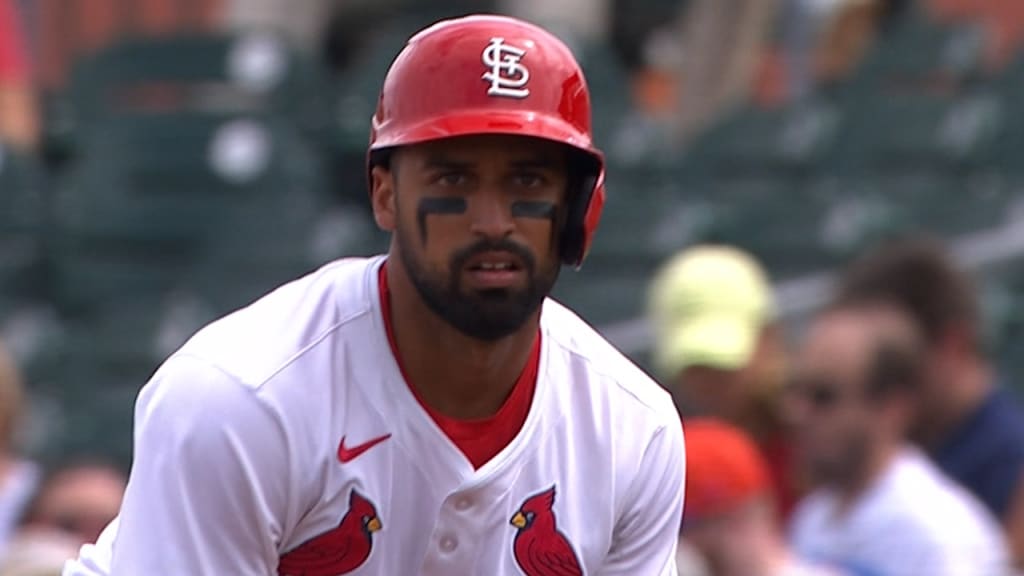
There are a few infield spots that appear largely settled. Shortstop Masyn Winn is entrenched as the everyday option, and the organization remains committed to his development. Nolan Gorman, splitting time between second base and designated hitter, is also considered a lock given his power potential and role in the club’s offensive plans. At first base, Alec Burleson has emerged as the clear favorite, providing left-handed pop and defensive stability.
With those positions essentially spoken for, attention shifts to what remains. The Cardinals are likely to carry six infielders on the Opening Day roster, which leaves just two spots available—and far more than two candidates. At the center of this battle are top prospect JJ Wetherholt, rising infielder Thomas Saggese, and utility man José Fermín. Each brings a different skill set and different implications for the roster, forcing the front office into some uncomfortable decisions.

Wetherholt, viewed as a cornerstone prospect, is widely expected to break camp with the major league club. His upside and long-term importance make him difficult to leave off the roster, even if his immediate role is somewhat limited. That effectively leaves Saggese and Fermín competing for what could be the final bench spot.
This dilemma was highlighted recently when Jeff Jones of the Belleville News-Democrat released his projection of the Cardinals’ Opening Day roster. In his analysis, Jones predicted that Fermín would ultimately be the odd man out, a decision that would require the team to designate him for assignment once spring training concludes.
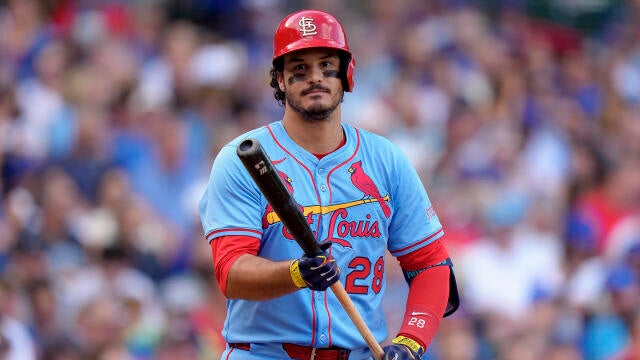
Jones described the situation as perhaps the most challenging roster call the Cardinals will face. Fermín is out of minor league options, meaning he cannot be sent down without first being exposed to waivers. Despite this, St. Louis has managed to keep him in the organization so far, avoiding that risk throughout the offseason. Still, as camp winds down, that luxury may disappear.
According to Jones, Donovan’s continued presence also plays a critical role in this equation. With Donovan taking up significant infield time, whichever player earns the final spot is unlikely to see regular action. That reality makes it harder to justify keeping Saggese in a limited bench role when he could instead be playing every day at Triple-A Memphis.
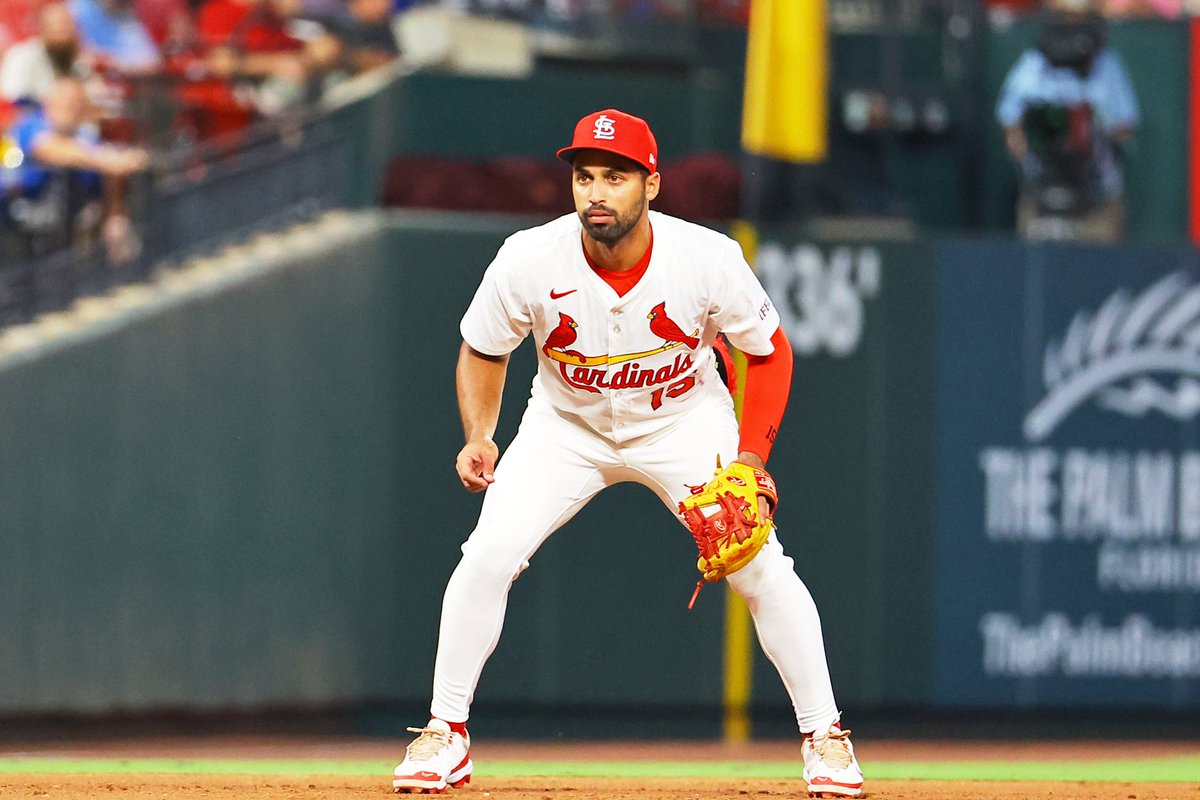
However, there is another wrinkle. Saggese has been mentioned internally as a potential solution at third base, giving him an added layer of versatility that Fermín does not currently possess. That positional flexibility could be enough to keep Saggese on the roster, at least for now, even if it comes at the cost of consistent at-bats.
Fermín’s case is more complicated. At 26 years old, he is no longer a prospect, and his major league track record is well established. Over the past three seasons, he has appeared in 96 games for St. Louis, hitting .220 with a .600 OPS. While he provides defensive versatility and familiarity with the organization, his offensive production has been modest, and there is limited evidence to suggest a breakout is coming.
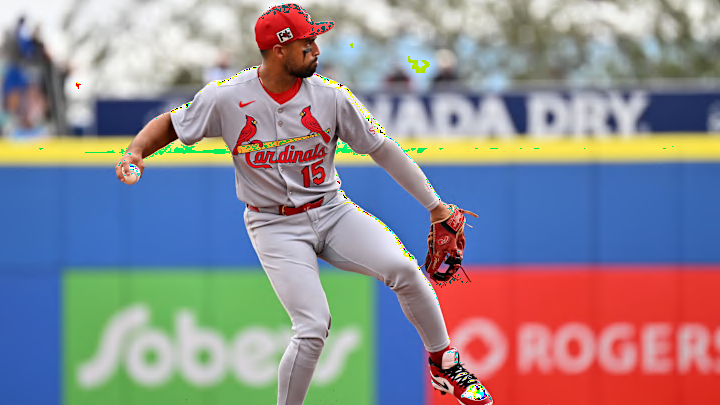
When comparing pure talent and long-term upside, the gap between Fermín and Saggese is clear. Saggese is viewed as the superior player with more potential to impact the team meaningfully in the future. That reality raises a fundamental question for the Cardinals: how much value do they place on retaining Fermín as organizational depth, especially if doing so means restricting Saggese’s development?
If Saggese remains on the major league roster but rarely plays, the long-term cost could outweigh the short-term convenience of keeping Fermín. Development requires repetition, and sitting on the bench five days a week does little to help a young player refine his skills or adjust to higher-level pitching. In that sense, sending Saggese to Memphis for everyday playing time could be the more responsible move, even if it means losing Fermín on waivers.

Of course, circumstances could change quickly. The clearest path for Fermín to remain with the Cardinals would be a trade involving Donovan at some point before Opening Day. If Donovan were moved, it would immediately free up infield opportunities and reduce the roster crunch. Under those conditions, assuming the team still carries six infielders—a fairly standard approach in today’s game—Fermín would no longer be fighting uphill against a numbers disadvantage.
In that scenario, Fermín’s defensive flexibility and experience could make him a reasonable bench option, while Saggese could still find a path to meaningful playing time. But as things stand now, Donovan’s presence casts a long shadow over the entire competition.

Ultimately, the Cardinals are balancing competing priorities. They must decide whether immediate depth and roster flexibility are more important than long-term player development. They also have to weigh the risk of losing Fermín for nothing against the potential cost of stalling Saggese’s progress.
There is no perfect solution. Every option carries consequences, and the final decision will likely reflect the organization’s broader philosophy for the season ahead. If the Cardinals prioritize growth and future impact, Saggese may be better served playing every day in Triple-A. If they value stability and insurance at the major league level, Fermín’s time with the club may continue—at least a little longer.
As spring training unfolds, performance will matter, but context will matter just as much. Roster math, contractual limitations, and organizational vision will ultimately shape the outcome. For now, the only certainty is that the competition is fierce, the stakes are real, and the Cardinals’ infield picture remains very much in flux.