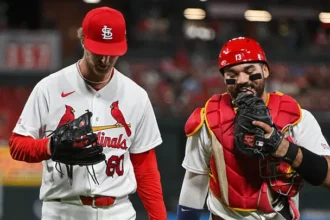
Erick Fedde’s time with the St. Louis Cardinals can best be described as a prolonged misadventure—one that managed to underperform even the most pessimistic expectations. Calling it a “disaster” may sound harsh, but in truth that label might actually be charitable given how things unfolded. What was supposed to be a stabilizing addition to the rotation instead became a cautionary tale about betting on veteran arms with diminishing margins for error.
At 32 years old, Fedde was not some untested prospect or reclamation project plucked from obscurity. He was a known quantity: a pitcher with a checkered MLB track record, a brief career revival overseas, and a reputation as a back-end starter who could eat innings if nothing else. Unfortunately for the Cardinals, even that modest bar proved too high. Over the course of more than 100 innings pitched for St. Louis last season, Fedde was consistently hit hard, posting an unsightly 5.22 ERA that mirrored his equally discouraging 5.13 Fielding Independent Pitching mark. Those numbers weren’t the product of bad luck or shaky defense—they were an accurate reflection of how ineffective he truly was.

Perhaps most alarming was how little separation existed between his strikeout and walk totals. Fedde barely managed to strike out more hitters than he issued free passes to, a dangerous profile in today’s game where missing bats is often the difference between survival and catastrophe. Without swing-and-miss stuff, pitchers are forced to live on the margins, and Fedde routinely failed to do so. Over 20 starts, he surrendered 14 home runs, many of them no-doubters that erased any hope of competitive outings. Each trip to the mound felt like a waiting game—how long before the damage began?
Visually, the decline was just as evident as the numbers suggested. His fastball lacked life, his secondary pitches failed to deceive, and hitters appeared comfortable early in counts. There was little sense of adjustment or reinvention. Instead, Fedde often looked like a pitcher clinging to an arsenal that no longer worked, relying on command he couldn’t consistently locate and movement that no longer fooled anyone. For a Cardinals organization that prides itself on pitching development and run prevention, it was an especially jarring fit.

Despite all of this, St. Louis somehow managed to find a trade partner at the deadline. In a twist that spoke more to league-wide pitching desperation than to Fedde’s value, the Atlanta Braves agreed to take him on. The Braves, ravaged by injuries and in need of anyone capable of taking the ball every fifth day, rolled the dice on Fedde in hopes that a change of scenery might spark something. It did not.
If anything, his performance in Atlanta was even worse. Across a brief and painful stint, Fedde was shelled to the tune of an 8.10 ERA, quickly erasing any remaining goodwill. The Braves, who have little patience for noncompetitive innings in the middle of a playoff race, wasted no time cutting ties. Fedde was designated for assignment and released soon after, his stay in Atlanta serving as little more than a footnote in an already forgettable season.

From there, he landed with the Milwaukee Brewers for the remainder of the regular season, though by that point expectations were minimal. Milwaukee was simply looking for depth—someone to absorb innings and protect younger arms. Fedde’s presence there was quiet and largely inconsequential, doing little to change the broader narrative surrounding his year.
Given the way his 2025 season unfolded, it would have been reasonable to assume that Fedde’s market would be nearly nonexistent over the winter. Pitchers coming off seasons like that—particularly those entering their mid-30s—often find themselves choosing between retirement and minor-league contracts with spring training invitations. That’s typically the reality for veterans whose performance has cratered and whose upside is largely exhausted.

But baseball has a way of surprising people, especially when rebuilding teams are involved. Enter the Chicago White Sox. In a move that raised eyebrows across the league, Chicago signed Fedde to a one-year deal for the 2026 season. It was a reunion of sorts, one rooted not in nostalgia but in pragmatism. The White Sox, deep in the midst of a rebuild and searching for any semblance of stability, saw Fedde as a familiar arm capable of providing innings while younger pitchers develop.
This signing was never about upside. It was about volume, experience, and the hope—however slim—that Fedde could recapture even a fraction of his earlier success on the South Side. The White Sox are coming off a brutal season and are clearly prioritizing short-term functionality over long-term solutions. In that context, taking a low-risk gamble on a known veteran makes a certain amount of sense, even if it doesn’t inspire much excitement.

For the Cardinals, meanwhile, a reunion with Fedde was never in the cards. Even speculative ideas like a sign-and-flip arrangement were off the table. St. Louis entered the offseason fully committed to a roster reset, and that commitment was reflected in nearly every move they made. Under the guidance of Chaim Bloom, the organization has pivoted decisively toward youth, flexibility, and long-term planning.
The Cardinals’ projected rotation is already crowded with both new acquisitions and internal options. Additions like Dustin May, Hunter Dobbins, and Richard Fitts have reshaped the pitching staff, while holdovers such as Michael McGreevy, Matthew Liberatore, Andre Pallante, and Kyle Leahy provide depth and upside. The emphasis is clearly on developing controllable arms rather than leaning on veterans whose best days may be behind them. Fedde, given his recent struggles, simply didn’t align with that vision.
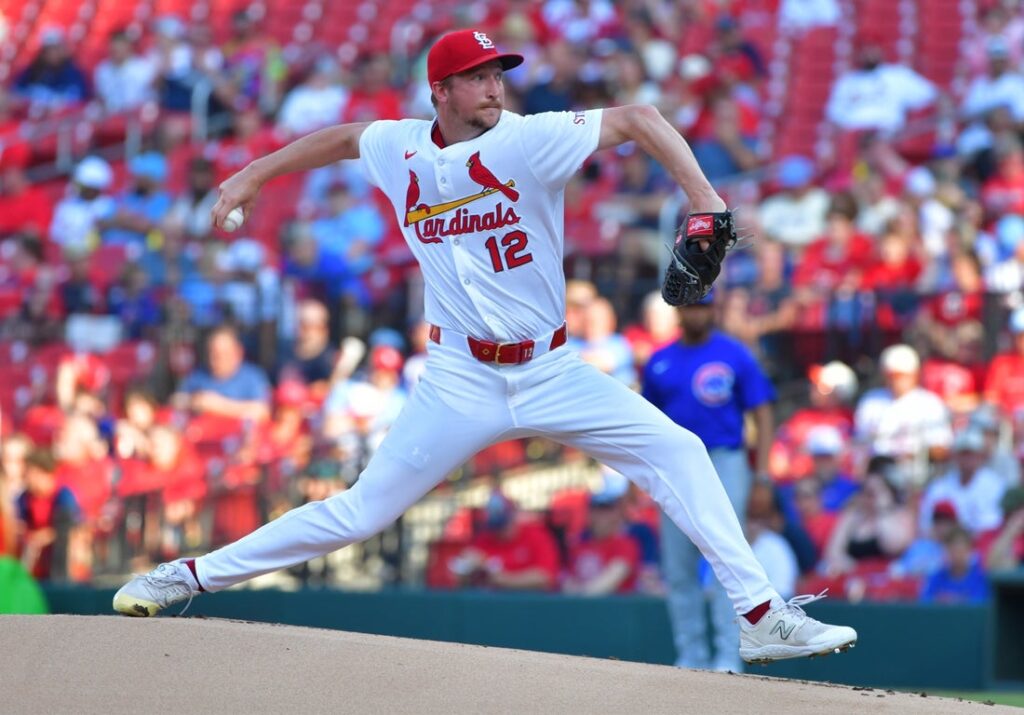
Ironically, Fedde’s value looked much different not that long ago. During the first half of the 2024 season—ironically with the White Sox—he was one of the few bright spots on an otherwise bleak roster. Over 121 1/3 innings, he posted a respectable 3.11 ERA, mixing pitches effectively and keeping hitters off balance. That stretch of success is what ultimately made him an attractive trade candidate and led to the three-team deal that sent Tommy Edman to the Los Angeles Dodgers and Fedde to St. Louis.
For a brief period after that trade, Fedde even appeared serviceable. In the second half of 2024, he recorded a 3.72 ERA across 10 starts for the Cardinals as the team settled into a second-place finish in the NL Central. While the underlying metrics suggested some regression risk, he at least looked capable of navigating lineups and giving the team a chance to win.
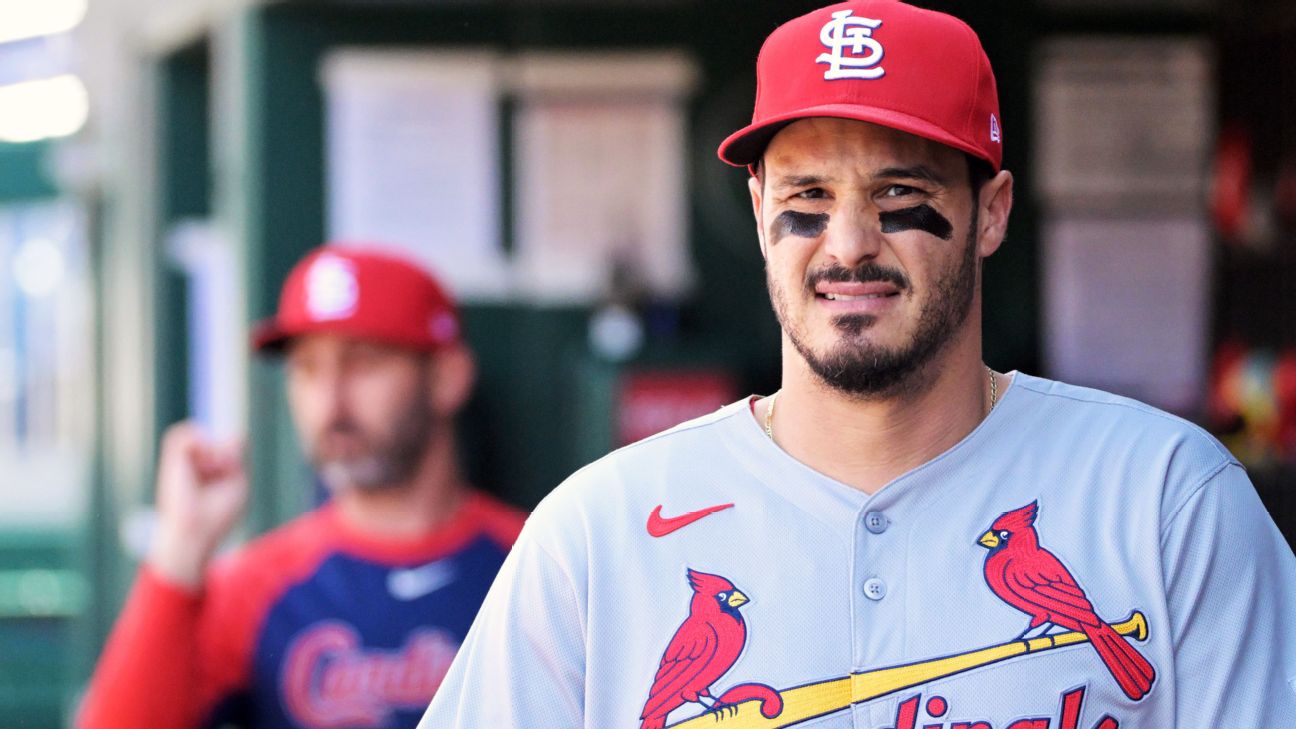
That version of Fedde, however, vanished in 2025. His stuff regressed sharply, his command wavered, and the results spiraled. The warning signs that had been present beneath the surface finally manifested in full. It’s difficult to pinpoint exactly what went wrong—whether it was mechanical, physical, or simply the natural aging curve—but the decline was undeniable.
As pitchers age, certain flaws tend to become magnified. Walk rates creep upward. Home runs become more frequent. Mistakes that once resulted in foul balls start landing in the seats. Fedde exhibited all of those issues last season, and there’s little evidence to suggest they’ll magically disappear as he approaches his 33rd birthday later this month.

That reality makes his upcoming stint with the White Sox a fascinating test case. Can a pitcher with diminishing stuff reinvent himself one more time? Can familiarity with an organization help unlock something that was lost elsewhere? Or is this simply a temporary patch, a placeholder innings-eater destined to be moved or released once younger arms are ready?
For Chicago, the gamble is modest. A one-year deal carries minimal long-term risk, and if Fedde can approximate league-average production, he’ll have served his purpose. At best, he could even become a midseason trade chip if contenders find themselves short on pitching again. At worst, he absorbs innings on a rebuilding team that isn’t expected to contend anyway.
For Fedde himself, this may represent one of his final opportunities to prove he belongs in a major-league rotation. Another season like 2025 could effectively close that door. The margin for error is thin, and time is not on his side.
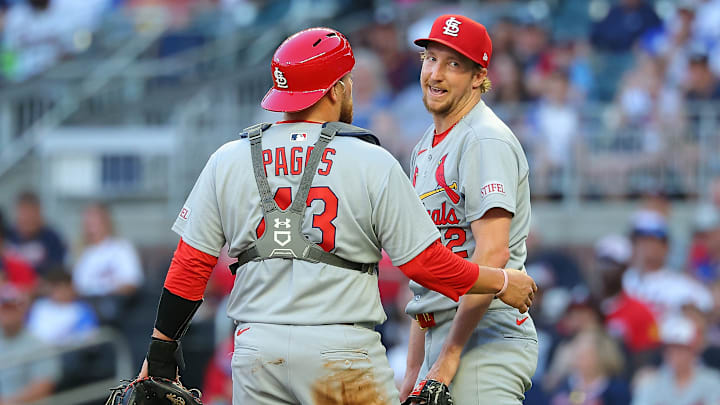
Back in St. Louis, attention now shifts to the remaining pieces of the old rotation. With Fedde gone and the youth movement in full swing, Miles Mikolas stands as the last member of the Cardinals’ 2025 Opening Day rotation who has yet to secure a role for the 2026 season. Whether he returns in some capacity or joins Fedde on the outside looking in remains to be seen.
In the end, Erick Fedde’s Cardinals chapter serves as a reminder of how quickly things can unravel for pitchers without dominant stuff. Success can be fleeting, and once the erosion begins, it often accelerates. For St. Louis, the lesson was learned the hard way. For Chicago, the hope is that lightning can strike twice—though history suggests that’s far from guaranteed.