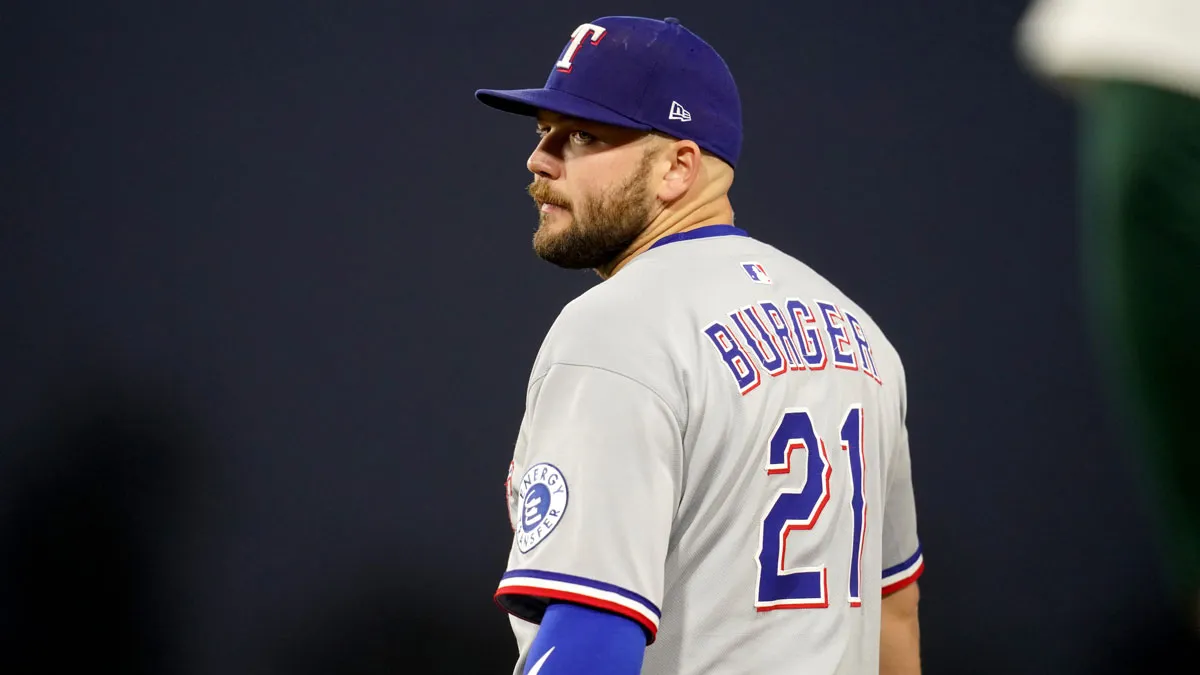
The Texas Rangers emerged as one of the more unexpected storylines of the offseason after making a pair of bold and somewhat puzzling roster decisions. In a move that caught many around the league off guard, Texas dealt its All-Star second baseman, Marcus Semien, in exchange for outfielder Brandon Nimmo. Not long after, the organization made the surprising decision to release Adolis García, parting ways with one of the most recognizable power bats in recent franchise history. Taken together, those moves signaled that the Rangers are not content to stand pat. They are reshaping the roster with intention, even if the direction is not immediately obvious to everyone watching from the outside.
There is no question that the front office is trying to recalibrate and improve the team’s long-term outlook. However, while several areas of the roster have been addressed, one glaring position appears to remain unresolved: first base. At the moment, that role belongs to Jake Burger. While Burger has value and can provide pop in the middle of a lineup, he does not necessarily profile as the kind of impact presence that transforms an offense from good to elite. For a team that clearly has championship aspirations, first base stands out as an opportunity for a major upgrade.

That’s where an intriguing trade proposal enters the conversation. According to Christopher Kline of Fansided, the Rangers should consider placing a call to the Philadelphia Phillies to inquire about a potential blockbuster deal for two-time MVP Bryce Harper. It is the type of idea that initially sounds ambitious, perhaps even far-fetched, but becomes increasingly compelling the more one thinks about it.
Kline argues that the Rangers would be eager to improve upon what they are currently getting from Burger’s spot in the lineup. Harper’s average annual value, while significant, is relatively modest compared to other superstar contracts around baseball. Given his star power, on-field production, and the off-field financial boost that comes with acquiring a player of his caliber, the deal could fit within Texas’ financial parameters. The Rangers have not shied away from veteran stars before—Jacob deGrom being a recent example—and they demonstrated in 2023 that they are capable of building and sustaining a championship-caliber core. The infrastructure is already in place for another serious run.
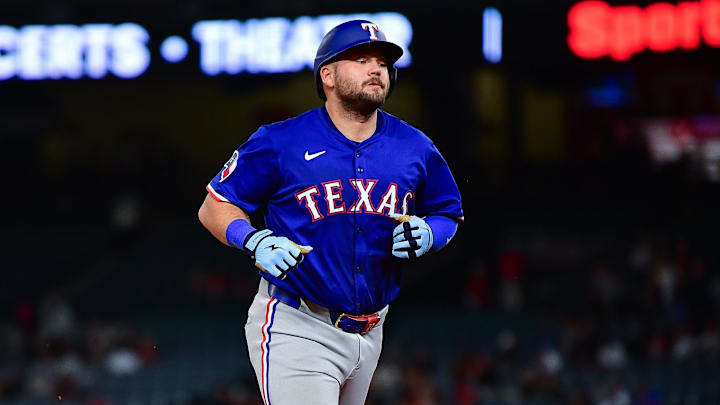
Adding Harper would not just be about replacing a position player. It would be about altering the competitive balance in the American League West. The division remains wide open, with multiple teams capable of contending but none firmly entrenched as a dominant powerhouse. A move for Harper could tip the scales in Texas’ favor.
From a lineup construction standpoint, the fit is tantalizing. Harper would likely slot into the cleanup role, hitting behind Brandon Nimmo, Wyatt Langford, and Corey Seager. That sequence alone presents a nightmare for opposing pitchers. Nimmo’s on-base skills at the top would set the table. Langford’s emerging talent and athleticism would apply pressure. Seager’s disciplined approach and power would demand careful navigation. Then comes Harper, whose blend of patience, power, and postseason experience could serve as the final, crushing blow in an inning.
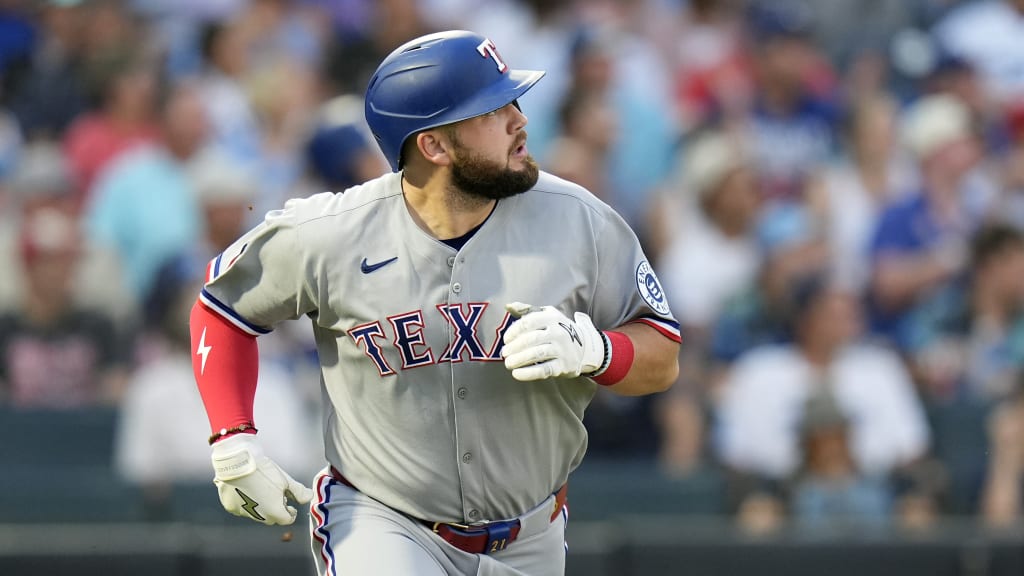
Looking at Harper’s most recent season provides further context for why this idea carries so much weight. Over 132 games, he posted a slash line of .261/.357/.487 with an .844 OPS. He collected 32 doubles, launched 27 home runs, and drove in 75 runs. Those numbers underscore a player who continues to produce at a high level, even as he moves into the later stages of his career. He remains a threat both to reach base and to change the game with one swing.
Placed into a Rangers lineup that already features Langford, Nimmo, and Seager, Harper would bring a dynamic mix of contact ability and power. The Rangers would suddenly boast a balanced offense capable of manufacturing runs in multiple ways. They would not be overly reliant on home runs, yet they would possess plenty of them. They would be able to grind out at-bats, draw walks, and capitalize on mistakes. In high-leverage postseason moments, that type of balance often proves decisive.
Financially, the contract is not as prohibitive as one might assume when hearing the name Bryce Harper. He is scheduled to earn in the mid-$20 million range annually for the remaining six years of his deal. In the modern landscape of Major League Baseball contracts, that figure is manageable for a franchise with resources like Texas. When you factor in Harper’s brand appeal, jersey sales, increased ticket demand, and overall media attention, the cost becomes even more justifiable. Acquiring a player of his stature at that annual salary could represent an opportunity too good to ignore.
Of course, any trade for Harper would require significant assets going back to Philadelphia. The Phillies would not part with a franchise cornerstone lightly. Texas would likely have to part with high-end prospects or controllable major league talent. That calculus would demand careful consideration. The Rangers’ front office would need to weigh the immediate competitive boost against the long-term cost in player development capital.

Still, the Rangers have shown a willingness to be aggressive. Their World Series victory in 2023 demonstrated that bold moves can pay off when executed properly. That championship also raised expectations. Once a team has tasted that level of success, the goal becomes sustaining it, not retreating into caution. Adding Harper would send a clear message to the rest of the league that Texas intends to remain in the championship conversation.
There is also a leadership component to consider. Harper brings more than statistics. He carries postseason experience, intensity, and a reputation for rising to big moments. In a clubhouse that blends youth and established stars, that presence could have a stabilizing and motivating effect. Younger players like Langford would benefit from sharing a lineup with someone who has navigated the highest stages of October baseball.
Timing is another factor. The 2026 season is fast approaching, and the Rangers must decide whether they are comfortable with their current roster construction or willing to take another swing at greatness. If Texas hesitates, another contender could explore a similar avenue. In today’s competitive environment, opportunities to acquire MVP-level talent rarely linger for long.
Ultimately, the proposal to trade for Bryce Harper represents both risk and reward. It would require boldness, financial commitment, and the surrender of meaningful assets. But it would also position the Rangers as immediate favorites in a division that lacks a clear frontrunner. It would deepen an already impressive lineup and reinforce the organization’s commitment to contending now rather than later.
The Rangers have already demonstrated this offseason that they are not afraid to surprise. Moving on from Marcus Semien and Adolis García was a dramatic shift. If those decisions were the opening act, perhaps a Harper pursuit could serve as the headline move that defines the next chapter of Texas baseball.
Whether the front office ultimately makes the call to Philadelphia remains to be seen. What is certain is that first base represents an opportunity for improvement, and Bryce Harper embodies the kind of transformational talent capable of elevating a roster from competitive to dominant. For a franchise seeking to build upon recent success and return to the sport’s summit, exploring that possibility might not just be bold—it might be necessary.