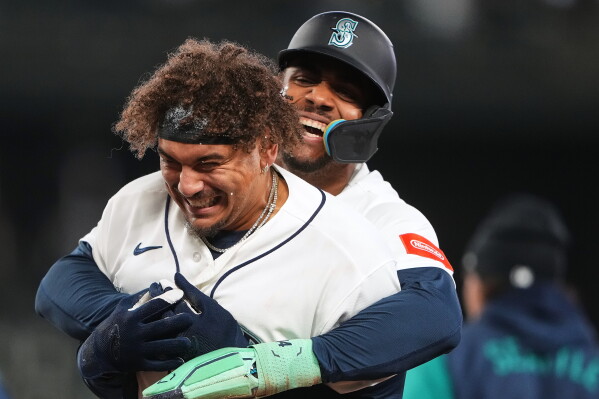
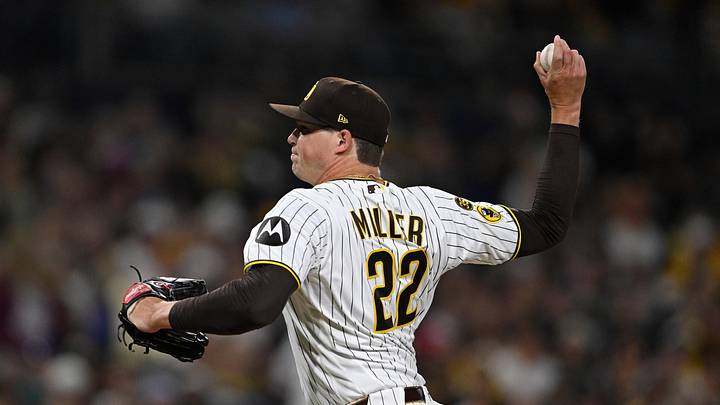
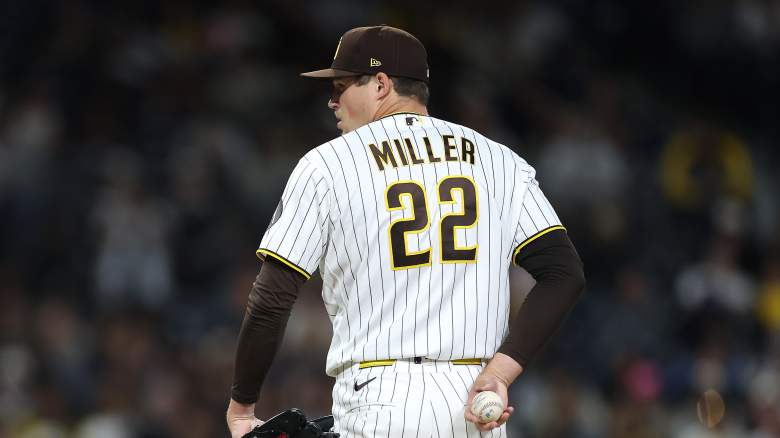
The Seattle Mariners have no shortage of ambition as the MLB trade deadline approaches, but turning those ambitions into reality may prove far more complicated than fans hoped. One of the biggest names linked to Seattle in recent weeks has been San Diego Padres flamethrower Mason Miller, a reliever whose electric fastball and dominant performances have made him one of baseball’s most coveted bullpen arms.
On paper, the idea is almost too good to ignore. Imagine Miller setting the stage in the eighth inning before Andrés Muñoz slams the door in the ninth. Or flip the roles if preferred. Either way, opposing lineups would be forced to deal with two of the hardest-throwing and most overpowering relievers in Major League Baseball over the final two innings of every close game.

It’s the kind of bullpen combination capable of carrying a team deep into October.
The problem is getting a deal across the finish line.
Recent reports suggest Seattle has little interest in sacrificing the young pitching talent that would almost certainly be required to convince San Diego to part with Miller. As a result, what once seemed like an intriguing trade possibility is beginning to look increasingly unrealistic.
Mariners Draw a Firm Line Around Core Pitching Talent
Seattle has spent years building one of baseball’s deepest collections of starting pitching, and the organization appears determined to protect that strength.

According to reporting from Adam Jude of The Seattle Times, the Mariners are not expected to entertain trade offers involving four members of their current major league rotation: Logan Gilbert, George Kirby, Bryan Woo and Bryce Miller.
Those aren’t the only names Seattle wants to keep.
The organization is also reportedly unwilling to include elite pitching prospects Kade Anderson or Ryan Sloan in trade discussions before the deadline.
While the club hasn’t officially labelled any of those six pitchers as completely untouchable, the message coming from the front office is clear enough. Seattle would strongly prefer to build around this group rather than use it as trade capital.
That stance dramatically complicates any pursuit of Mason Miller.
Any conversation with the Padres would almost certainly begin with a request for elite young pitching, and the Mariners have effectively removed nearly every obvious candidate from the negotiating table.
Mason Miller’s Value Has Never Been Higher
San Diego has very little incentive to move one of the most dominant relievers in baseball.
Miller has been nearly impossible to square up this season, overwhelming hitters with triple-digit velocity while producing elite numbers across the board.
Through 41⅔ innings, the right-hander owns a microscopic 0.86 ERA while collecting 25 saves and striking out 78 batters.
His dominance is only part of what makes him so valuable.
Miller also remains under team control through the 2029 season, giving whichever club employs him several more years of elite production at a relatively affordable cost.

That combination of performance, youth and contractual control makes him one of the most valuable relief pitchers anywhere in baseball.
Even if San Diego eventually becomes willing to listen to offers, it would almost certainly demand one of the largest trade packages of this deadline season.
Padres Already Paid a Massive Price
One reason San Diego is unlikely to lower its asking price is because of what it invested to acquire Miller.
At the 2025 trade deadline, the Padres completed a blockbuster deal with the Athletics that brought both Mason Miller and left-handed starter JP Sears to San Diego.
The price was enormous.
The centrepiece of the trade was shortstop Leo De Vries, who entered the deal as MLB Pipeline’s No. 3 overall prospect.
His inclusion alone made headlines throughout baseball.
In fact, De Vries became the highest-ranked prospect ever traded during the deadline era since MLB Pipeline began publishing prospect rankings in 2004.
San Diego also surrendered three highly regarded pitching prospects—Braden Nett, Henry Baez and Eduarniel Núñez—to complete the transaction.
That haul represented one of the most expensive prospect packages exchanged in recent memory.
Because of that investment, Padres president of baseball operations A.J. Preller would almost certainly insist on receiving another premium package if he ever considered moving Miller.
Anything less would effectively mean acknowledging that the blockbuster completed just one year earlier failed to maximise the club’s long-term value.
That’s not a position most executives are eager to find themselves in.
Seattle Lacks an Obvious Centrepiece

The Mariners’ reluctance to move their top young pitchers leaves them without the kind of headline prospect San Diego would likely demand.
Kade Anderson currently ranks as MLB Pipeline’s No. 5 overall prospect and is widely regarded as the top pitching prospect in baseball.
Ryan Sloan also sits comfortably inside Pipeline’s Top 10 prospect rankings.
Those two young arms represent Seattle’s most valuable minor league pitching assets.
Keeping them off limits makes perfect sense from the Mariners’ perspective, especially considering the organisation’s long-term commitment to building around homegrown pitching.
However, it also removes the two players most capable of anchoring a blockbuster proposal for Miller.
Without either Anderson or Sloan available, Seattle would struggle to present a package comparable to what San Diego originally paid to acquire the All-Star closer.
Luis Castillo Doesn’t Solve the Problem
Another name frequently mentioned in trade speculation has been veteran starter Luis Castillo.
Seattle has reportedly shown some willingness to explore moving Castillo, whose contract still carries roughly $30 million through the end of the 2027 season.
On the surface, moving Castillo could help Seattle clear payroll while addressing other roster needs.
Unfortunately, his contract significantly reduces his trade appeal.
For San Diego, exchanging one of baseball’s most affordable elite closers for an older starting pitcher with substantial financial commitments simply doesn’t make much sense.
Even if Castillo remains a productive starter, the economics of such a move heavily favour Seattle rather than the Padres.
Unless additional premium prospects were included, Castillo alone is unlikely to attract serious interest from San Diego in a Mason Miller discussion.
Emerson Hancock Could Enter Negotiations
If Seattle were to engage in serious trade talks, Emerson Hancock appears to be the most logical major league player available.
The former first-round pick has shown flashes of his potential and still possesses enough upside to intrigue other organisations.
Hancock could certainly become part of a larger package.
The issue is that he would only begin the conversation.
He would not be enough to complete it.
To seriously compete with other potential bidders, Seattle would almost certainly have to include additional elite prospects alongside Hancock.
Outfielder Lazaro Montes immediately comes to mind.
One of the most exciting power-hitting prospects in the Mariners’ system, Montes has developed into one of the organisation’s premier offensive talents.
Infielder Michael Arroyo is another name that would likely interest San Diego.
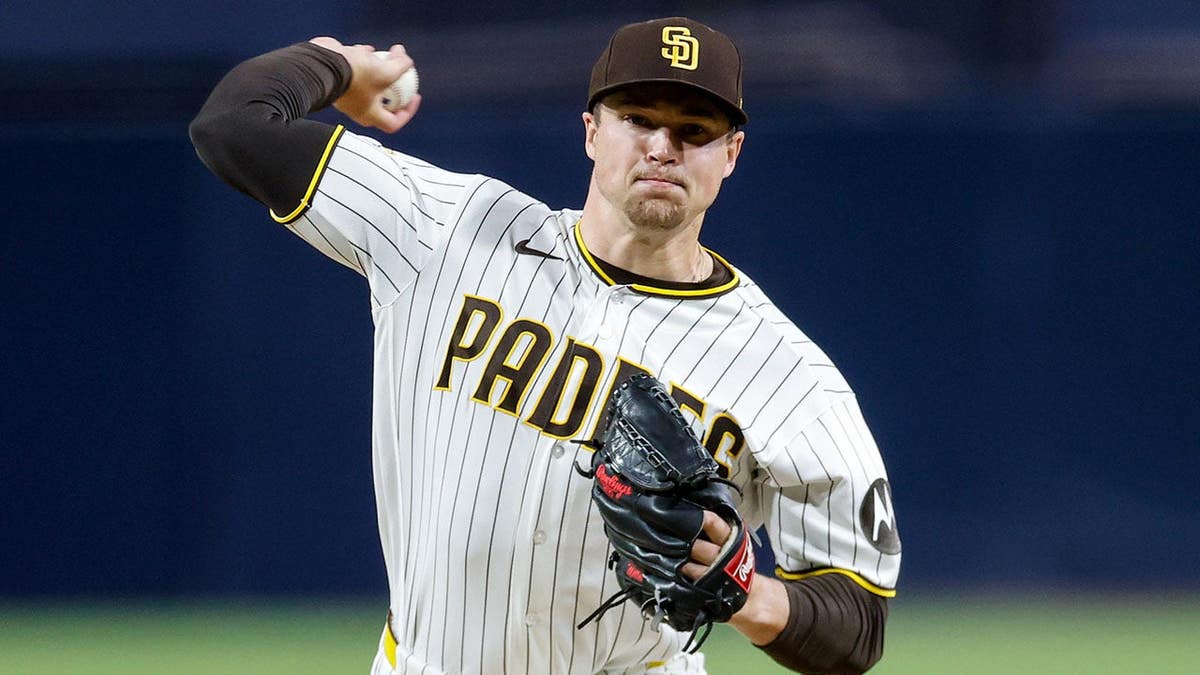
His combination of hitting ability, plate discipline and offensive upside has steadily increased his value throughout the minors.
Even then, there’s no guarantee such a package would satisfy the Padres’ demands.
Is That Price Worth Paying?
That’s where the conversation becomes far more complicated for Seattle.
Mason Miller is unquestionably one of baseball’s best relievers.
There’s no debating his talent.
But should any team surrender multiple premium prospects for a bullpen arm?
History suggests that’s an incredibly risky investment.
Relievers, even elite ones, generally throw between 60 and 70 innings per season.
Compared to frontline starting pitchers or everyday position players, their overall impact naturally comes in a smaller sample.
Seattle also happens to employ one of baseball’s premier closers already.
Andrés Muñoz has established himself as one of the game’s elite late-inning weapons, giving the Mariners a dominant option at the back of their bullpen without making another blockbuster trade.
That reality makes sacrificing elite prospects for another closer considerably more difficult to justify.
Instead of strengthening an already impressive bullpen, Seattle may be better served directing those assets toward another area of need.
Offensive Upgrades Remain the Bigger Priority
If the Mariners hope to make a serious postseason run, many evaluators believe improving the lineup should rank ahead of adding another dominant reliever.
Seattle continues searching for consistent right-handed offensive production.
Adding another middle-of-the-order bat would address a much more pressing weakness than further reinforcing the bullpen.
No matter how dominant Miller may be, he cannot help score runs.
In October, shutdown relief pitching certainly matters.
But clubs still need enough offence to build leads before their relievers ever take the mound.
Given the Mariners’ current roster construction, investing heavily in offensive upgrades may provide a greater overall return than spending premium trade assets on another elite bullpen piece.
A.J. Preller Always Keeps Rivals Guessing
Of course, nothing involving Padres president of baseball operations A.J. Preller is ever entirely predictable.
Few executives around baseball have developed a reputation for making bold, unexpected moves quite like Preller.

Time and again, he has shown a willingness to pursue blockbuster trades that catch the rest of the league by surprise.
That unpredictability means Mason Miller cannot be completely removed from Seattle’s list of possibilities.
Unexpected negotiations can always emerge during deadline week.
Player valuations shift.
New injuries occur.
Other deals reshape the market.
All it takes is one surprising development to reopen discussions that previously appeared dead.
Still, based on Seattle’s current position, completing a blockbuster for Miller appears increasingly unlikely.
The Mariners have made it abundantly clear they want to preserve the young pitching that has become the foundation of both their present success and future aspirations.
San Diego, meanwhile, has every reason to demand a massive return for one of baseball’s most dominant relievers.
Those two realities simply don’t align.
Unless one front office dramatically changes its stance over the coming days, Seattle’s vision of pairing Mason Miller with Andrés Muñoz in the late innings is likely to remain exactly that—a dream rather than a deadline reality.
READ MORE