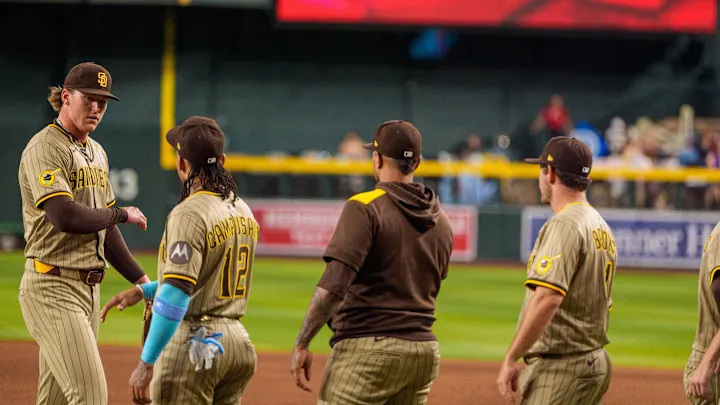
The San Diego Padres entered the offseason in a difficult and increasingly familiar position: financially constrained, talent-rich, and facing hard decisions with limited flexibility. Years of aggressive spending under president of baseball operations A.J. Preller have produced a roster loaded with star power, but that ambition has come at a cost. With a significant portion of payroll already committed to long-term contracts for marquee players, the Padres have very little room to maneuver when it comes to retaining key contributors who reach free agency.
That reality has already begun to take shape this winter, and it could continue to define San Diego’s offseason strategy. The most glaring example came early, when the Padres were unable to retain frontline starter Dylan Cease. Cease, one of the most sought-after arms on the market, ultimately signed a massive $210 million deal with the Toronto Blue Jays, fresh off their American League championship run. For San Diego, losing Cease wasn’t entirely unexpected, but it underscored just how limited the club’s financial options have become.

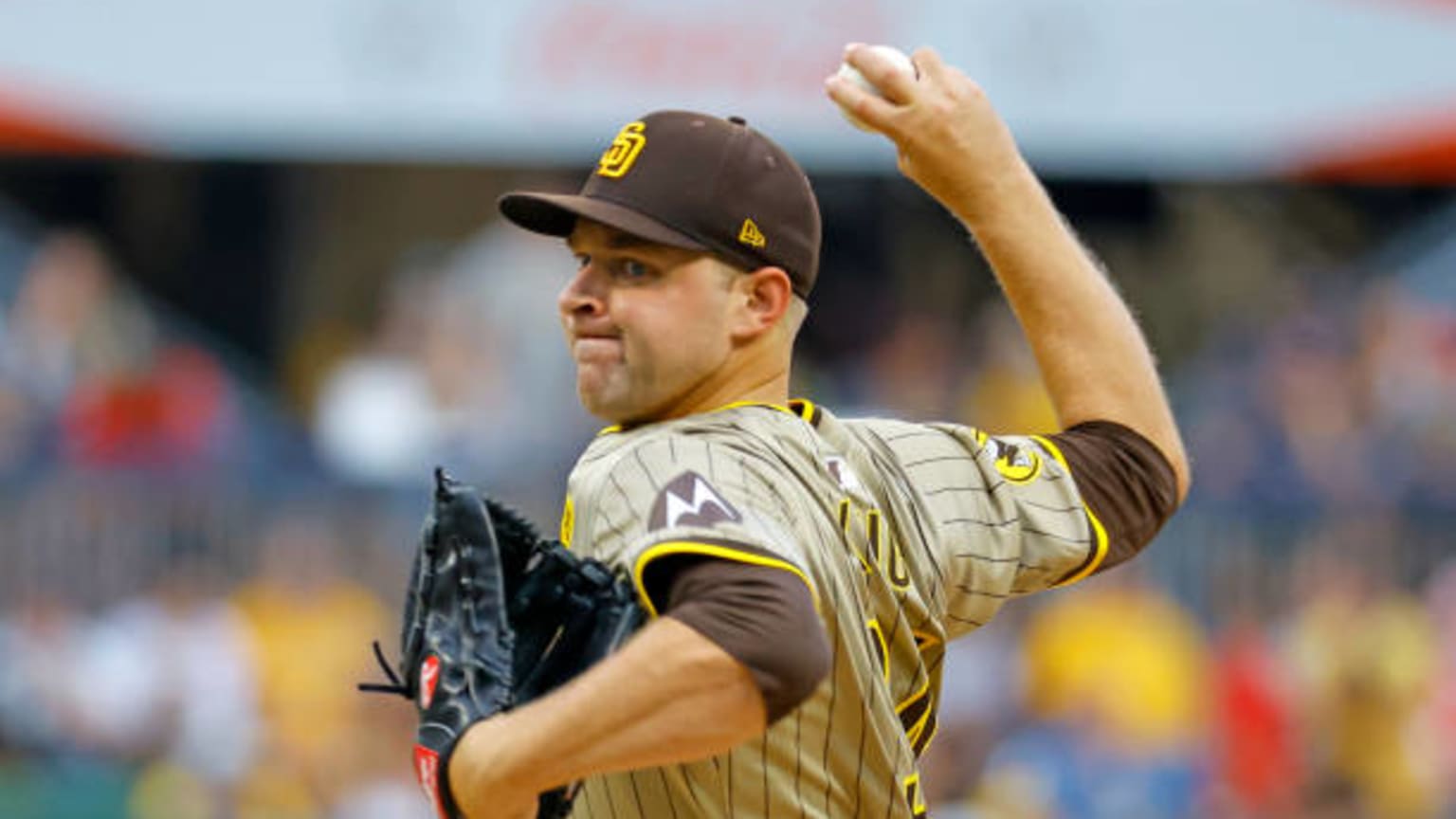
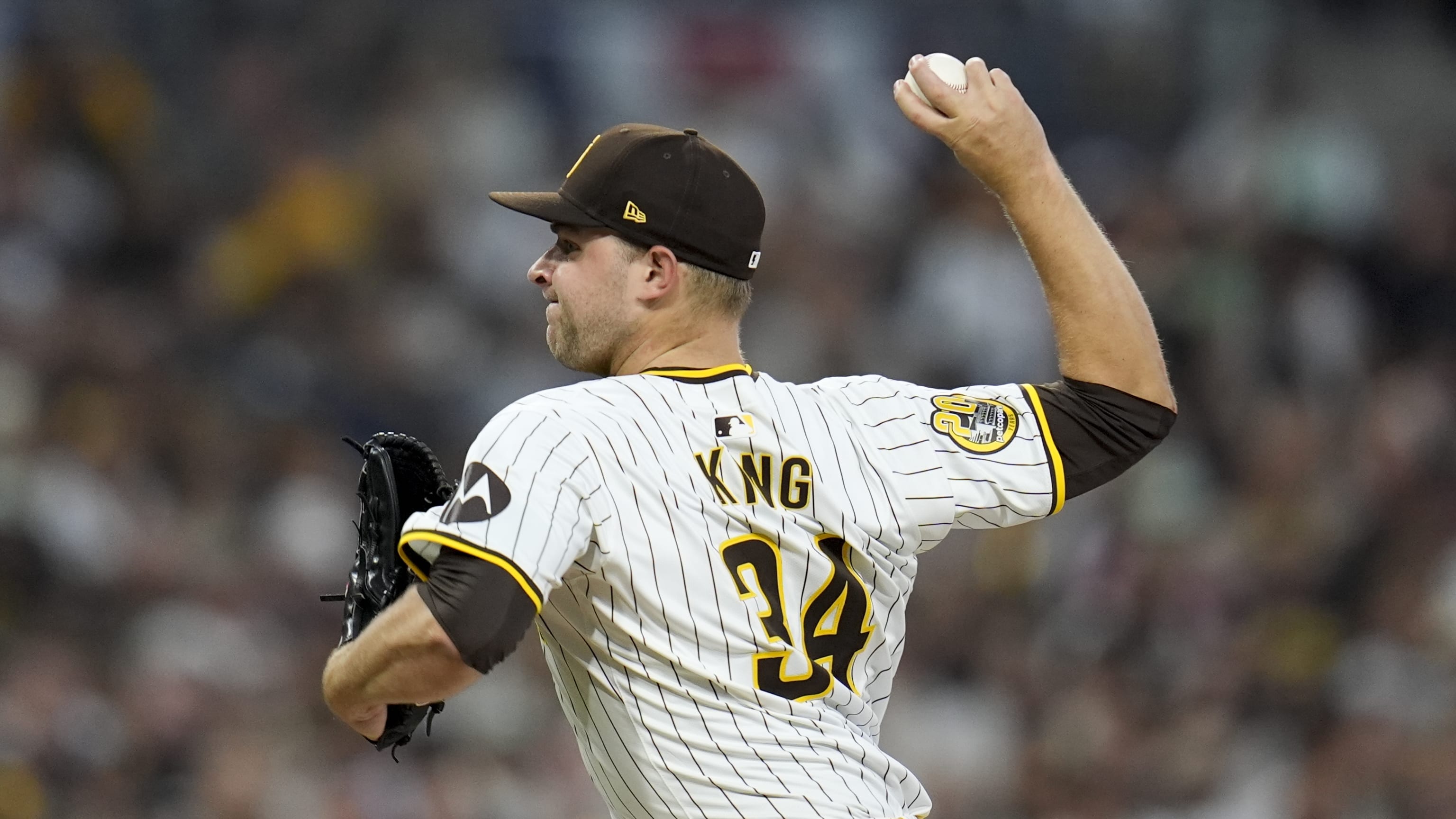
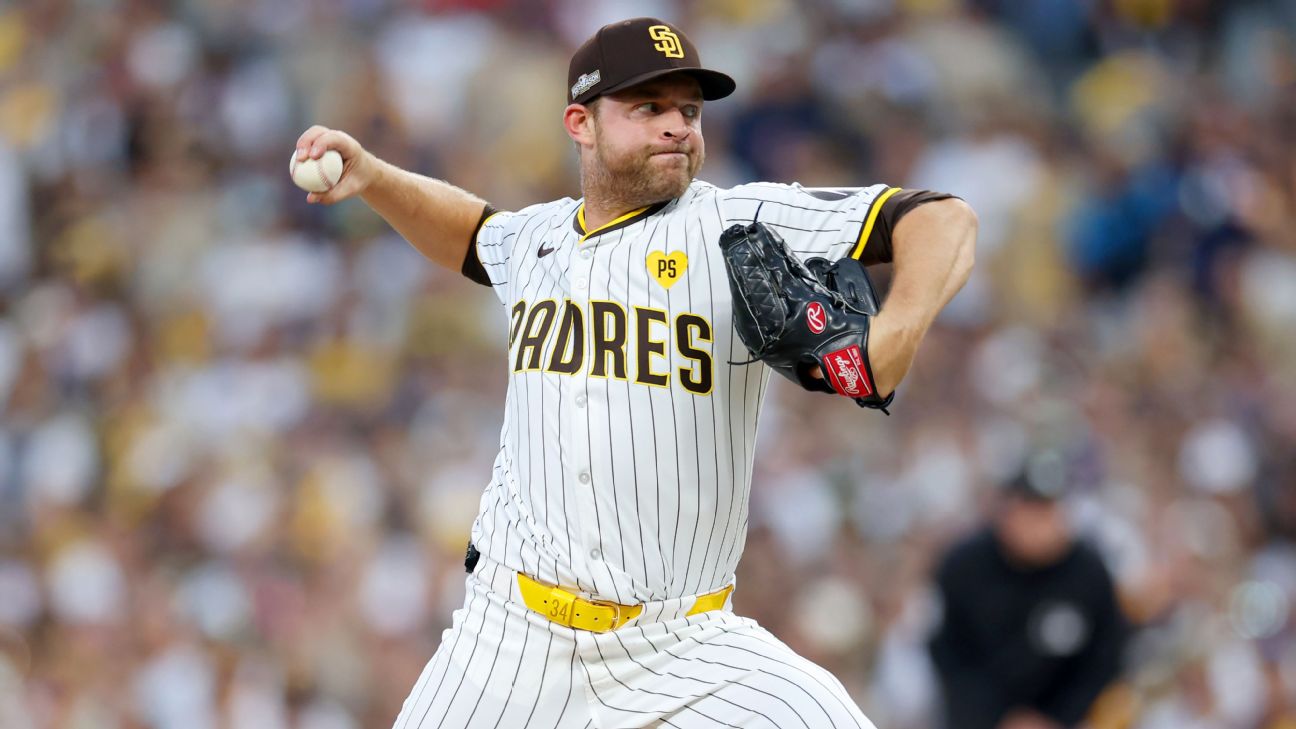
Now, the fallout from that loss may not be over. According to Bleacher Report’s Tim Kelly, the Padres are in serious danger of losing another key pitcher: veteran right-hander Michael King. In a prediction published earlier this week, Kelly suggested that King is unlikely to return to San Diego, citing both the team’s recent departures and the broader financial landscape surrounding the organization.
“The San Diego Padres have already lost the aforementioned Cease and Suárez in free agency,” Kelly wrote, “and considering they are reportedly willing to consider trade offers for star reliever Mason Miller and starter Nick Pivetta, it’s fair to assume that the usually-aggressive A.J. Preller doesn’t have a ton of money to spend this offseason.”
That assessment paints a clear picture of the Padres’ current predicament. Preller, long known for his bold and relentless pursuit of talent, appears to be operating under far more restrictive conditions this winter. Trade rumors involving high-end arms such as Miller and Pivetta only reinforce the idea that San Diego is exploring cost-cutting measures rather than adding payroll.
Within that context, Kelly believes Michael King will be the next significant piece to walk out the door.
“That likely means that Michael King—acquired in the December 2023 deal that sent Trent Grisham and Juan Soto to the Yankees—won’t return to the Padres,” Kelly continued. “Luckily for him, there will likely be a robust market of other suitors after King posted a 3.10 ERA in two seasons in San Diego.”

King’s situation is emblematic of the Padres’ broader challenge. When San Diego acquired him as part of the blockbuster trade that sent Juan Soto to New York, the move was viewed as a smart recalibration—trading one superstar for depth, pitching stability, and long-term value. King quickly validated that decision with strong, consistent performances, establishing himself as a reliable presence in the rotation and a valuable innings-eater with upside.
Over two seasons in San Diego, King posted an impressive 3.10 ERA, demonstrating command, durability, and the ability to navigate lineups multiple times. In a market where dependable starting pitching is increasingly scarce, that résumé carries significant weight. Unfortunately for the Padres, it also means King has likely priced himself out of their range.
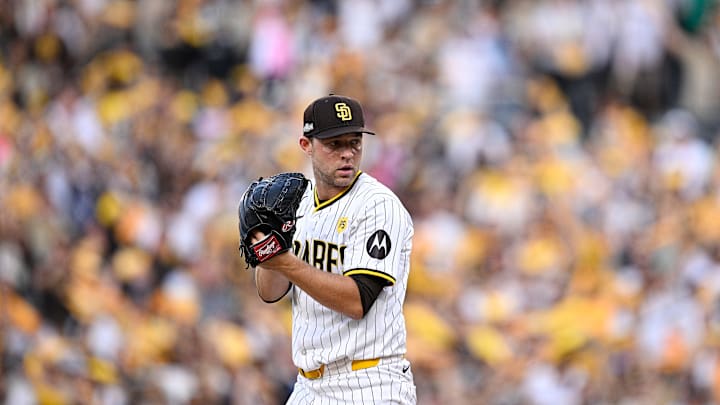
Financial realities appear to be the deciding factor. With so much of the Padres’ payroll already locked into long-term commitments, there simply may not be enough flexibility to compete for King’s services on the open market. Jim Bowden of The Athletic has projected King to command a contract in the neighborhood of $75 million, a figure that would stretch San Diego’s resources beyond a comfortable limit.
As a result, rival teams with deeper pockets and fewer payroll constraints have begun to emerge as logical landing spots. Among the most frequently mentioned suitors are the Boston Red Sox, New York Yankees, and Baltimore Orioles—all organizations with clear rotation needs and the financial capacity to pursue mid-to-high-tier free-agent pitching.
For the Red Sox, adding a pitcher like King would align with their ongoing efforts to stabilize a rotation that has struggled with inconsistency and injuries. Boston has been vocal about its desire to reestablish itself as a perennial contender, and investing in a reliable starter entering his prime would fit neatly into that plan.
The Yankees, meanwhile, are already familiar with King from his earlier tenure in their system. A reunion would make sense on multiple levels, particularly as New York looks to reinforce its pitching depth around a championship-caliber core. King’s ability to pitch in high-leverage situations and handle pressure would be a natural fit in the Bronx.
Baltimore is another intriguing possibility. The Orioles have built one of the most exciting young cores in baseball, but their postseason ambitions have been hampered by questions about starting pitching. Bringing in a veteran like King could provide stability and leadership for a rotation still finding its footing at the highest level.
While King’s potential departure would be another blow, the Padres cannot afford to dwell on what they’re losing. Instead, they must focus on how to adapt. Replacing King will not be easy, especially given the lack of comparable options available at a lower price point. The free-agent pitching market thins out quickly once you move beyond the top tier, and most arms with similar production profiles come with significant risk or cost.
That leaves San Diego facing a difficult balancing act. The front office will need to identify pitchers who can provide solid innings without commanding premium dollars. That could mean targeting bounce-back candidates, undervalued veterans, or younger arms with upside but less established track records. It could also involve creative trades, especially if the Padres decide to leverage their remaining assets to address multiple needs at once.
Still, the margin for error is slim. Losing both Cease and King in the same offseason would dramatically reshape the Padres’ rotation and place additional pressure on the pitchers who remain. Depth, already a concern, could quickly become a liability if injuries strike or performance regresses.

From a broader perspective, this offseason may represent a turning point for the Padres. After years of aggressive spending and headline-grabbing moves, the organization appears to be entering a more restrained phase—one defined by tough choices and financial discipline. Whether that shift is temporary or signals a longer-term change in philosophy remains to be seen.
What is clear is that the Padres no longer have the luxury of simply outbidding their competition. Every move must be calculated, every dollar carefully allocated. Letting a pitcher like Michael King walk is not a reflection of his value, but rather a consequence of the financial structure San Diego has built over the past several seasons.
As the offseason continues, all eyes will be on how Preller and his staff respond. Replacing King may not require finding a pitcher of identical caliber, but it will demand creativity, foresight, and a willingness to take calculated risks. For a team still hoping to contend in a competitive National League, the margin between success and setback has rarely been thinner.
In the end, the Padres’ inability to re-sign Michael King would serve as another reminder of the price of ambition. Big contracts bring star power and excitement, but they also limit flexibility when the bill comes due. This winter, San Diego is learning that lesson firsthand—and how they respond could shape the franchise’s trajectory for years to come.