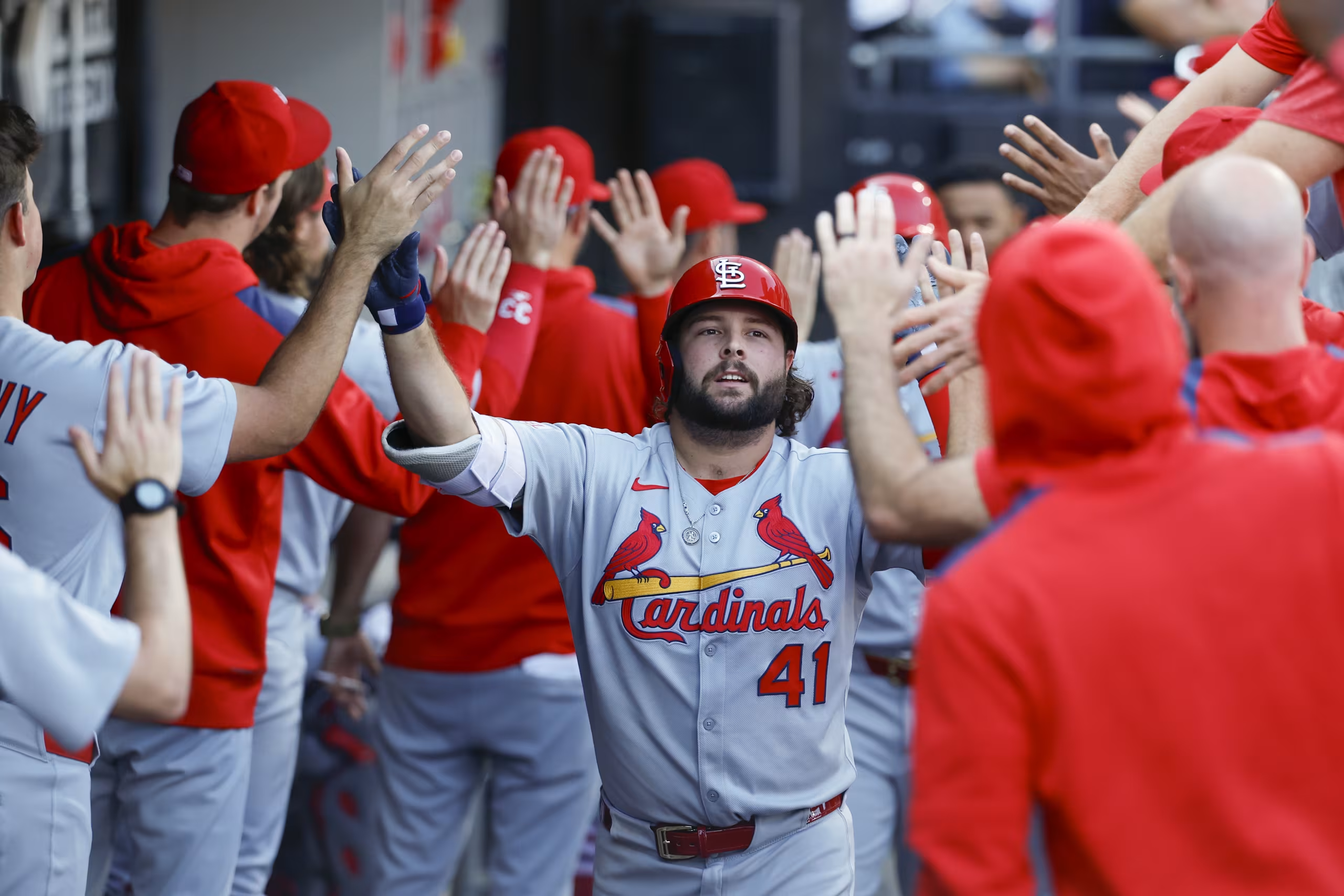
During the buildup to the new Major League Baseball season, the St. Louis Cardinals faced an important decision regarding their pitching staff—specifically, who would make up the team’s Opening Day starting rotation. After an offseason filled with roster adjustments and the addition of several new arms, the organization entered spring training with numerous pitchers competing for a limited number of rotation spots. Over the course of camp, the competition gradually narrowed as coaches and executives evaluated performances, conditioning, and overall readiness for the long season ahead. ⚾
By the end of spring training, six pitchers had emerged as the primary candidates for the starting rotation. These pitchers included Michael McGreevy, Matthew Liberatore, Dustin May, Kyle Leahy, Andre Pallante, and Richard Fitts. Each of them had been under close scrutiny throughout camp as the team weighed which combination of pitchers would give the Cardinals the best chance to begin the season strongly.
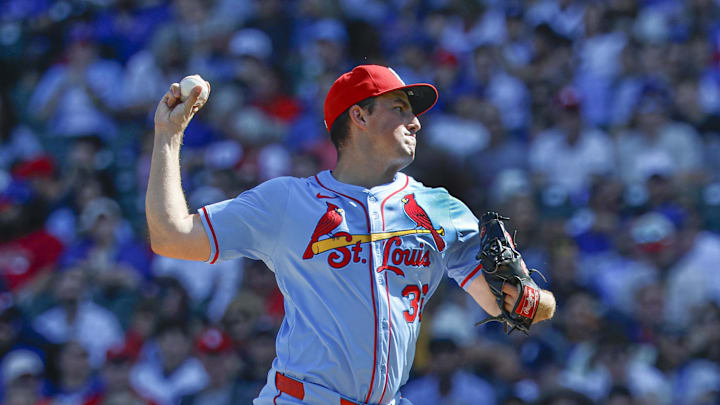
Another pitcher who had recently joined the organization also entered the broader conversation about the pitching staff. Hunter Dobbins was acquired during the offseason from the Boston Red Sox. However, his situation was slightly different from the others because he was still in the process of recovering from a serious injury. Dobbins had suffered a torn ACL during the previous season, and the Cardinals have been cautious with his progression as he works his way back to full health. Rather than rushing him into high-intensity competition, the team has taken a slower, more controlled approach to his workload throughout spring training.
While the Cardinals had several possible pitching configurations available, the club ultimately appeared to clarify its direction on Wednesday when a roster transaction involving Fitts surfaced. According to his official profile on MLB.com, Fitts had been optioned to the minor leagues. This move effectively removed him from contention for one of the five Opening Day rotation spots.

News of the transaction was first shared publicly by Derrick Goold, a respected reporter who covers the Cardinals for the St. Louis Post‑Dispatch. Posting on X (formerly Twitter), Goold explained that minor league transaction records showed Fitts being sent down to the Cardinals’ Triple-A affiliate. At the time he reported the information, the team itself had not yet issued an official statement confirming the move.
According to Goold’s report, the right-handed pitcher was assigned to the Cardinals’ Triple-A club, the Memphis Redbirds. That assignment effectively finalized the club’s five-man starting rotation heading into the season, although the exact order in which the pitchers will take the mound had not yet been determined.

With Fitts heading to Triple-A, the Cardinals’ projected starting rotation to begin the season includes Liberatore, May, McGreevy, Pallante, and Leahy. Each of these pitchers offers a different skill set and brings varying levels of experience to the staff, creating a mix of youth, upside, and recent success.
The decision to option Fitts also sheds light on how the Cardinals plan to structure their pitching staff overall. Earlier in spring training, there had been speculation that the team might consider using a six-man rotation. Such a setup can sometimes help protect pitchers’ arms and distribute innings more evenly, particularly early in the season. However, the latest roster move strongly suggests that the organization has opted to proceed with the more traditional five-man rotation instead—at least for the start of the year.
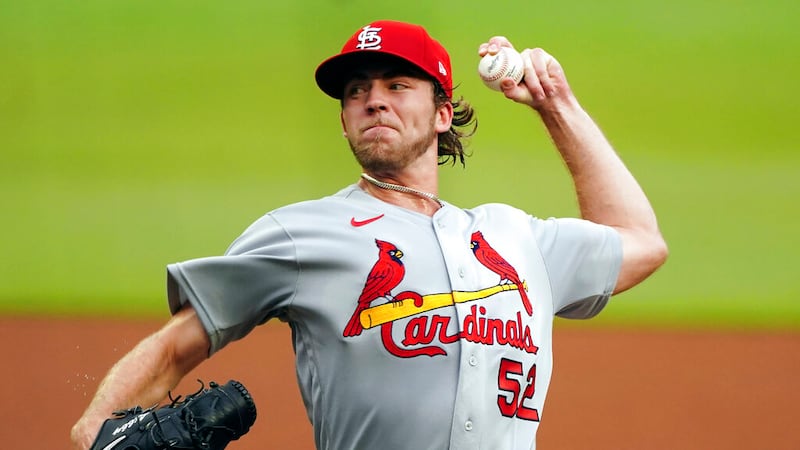
Even though Fitts will begin the season in the minors, the move should not necessarily be viewed as a long-term setback for the young pitcher. In fact, many within the organization see him as a promising arm with significant potential. His time in Triple-A could simply serve as an opportunity to refine his command, sharpen his secondary pitches, and remain ready for a call-up later in the season if the need arises.
Fitts showed flashes of his talent during spring training, though his results were somewhat inconsistent. Over 9⅓ innings pitched in exhibition games, he recorded a 5.79 earned run average. While spring training statistics are not always the most reliable indicators of a pitcher’s future performance, teams still evaluate them alongside other factors such as pitch quality, velocity, mechanics, and overall command. In the Cardinals’ case, the coaching staff ultimately decided that Fitts would benefit from more development time at the Triple-A level.
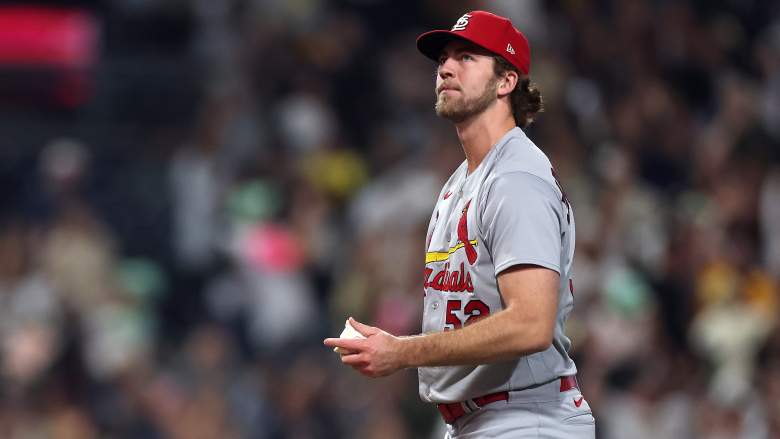
Despite those spring struggles, Fitts has already demonstrated that he can compete effectively at the major league level. In his young professional career, he has appeared in 15 big-league games and posted a respectable 3.97 ERA. That track record indicates that the Cardinals still view him as part of their future plans, even if he is not part of the Opening Day rotation.
One consequence of Fitts being optioned is that it confirms spots in the rotation for Pallante and Leahy—two pitchers who entered camp with something to prove. Both players delivered encouraging performances during spring training, helping strengthen their cases to remain with the big-league club.

Leahy, for example, is coming off an impressive season in 2025. During that campaign, he appeared in 62 games for St. Louis and recorded a strong 3.07 ERA. His reliability and ability to handle frequent appearances made him a valuable piece of the Cardinals’ pitching staff. Although much of his work previously came out of the bullpen, the organization appears ready to give him an opportunity in the starting rotation.
Pallante’s journey has been slightly more complicated. Earlier in his career, he experienced some challenges while pitching as a starter. His results in the rotation were inconsistent, and he occasionally struggled with command and efficiency. However, his performance during spring training has been extremely encouraging. Across 14 innings pitched in camp, Pallante posted an excellent 2.57 ERA, demonstrating improved control and effectiveness.
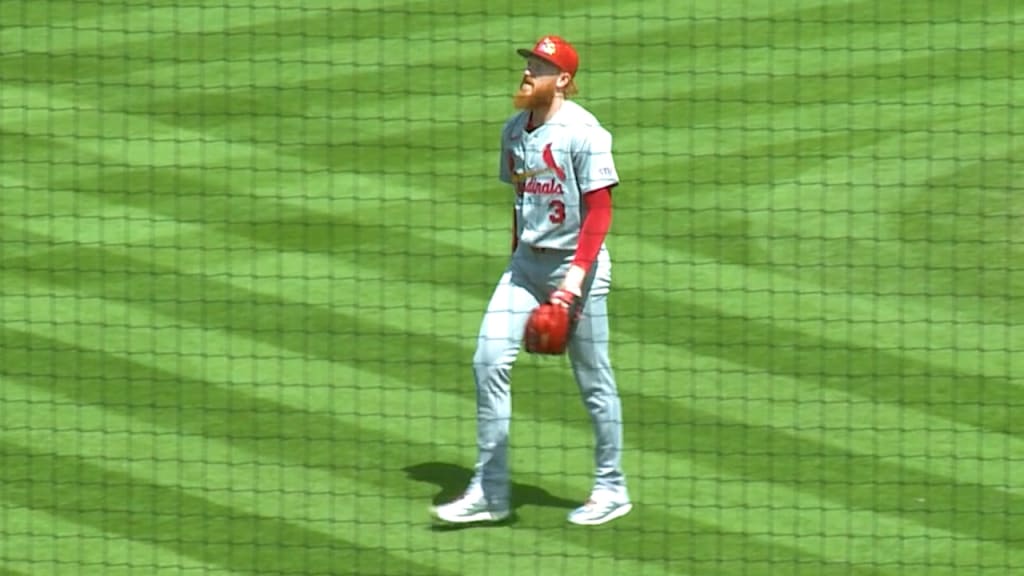
Those strong spring outings appear to have played a significant role in the Cardinals’ decision to include Pallante in the starting rotation. Coaches and team officials often emphasize that spring training is an opportunity for players to compete for roles, and Pallante clearly made the most of that chance.
With the rotation now largely settled, the Cardinals head into the new season with one of the younger pitching staffs in the league. Youth can bring both excitement and unpredictability, but it also offers the potential for growth and long-term success. Several of the pitchers expected to take the mound this season are still developing and refining their skills, which could pay dividends for the organization in the years ahead.
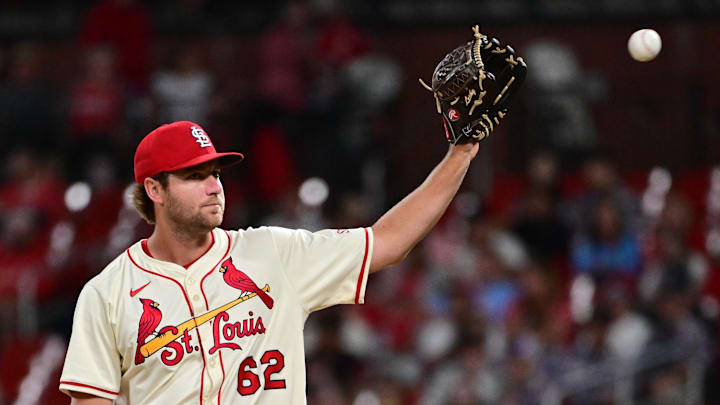
At the same time, the presence of capable pitchers in the minor leagues provides valuable depth for the club. Injuries, fatigue, and performance fluctuations are all common challenges over the course of a 162-game season. Having talented arms waiting in Triple-A gives the Cardinals flexibility if they need to adjust their rotation later in the year.
Fitts represents one of the most notable examples of that depth. While he may start the season with Memphis, his ability and prior major league experience make him a strong candidate to return to St. Louis if circumstances require it. In fact, Goold suggested that Fitts might fill a role similar to the one McGreevy held previously—serving as a ready option who can step into the rotation when needed.
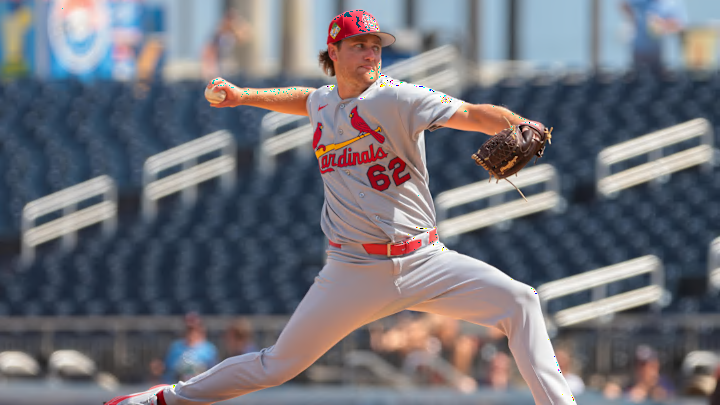
The Cardinals’ overall strategy appears focused on balancing immediate competitiveness with long-term development. By giving young pitchers opportunities at the major league level while maintaining a pipeline of talent in the minors, the organization is positioning itself to adapt throughout the season.
Fans will likely watch closely to see how the new rotation performs once the regular season begins. Each pitcher will face the challenge of maintaining consistency against major league hitters over extended outings. Success will depend not only on raw talent but also on durability, command, and the ability to make adjustments during games.
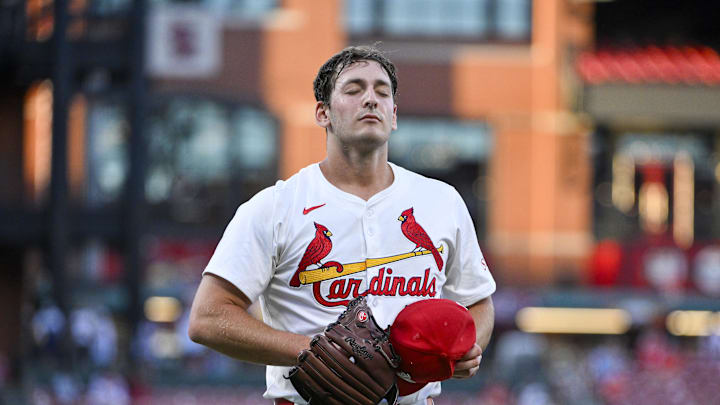
Even with some uncertainty that comes with a relatively young rotation, there is reason for optimism in St. Louis. Several of these pitchers have already shown they can succeed at the highest level, and their development could elevate the team’s overall performance.
If the group performs well, the Cardinals could find themselves with a strong foundation for both the current season and the future. Meanwhile, pitchers like Fitts and Dobbins remain important pieces of the organization’s depth chart, ready to contribute when their opportunities arise.

In the broader picture, the Cardinals seem to be moving in a promising direction. Their pitching staff is evolving, their young talent is gaining experience, and the team has built multiple layers of depth within the organization. As the new season approaches, the club appears confident in its decision-making and optimistic about the possibilities ahead.
READ MORE