The Milwaukee Brewers have taken full advantage of the Chicago Cubs’ recent struggles in the National League Central race. During Chicago’s difficult 10-game losing streak, Milwaukee managed to create valuable separation in the standings and strengthen its position near the top of the division. In a season where every game carries weight, especially in a tightly contested division, the Brewers understood the importance of capitalizing on opportunities when rivals falter.
The National League Central has become one of the most competitive divisions in Major League Baseball this season. Entering Sunday’s action, all five teams in the division held winning records above .500, a rare accomplishment that highlights how closely matched the clubs have been. Unlike divisions where one or two teams dominate while others struggle near the bottom, the NL Central has turned into a weekly battle where momentum can shift quickly. That makes stretches like the Cubs’ losing streak even more damaging, and Milwaukee has benefited directly from it.

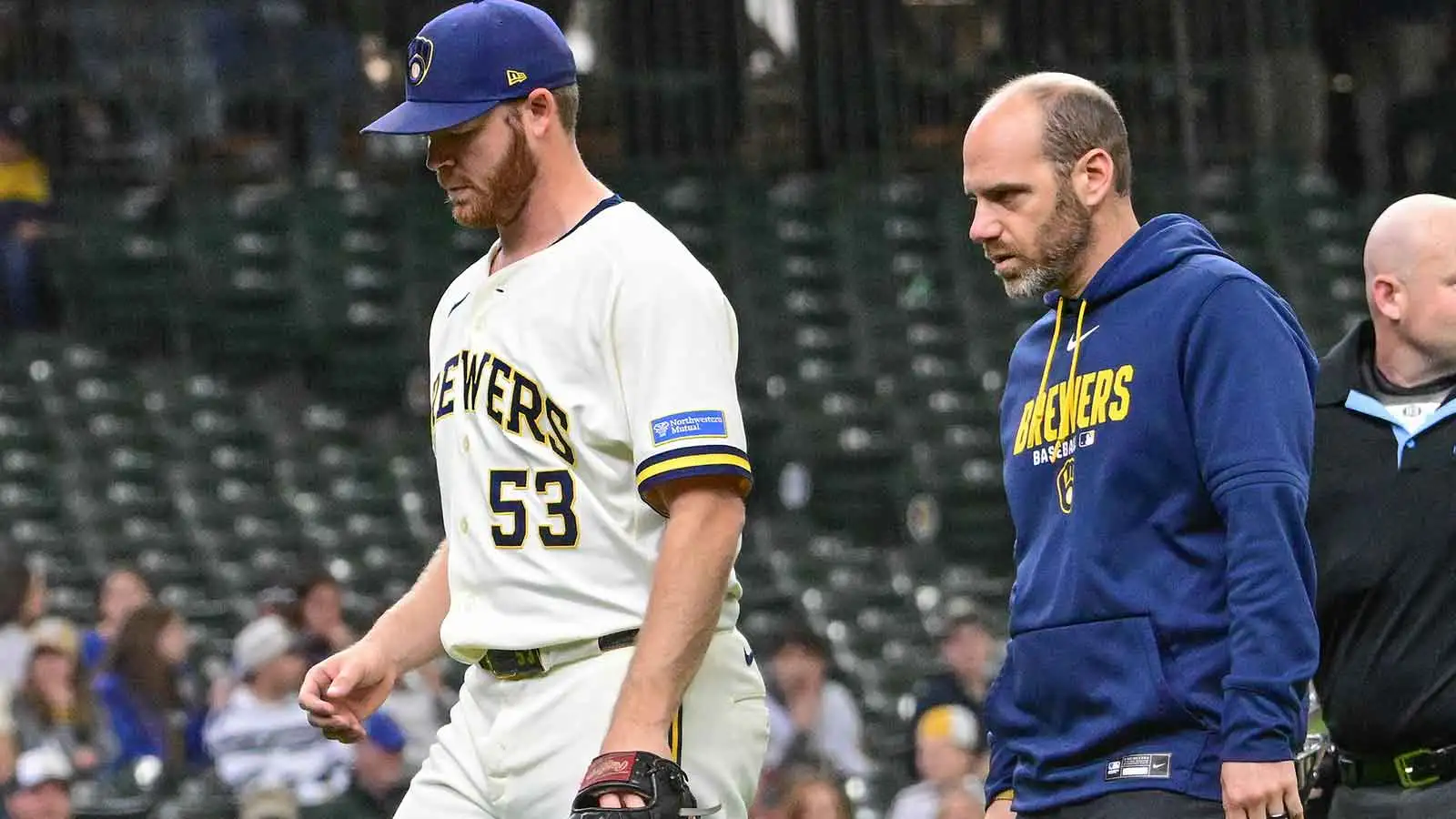
As the Brewers continue their road trip, they found themselves in Texas for a three-game series against the Houston Astros. After securing a strong victory in Friday night’s opener, Milwaukee had an opportunity to go for a sweep on Saturday. Instead, the Brewers suffered a disappointing 9-2 defeat that exposed several weaknesses, most notably the performance of starting pitcher Brandon Sproat.
The young right-hander struggled throughout the game and was unable to provide the stability Milwaukee needed on the mound. Following the loss, Brewers manager Pat Murphy addressed Sproat’s outing with striking honesty. Murphy did not attempt to soften his criticism or hide his frustration, making it clear that the organization expects far better performances from its pitchers if the team intends to remain in contention.
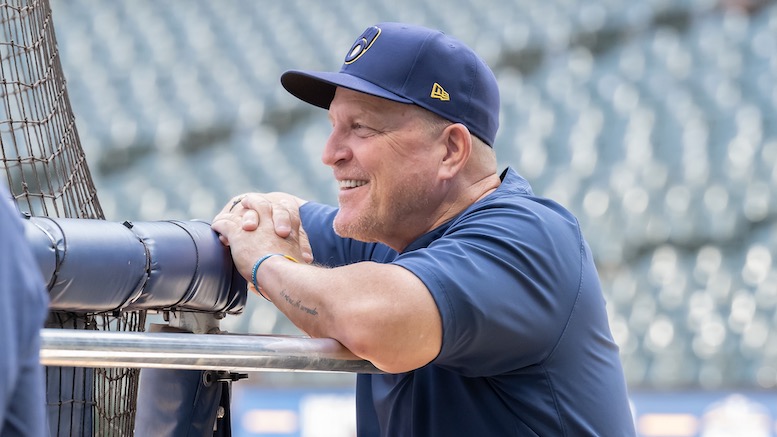
Murphy’s comments after the game reflected both disappointment and urgency. The Brewers are not a rebuilding team focused solely on player development and long-term potential. Instead, Milwaukee views itself as a legitimate contender trying to win games immediately, and the manager emphasized that poor performances cannot become a recurring issue.
“We’re not going to tolerate too many duds like this,” Murphy said after the game. “If he’s not going to step up, we’re trying to win. We’re not rebuilding.”
The statement sent a strong message not only to Sproat but to the entire clubhouse. Murphy’s approach highlighted the competitive mindset within the Brewers organization. While teams in rebuilding phases might allow young pitchers extended opportunities to work through struggles without much pressure, Milwaukee’s goals are different. Every game matters, and every rotation spot must contribute consistently.

Despite his blunt assessment, Murphy also acknowledged that Sproat has demonstrated flashes of talent throughout the season. The manager made it clear that the organization has not given up on the young pitcher. However, Saturday’s outing represented a significant setback in Murphy’s eyes.
“He’s done some really, really good stuff,” Murphy continued. “So it’s not like he’s not going to get another chance. It’s just that he took a step back. I thought he took a step back today.”
Sproat’s outing against Houston certainly supported Murphy’s concerns. Over 4.1 innings, the right-hander surrendered six hits and five earned runs while allowing a home run. Although he managed to strike out four batters, he struggled to keep Houston’s offense under control. By the time the fifth inning ended, the Brewers were trailing 6-2, a deficit they never seriously threatened to overcome.
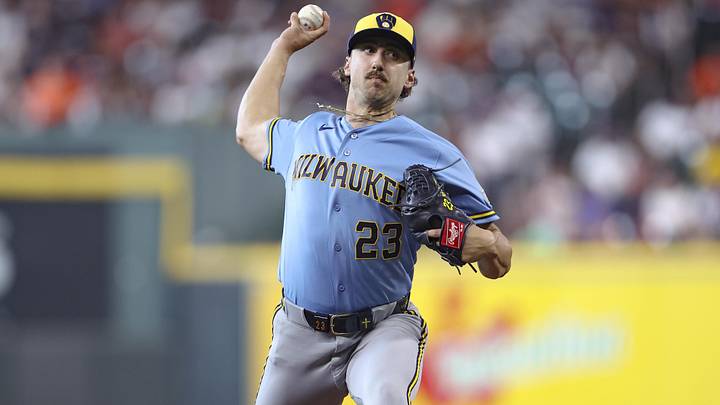
The Astros capitalized on mistakes throughout the night, consistently applying pressure against Sproat and forcing Milwaukee into an uphill battle early in the game. For a Brewers team that had hoped to build momentum with another victory, the loss served as a frustrating reminder of how quickly games can unravel when starting pitching fails to deliver.
Sproat’s recent performances have become an increasing concern for Milwaukee. May has proven to be an especially difficult month for the young pitcher, whose inconsistency has prevented him from establishing himself as a dependable part of the rotation.

Over the course of the month, Sproat posted a 1-2 record along with a 5.64 earned run average. Across 22.1 innings pitched, he allowed 20 hits and 14 earned runs while also surrendering three home runs. While his strikeout total of 27 demonstrates his ability to miss bats, command issues and costly mistakes have overshadowed the positives. He also issued 12 walks during that stretch, further contributing to his struggles.
Perhaps most concerning for Milwaukee is the pattern that has developed over Sproat’s last four starts. In each outing against quality opponents—including the San Diego Padres, Chicago Cubs, Los Angeles Dodgers, and Houston Astros—he allowed at least three earned runs. Those performances have raised questions about his ability to consistently compete against strong lineups at the major league level.
For a young pitcher trying to secure his role in a playoff-contending rotation, consistency is critical. While occasional rough outings are expected from developing players, repeated struggles against elite competition can quickly place a pitcher’s future role in doubt. That reality appears to be approaching for Sproat, who now faces mounting pressure to show improvement in his next opportunity.
Even so, the Brewers remain invested in his development because of the significant role he played in the organization’s offseason plans. Sproat was one of the key pieces Milwaukee acquired from the New York Mets in the Freddy Peralta trade during the winter. The Brewers viewed him as a pitcher with considerable upside and believed he could eventually become an important contributor to the rotation.

Because of that investment, the organization is eager to see him succeed rather than move on too quickly. However, patience has limits for teams with postseason aspirations. Milwaukee needs results now, not just long-term potential, and Sproat understands that reality.
After Saturday’s game, the pitcher took accountability for his performance and admitted his frustration with the way things have unfolded recently. Rather than making excuses, Sproat acknowledged that he must improve in several key areas if he hopes to remain in the rotation.
“Really, the only positive today was no walks,” Sproat admitted. “That’s a positive.”
His comments reflected both honesty and disappointment. While avoiding walks represented a small step forward, it did little to offset the overall struggles he experienced against Houston’s lineup.

“Right now it’s tough,” Sproat continued. “I’ve got to be better. Throw strikes early and often. It sucks right now, to be honest with you.”
The frustration in Sproat’s words illustrated the difficult reality many young pitchers face when transitioning into larger roles at the major league level. Talent alone is rarely enough to guarantee success. Consistency, command, confidence, and the ability to recover from adversity all play crucial roles in determining whether a pitcher can thrive over a long season.
Sproat also acknowledged that he needs to improve his ability to work deeper into games. Modern baseball places enormous value on starting pitchers who can consistently pitch into the sixth and seventh innings, reducing strain on the bullpen and giving teams stability throughout a series.
“If it was my choice, I’d go nine every time,” he said. “But that’s not reality. Let’s just start with getting through five right now.”
That statement perfectly captured where Sproat currently stands in his development. Rather than focusing on dominance or complete games, his immediate goal has become simply providing the Brewers with reliable innings and keeping the team competitive deep enough into games for the offense to have a chance.

Milwaukee will likely give Sproat another opportunity later in the week, but the pressure surrounding that start will undoubtedly increase. Murphy’s public comments made it clear that improvement is expected quickly. The manager did not need to deliver an extended lecture or create unnecessary drama to send his message. His straightforward remarks accomplished that on their own.
Now the responsibility shifts back to Sproat. How he responds could play a major role in determining his future with the Brewers rotation this season. Young players often face defining moments during difficult stretches, and this appears to be one of those moments for Sproat.

The Brewers remain in a strong position overall thanks to their recent success and the struggles of division rivals like the Cubs. However, if Milwaukee hopes to maintain its place near the top of the standings and eventually compete deep into October, the team will need greater consistency from the back end of its rotation.
Fortunately for Milwaukee, they still have confidence in their ace, Jacob Misiorowski, who was scheduled to take the mound in Sunday’s rubber match against Houston. Instead of entering the game with a chance to complete a series sweep, however, the Brewers found themselves simply trying to secure a series victory after Saturday’s disappointing loss.
In a competitive division where every win matters, missed opportunities can quickly become costly. The Brewers know they cannot afford many more outings like the one they received from Sproat on Saturday night. At the same time, baseball seasons are long, and young pitchers often experience periods of growth through adversity.
Whether Sproat can learn from these recent struggles and adjust successfully may ultimately determine not only his role within the Brewers organization, but also how far Milwaukee can go this season.
READ MORE