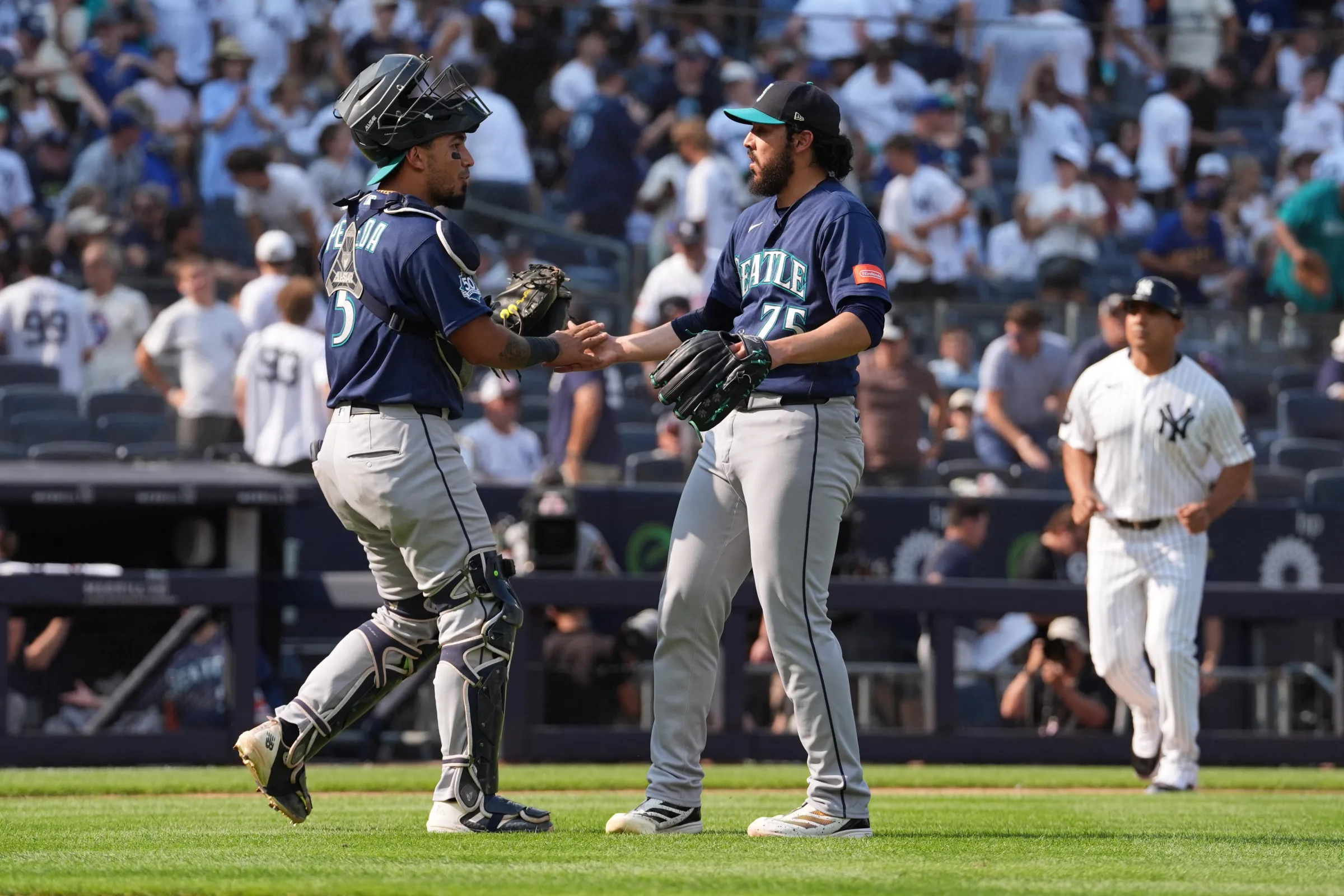
Seattle finally had something to celebrate on Aug. 13, but the victory came with a difficult roster decision attached to it.
The Mariners escaped New York with a dramatic 1-0 victory over the Yankees, ending a frustrating stretch and giving the club some much-needed momentum before heading into a critical series against the Houston Astros. But as Seattle packed up for the next stop on its schedule, rookie shortstop Colt Emerson received news he certainly did not want to hear: He was being optioned back to Triple-A Tacoma.
For Emerson, the timing could hardly have been worse. He had just endured an extremely difficult road trip, and being sent down immediately after a victory probably made the decision sting even more. Yet as uncomfortable as the move may have been, the Mariners reached a point where they could no longer afford to ignore what was happening at the plate.

Sending Emerson to Tacoma is not an admission that Seattle has lost faith in him. In fact, the opposite is probably true. The organization still believes he can become one of the most important players on its roster. But sometimes the best way to protect a young player’s long-term development is to remove him from the pressure of the major leagues before his struggles become even more damaging.
The Mariners Could No Longer Ignore Emerson’s Strikeout Problem
Emerson entered the major leagues carrying enormous expectations.

He was regarded as one of baseball’s premier young prospects, and Seattle clearly viewed him as a cornerstone of its future. The Mariners demonstrated just how strongly they believed in him by agreeing to an eight-year, $95 million contract extension before he had even made his major-league debut.
That kind of commitment tells you everything about how highly the organization values Emerson’s potential.
But potential does not automatically translate into major-league production.
The $95 million agreement is an investment in the player Seattle believes Emerson can become, not a guarantee that he must remain in the lineup regardless of his performance. At some point, the Mariners had to evaluate what was best for both the player and the team in the present.
Unfortunately for Emerson, the numbers had become impossible to overlook.
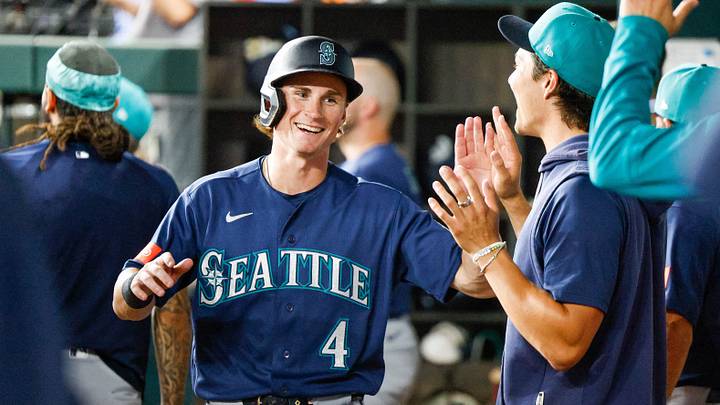
He was hitting just .190 with a .246 on-base percentage and a .335 slugging percentage. His eight home runs provided glimpses of the offensive ability that made him such a highly regarded prospect, but those flashes were being overwhelmed by his inability to consistently make contact.
Through 241 plate appearances, Emerson had struck out 83 times.
That represents roughly a 34 percent strikeout rate, an alarming figure for any hitter, but particularly concerning for a young player trying to establish himself on a team with postseason aspirations.
And the Mariners did not suddenly discover this problem during the Yankees series.
Opposing pitchers had been identifying Emerson’s weaknesses and repeatedly attacking them. High fastballs became particularly effective against him, and he struggled to catch up to pitches that were elevated in the strike zone. As his timing deteriorated, his plate discipline also began to suffer.
Instead of controlling the strike zone, Emerson increasingly found himself chasing pitches he might have previously handled. Once pitchers realized they could exploit that weakness, the at-bats became increasingly difficult for the rookie.
The results eventually became too severe to overlook.
Wednesday’s game against New York was perhaps the clearest indication that Emerson needed a reset. He went 0-for-4 and struck out in all four plate appearances, repeatedly looking overmatched against Yankees pitching.
That performance came during an especially brutal stretch.
Across his final 26 plate appearances, Emerson collected only three hits while striking out 13 times.
At that point, continuing to send him to the plate every day simply because of his contract or prospect status would have been difficult to justify.
The Contract Should Not Dictate the Decision
Seattle probably knew it was taking on additional scrutiny when it guaranteed Emerson $95 million before he had played a single major-league game.
That’s the reality of making such a massive investment in a young player.
When Emerson hits a home run or delivers a big performance, the contract looks like a brilliant bet on the future. When he goes through a prolonged slump, however, the same contract suddenly becomes part of the conversation.
It shouldn’t.
The Mariners did not sign Emerson to guarantee that he would never struggle. They signed him because they believe his ceiling is extraordinarily high.
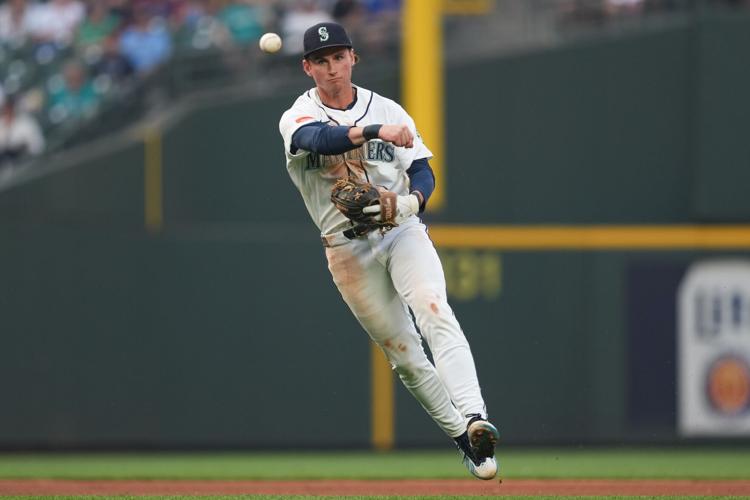
Sending him to Tacoma does not change that belief.
If anything, allowing Emerson to continue struggling at the major-league level simply because Seattle had already committed $95 million could have made the situation worse. Baseball is difficult enough for an inexperienced player without adding the pressure of trying to justify a massive contract every time he steps into the batter’s box.
The better approach is to remove some of that pressure and give him an opportunity to rebuild.
Tacoma provides exactly that environment.
In Triple-A, Emerson can work with coaches on his swing mechanics, improve his recognition of high fastballs and regain confidence without facing major-league consequences every night. He can focus on rebuilding the plate approach that made him such a dangerous prospect in the first place.
Before reaching Seattle, Emerson’s minor-league strikeout rate was around 20 percent. That number wasn’t perfect, but it demonstrated that he was capable of controlling the strike zone much better than he has during his recent major-league struggles.
The goal now should be to help him rediscover that version of himself.
This Is About Development, Not Giving Up
It would be easy to look at the demotion and assume Seattle has already soured on Emerson.
That would be a mistake.
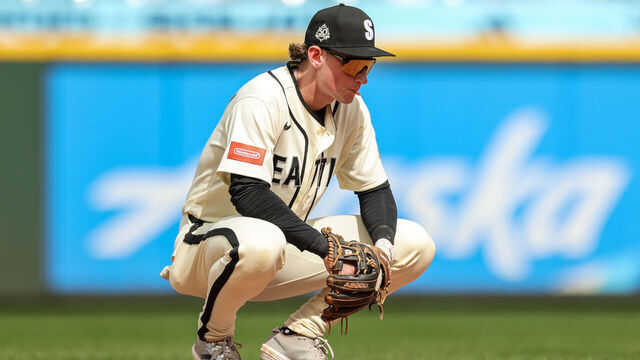
Young players routinely experience difficult adjustments when they first reach the major leagues. The difference between Triple-A pitching and MLB pitching can be enormous. Major-league pitchers identify weaknesses faster, exploit them more aggressively and rarely allow hitters to repeatedly make the same mistake without consequences.
Emerson is learning that lesson in real time.
The Mariners have to decide whether he is better served by continuing to struggle in front of thousands of fans or by spending time in Tacoma working through those issues with fewer distractions.
The answer became increasingly obvious.
Seattle needs Emerson to become a productive major-league hitter eventually. Sending him down now could help make that happen sooner.
Brock Rodden Has Earned His Chance
While Emerson’s demotion is the headline, Seattle also needs someone capable of helping the club immediately.
That player is expected to be Brock Rodden.
The 26-year-old switch-hitter has put together a strong season at Triple-A Tacoma, hitting .262/.342/.499 while producing 19 home runs, 22 doubles and 65 RBIs.
Those numbers don’t suggest Rodden is suddenly going to become Seattle’s next superstar. But they do show that he has earned an opportunity.
And perhaps just as importantly, Rodden brings versatility.
He is capable of playing second base, shortstop, third base and the outfield, giving manager Dan Wilson another flexible option as the Mariners navigate injuries and roster challenges.
That versatility could become especially valuable with J.P. Crawford recovering from a sprained left wrist.
With Crawford unavailable, Leo Rivas is expected to handle much of the shortstop responsibility. Rodden can provide support around the infield and potentially fill multiple roles depending on what Seattle needs on a given day.
For a team trying to stay competitive during an important stretch of the season, that flexibility matters.
Seattle Needs Immediate Production
The Mariners aren’t operating in a vacuum.
This isn’t a rebuilding club with unlimited patience. Seattle is trying to compete, and every game matters as the season moves toward its most important stage.
That’s what makes Emerson’s situation more complicated.

If the Mariners were out of contention, they could afford to let him continue learning through his struggles. But with meaningful games ahead and the Astros waiting, Seattle needs players who can consistently compete at the plate.
That doesn’t mean Rodden will suddenly solve every offensive problem.
It simply means Seattle needs to make decisions based on what the team requires right now while continuing to develop the players who will matter most in the future.
Emerson is part of that future.
Rodden may be part of the present.
Those two things can be true at the same time.
The Road Ahead for Emerson
The most important thing for Emerson now is how he responds.
Being sent to Triple-A can feel like a setback, especially for a player who arrived in the majors with so much hype and a massive contract already attached to his name.
But this doesn’t have to define his rookie season.
If Emerson uses his time in Tacoma to fix his timing, improve his fastball recognition and regain confidence, the demotion could ultimately become an important part of his development.
The Mariners don’t need him to prove anything immediately.
They need him to become the hitter they believed he could be when they made that eight-year commitment.
That process may require patience.
Emerson will eventually get another opportunity. When that happens, Seattle will want to see a hitter who is more comfortable in the strike zone, better equipped to handle elevated fastballs and capable of extending at-bats instead of consistently ending them with strikeouts.
The talent that made him a top prospect hasn’t disappeared.
But talent alone isn’t enough at the major-league level.
A Difficult Decision That Made Sense
There is no question that optioning Colt Emerson was painful.

Seattle invested heavily in him. The organization believes in his future. Fans have been eager to watch him develop into the star many expected him to become.
But none of that makes him immune from being sent down when his performance demands it.
The Mariners had reached the point where they had to prioritize development and immediate competitiveness over sentiment.
Emerson’s .190 batting average, .246 on-base percentage, .335 slugging percentage and 83 strikeouts in 241 plate appearances painted a clear picture. His four-strikeout performance against the Yankees only reinforced what had already been happening for weeks.

Continuing to send him out there without making an adjustment would not necessarily have helped him.
Tacoma gives him an opportunity to slow things down, work on his swing and rebuild the confidence that has been missing.
Meanwhile, Brock Rodden gets the opportunity he has earned after producing consistently at Triple-A.
Nobody should confuse Rodden’s promotion with Seattle abandoning Emerson as its long-term shortstop. That’s not what this is.
This is a temporary move designed to solve an immediate problem while helping one of the organization’s most important young players develop into the player Seattle expects him to become.
The $95 million contract remains an investment in Emerson’s future.
It just doesn’t mean he has to figure everything out in the major leagues.
For the Mariners, sending Colt Emerson back to Triple-A was uncomfortable. It was probably overdue. And given everything that had happened at the plate, it was ultimately the right baseball decision.
READ MORE