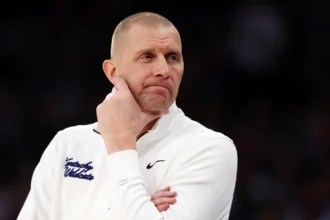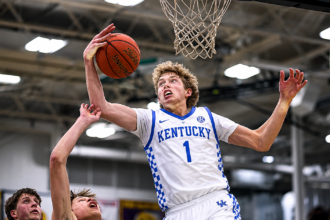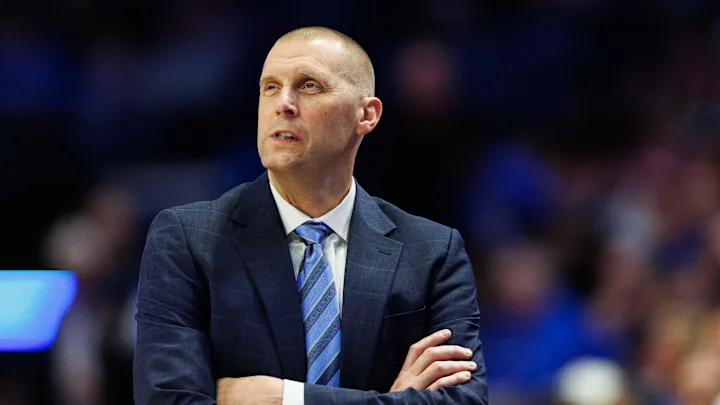
Kentucky Wildcats men’s basketball head coach Mark Pope is currently operating under increasing pressure as questions continue to mount around the direction of the program. After finishing the previous season with a 22–14 record, expectations for a quick turnaround were already high, but those hopes have been met with frustration as the Wildcats struggle to land elite-level talent during the 2026 recruiting cycle. What was expected to be a pivotal offseason aimed at rebuilding the roster has instead become a period defined by uncertainty, missed opportunities, and growing external criticism.
The core issue facing Kentucky revolves around recruiting, where the program has failed to meet its traditional standard of excellence. Historically one of the most dominant forces in college basketball recruiting, Kentucky has long been associated with securing top-ranked high school prospects and attracting high-impact transfers. However, in this cycle, the Wildcats have repeatedly come up short when competing for premier talent, raising concerns about the program’s ability to maintain its national standing in an increasingly competitive landscape.
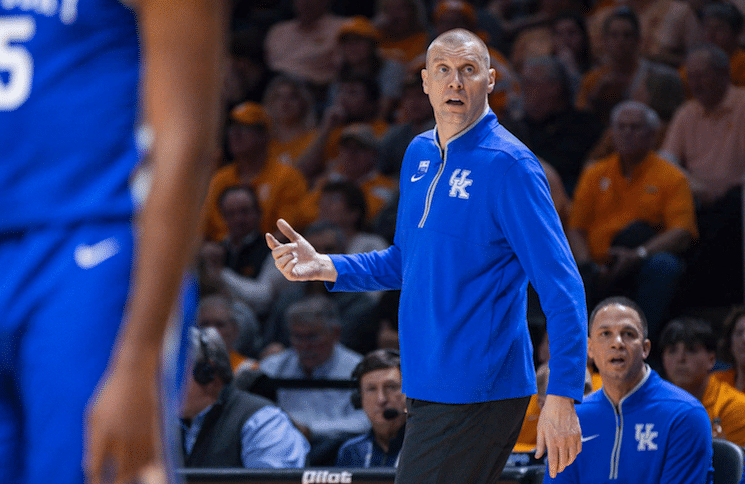
Those concerns became especially visible on May 8, 2026, when the nation’s top-ranked recruit, Tyran Stokes, officially announced his commitment to Kansas Jayhawks men’s basketball instead of Kentucky. Stokes had been heavily linked with the Wildcats throughout his recruitment, and many analysts believed Kentucky was one of the frontrunners to secure his signature. His decision to go elsewhere represented a significant setback for the program and added to an already growing list of missed opportunities.
During a televised segment on ESPN’s NBA Tip-Off, Stokes addressed the speculation surrounding his recruitment and his perceived connection to Kentucky. Speaking directly during the broadcast, he offered a brief but pointed comment that quickly gained attention among fans and analysts alike. When speaking to Charles Barkley, Stokes appeared to downplay expectations tied to Kentucky’s pursuit of him.
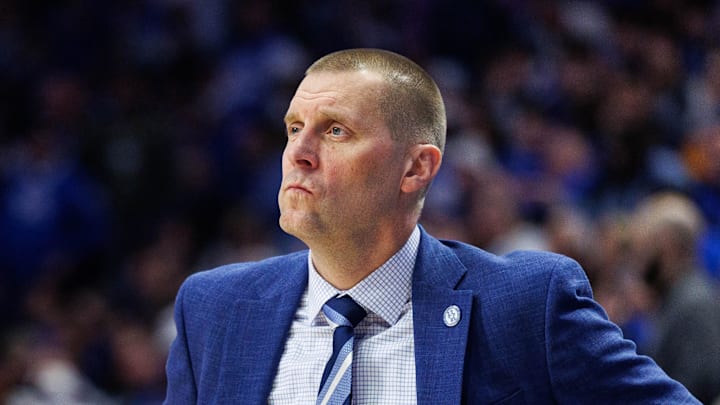
“Don’t get too excited,” Stokes said when asked about the Wildcats’ chances, a remark that hinted at the growing distance between the player and the program during the final stages of recruitment.
While individual recruiting losses are common in college basketball, Kentucky’s situation is being viewed through a broader lens due to a consistent pattern of setbacks across multiple recruiting channels. The program has not only missed out on elite high school prospects but has also struggled to make meaningful gains in the transfer portal, which has become increasingly important in modern roster building. In this new era of college basketball, where roster turnover is high and experience is often prioritized, Kentucky’s inability to consistently secure top transfer talent has become a notable concern.
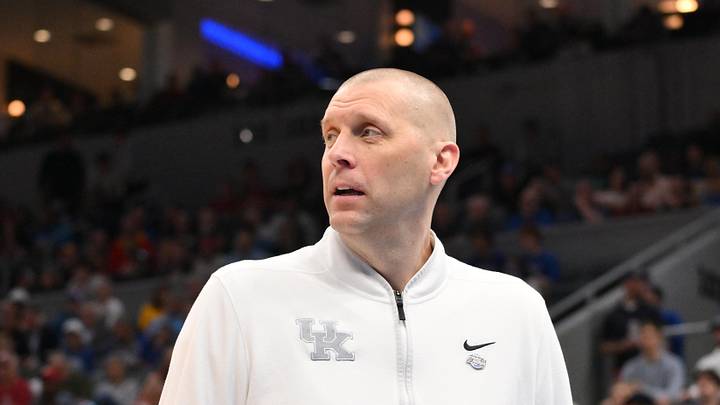
At present, Kentucky’s transfer portal ranking sits at 13th nationally according to data from 247Sports. While this position is not disastrous on its own, it is underwhelming for a program of Kentucky’s historical stature and recruiting expectations. Meanwhile, rival programs have capitalized on the current landscape. Both Louisville Cardinals men’s basketball and Tennessee Volunteers men’s basketball have assembled the top two transfer classes in the country, further highlighting Kentucky’s relative decline in this area.
The struggles extend beyond the transfer portal. Kentucky’s incoming high school recruiting class has also fallen significantly below expectations. Currently ranked 91st nationally, the class is unusually low for a program that typically competes for top-five or top-ten recruiting rankings every year. Even more concerning is the fact that Kentucky’s class is now ranked behind programs not traditionally associated with elite recruiting success, including Toledo Rockets men’s basketball and Penn Quakers men’s basketball. For a program with Kentucky’s resources, history, and brand power, such rankings are seen as a significant underperformance.

These recruiting challenges are compounded by the team’s on-court struggles from the previous season. Despite entering the year with high expectations and a roster assembled with significant investment, Kentucky failed to meet performance benchmarks. The team finished the season ranked 40th in adjusted offensive efficiency, a metric that reflects overall scoring effectiveness and consistency. This ranking placed Kentucky outside of the elite offensive tier that fans and analysts typically associate with the program.
The Wildcats’ postseason performance also fell short of expectations. In the NCAA Tournament, Kentucky suffered a 19-point defeat at the hands of Iowa State Cyclones men’s basketball in the second round. The loss was not only decisive but also exposed several weaknesses that had been present throughout the season, including inconsistent offensive production and defensive lapses in key moments. For a program that often measures success in deep tournament runs, an early and one-sided exit added further disappointment to an already underwhelming campaign.
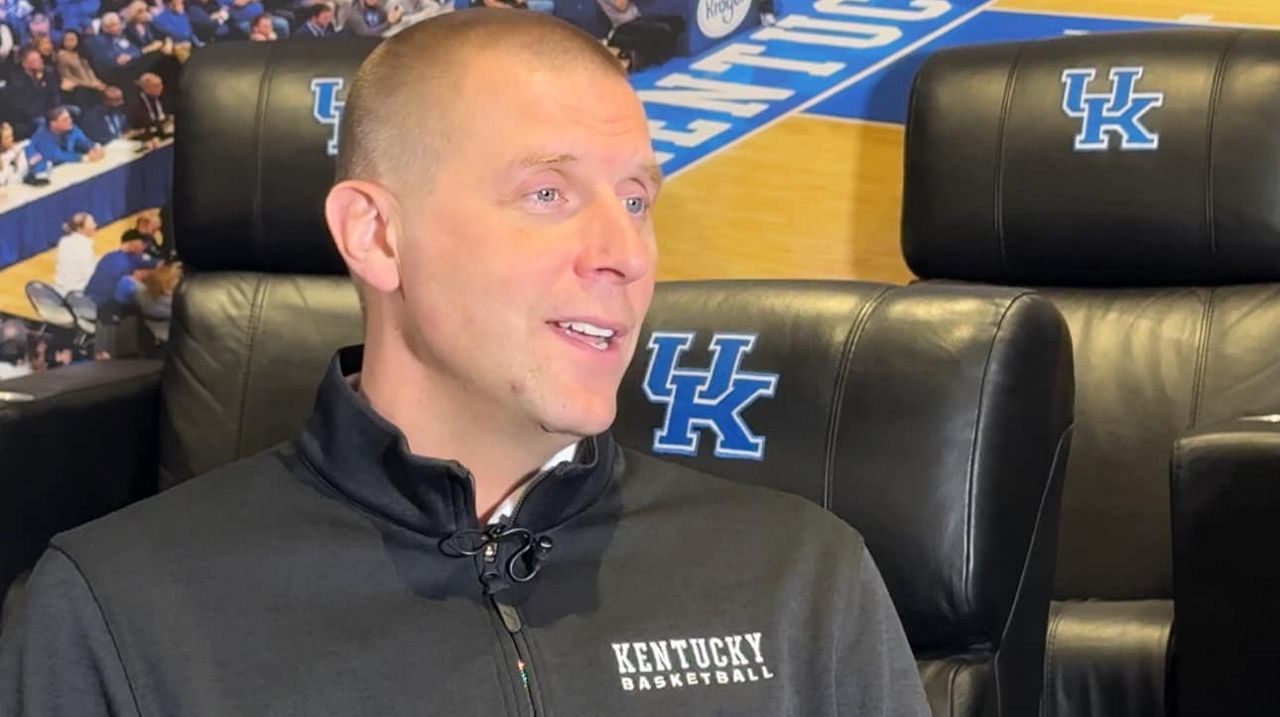
Compounding the frustration is the level of investment that went into the roster. Reports indicate that Kentucky’s 2025–26 team carried an estimated $22 million in Name, Image, and Likeness (NIL) spending. This level of financial commitment reflects the program’s desire to remain competitive in an evolving college sports environment where NIL deals play a significant role in roster construction. However, despite this substantial investment, the return on performance did not match expectations. Injuries to key players, inconsistent individual performances, and lack of cohesion all contributed to a season that ultimately failed to meet its goals.
During the coverage of Tyran Stokes’ recruitment decision, Barkley made a light observation about the environment surrounding the announcement. Sitting nearby, he commented on the visual cues that suggested Kentucky’s involvement in the recruitment process, noting the program’s signature color was prominently displayed in the setting.
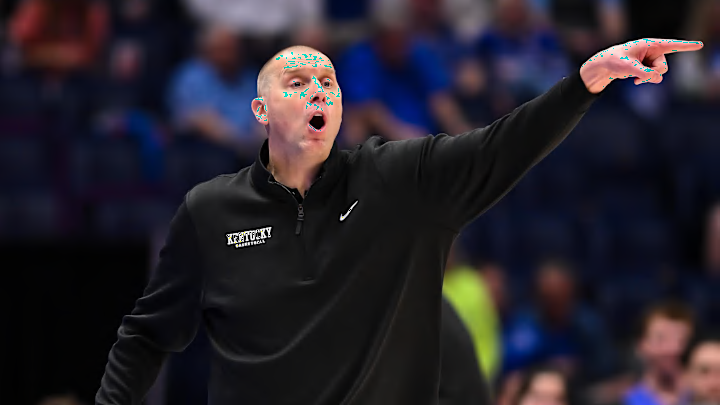
“A lot of blue over there,” Barkley remarked, referring to the strong visual presence associated with Kentucky’s branding during the segment.
Despite these subtle indications, Stokes ultimately chose Kansas, further deepening Kentucky’s recruiting frustrations and adding another high-profile loss to the offseason narrative.
As the offseason progresses, external pressure on Mark Pope has continued to intensify. According to reporting from CBS Sports, concerns are growing not only about recruiting outcomes but also about Kentucky’s competitiveness relative to rising programs in the region. Schools such as Indiana Hoosiers men’s basketball and Vanderbilt Commodores men’s basketball have shown noticeable improvement in recent cycles, creating additional competition for recruits and further complicating Kentucky’s path back to dominance.

Roster turnover has only added to the challenge. Kentucky has lost its top five scorers from the previous season, leaving significant gaps in production that must be addressed before the upcoming campaign. Replacing that level of output is never simple, particularly when combined with recruiting struggles and limited transfer portal success. At this stage of the offseason, the Wildcats have yet to secure multiple high-impact additions capable of immediately stepping into major roles.
So far, only one top-40 transfer prospect, Zoom Diallo, has committed to Kentucky. While Diallo is considered a promising addition with potential to contribute early, he alone is not viewed as sufficient to restore Kentucky to its usual competitive standard. Analysts continue to emphasize that the roster still requires additional reinforcements if the program hopes to compete at the highest level of college basketball.

As a result, the situation surrounding Kentucky basketball has become increasingly tense. Expectations remain high due to the program’s historical success, but recent recruiting setbacks and uneven on-court results have raised legitimate questions about its current trajectory. With pressure mounting and competition intensifying, the upcoming months are shaping up to be a critical period for Mark Pope and the future of the Wildcats program.
READ MORE