The New York Mets’ difficult 2026 campaign has continued to spiral into frustration, with the team lingering near the bottom of the National League standings and facing increasing pressure from both fans and media. As the losses mount and questions grow louder about the direction of the franchise, old comments from former Mets first baseman Pete Alonso have resurfaced—particularly remarks he once made during tense contract discussions with team president of baseball operations David Stearns.
Those comments, originally made during negotiations in 2024, have taken on new life as the Mets’ current struggles have reignited scrutiny of their roster-building philosophy and long-term decision-making. At the time, Alonso was in the middle of high-stakes conversations about his future with the organization, and the tone reportedly reflected the friction that often comes with star players and front offices trying to align on value, timing, and direction.

According to reporting from New York Post insider Jon Heyman, Alonso made a particularly pointed remark to Stearns during those discussions. The quote that has since resurfaced reads: “When my career is being evaluated for the Hall of Fame years from now, you’ll still be fiddling with your [flipping] formulas.” While the wording was sharp, the underlying message reflected a broader philosophical divide—Alonso emphasizing legacy, production, and on-field impact, while the front office leaned into analytics, projections, and long-term value modeling.
At the time, the comment was seen by some as a heated negotiating jab rather than a definitive statement of animosity. Still, in the context of the Mets’ ongoing struggles in 2026, it has gained renewed attention, with fans and commentators revisiting whether it symbolized a deeper disconnect between the player and the organization’s evolving leadership approach.
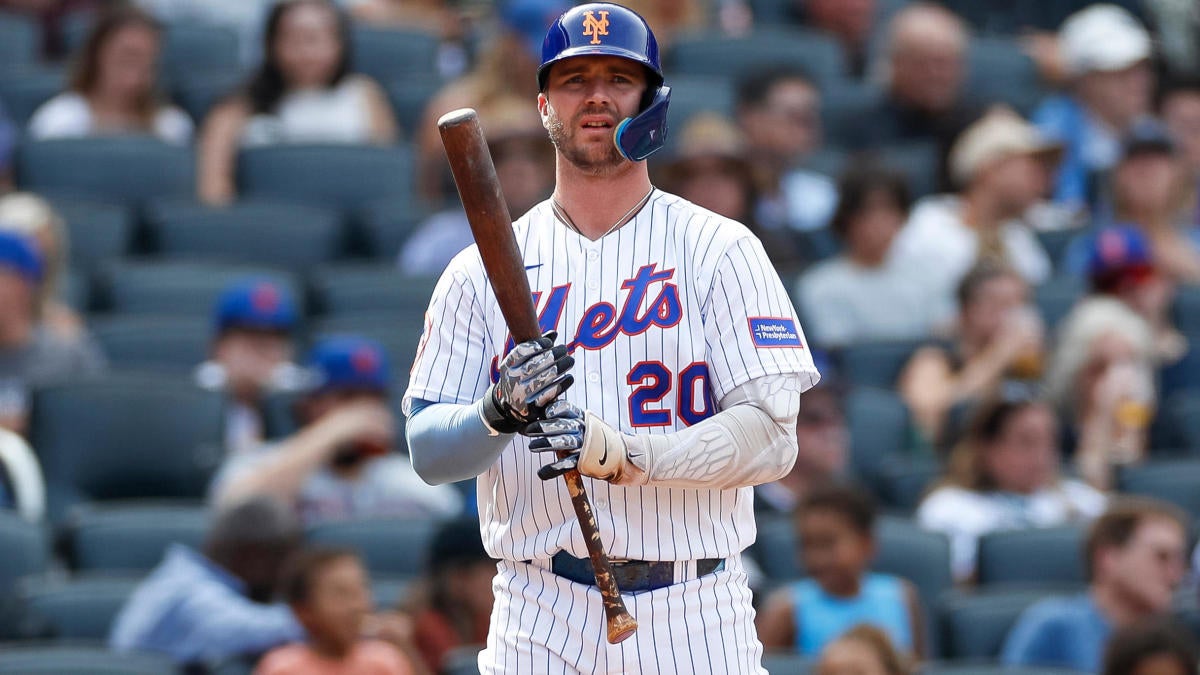
Following those negotiations, Alonso ultimately agreed to a short-term extension with the Mets, a move that kept him in New York temporarily but did not represent a long-term commitment from either side. Eventually, he departed in free agency, closing the chapter on his Mets tenure and beginning a new phase of his career with the Baltimore Orioles.
Meanwhile, the Mets moved forward by reshaping their roster under Stearns’ leadership. The front office brought in new players, adjusted payroll priorities, and attempted to build a more balanced and analytically driven roster. However, those changes have yet to produce consistent success on the field in 2026. Instead, the team’s performance has been uneven, with stretches of competitive baseball overshadowed by prolonged slumps, defensive breakdowns, and inconsistent offensive production.

As a result, the resurfacing of Alonso’s past comments has become symbolic for many observers—less about the quote itself and more about what it represents in hindsight. For critics of the Mets’ current direction, the remark is being interpreted as foreshadowing a philosophical tension: a power hitter focused on tangible career achievements versus a front office heavily invested in models, projections, and optimization strategies that do not always translate cleanly into wins.
Despite the renewed attention, Alonso himself has not publicly revisited the remark in any recent context. Throughout his career, he has generally maintained a respectful tone when discussing his time in New York. Even after leaving the organization, he has avoided turning his departure into a prolonged public dispute, instead emphasizing appreciation for his teammates, the fanbase, and his experiences in the city.

In earlier interviews following his exit, Alonso reflected on his Mets tenure with a more conciliatory perspective. He acknowledged the emotional weight of his time with the team but made clear he did not harbor resentment. As he put it in a conversation with the New York Post: “I can’t look back and be disgruntled. I have some of the best memories wearing that uniform, being in the locker room with those guys.” That sentiment has continued to shape how he is perceived in relation to the organization—less as a player burned by his departure, and more as someone who moved on while still valuing his time there.
Still, baseball narratives often linger, and Alonso’s connection to the Mets remains a recurring topic whenever the team struggles. His offensive production during his years in New York included multiple standout seasons, marked by power hitting, home run totals that placed him among the league’s elite sluggers, and moments that made him a centerpiece of the franchise’s identity during his tenure. Those accomplishments are not forgotten, especially as the Mets search for a consistent offensive anchor in their current roster construction.

Now with the Orioles, Alonso is navigating a new environment and a fresh set of expectations. His 2026 season has been uneven statistically, though still punctuated by flashes of the power that defined his earlier career. Through the early part of the season, he is batting .225 with seven home runs, 21 RBIs, 10 doubles, and a .773 OPS. While those numbers reflect some productivity, they also indicate inconsistency at the plate, as he continues adjusting to a new team context and lineup structure.
One of his more notable recent moments came in a game against the Miami Marlins, where he delivered a three-run home run that briefly shifted momentum and showcased his enduring ability to change a game with one swing. However, that highlight was balanced by less favorable moments as well, including defensive mistakes in another outing that contributed to a late-game loss. These ups and downs have reflected a broader theme of adjustment rather than dominance, as Alonso works to stabilize his performance in a new uniform.

Meanwhile, back in New York, the Mets’ front office continues searching for answers. The team’s struggles have become a focal point of criticism, with fans questioning whether the current roster construction maximizes the available talent or whether deeper structural issues are preventing the team from competing at a high level. Every losing streak seems to intensify scrutiny on Stearns and his approach, especially given the high expectations that accompany the Mets’ payroll and market size.
In that environment, Alonso’s resurfaced comment has taken on an almost symbolic quality. It is being replayed not necessarily as a personal attack, but as a snapshot of two competing worldviews in modern baseball: the analytical, formula-driven front office model versus the traditional emphasis on player legacy, production, and intangible impact. As the Mets continue to struggle in 2026, that tension feels more relevant than ever to those watching the franchise from the outside.

Ultimately, the situation illustrates how quickly baseball narratives evolve. A remark made during a contract negotiation years earlier can reemerge in a completely different context, reshaped by team performance, roster turnover, and shifting public perception. For Alonso, the focus remains on adapting and contributing in Baltimore. For the Mets, the pressure is on to turn their season around and validate the decisions that led them to this point.
Whether or not the resurfaced comment carries any real significance to the people involved, it has undeniably become part of the broader conversation surrounding a franchise still trying to define its identity—and a former star whose time in New York continues to echo through the team’s present struggles.
READ MORE