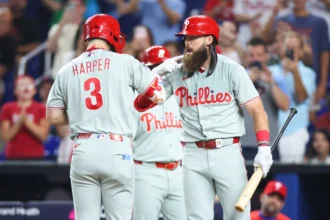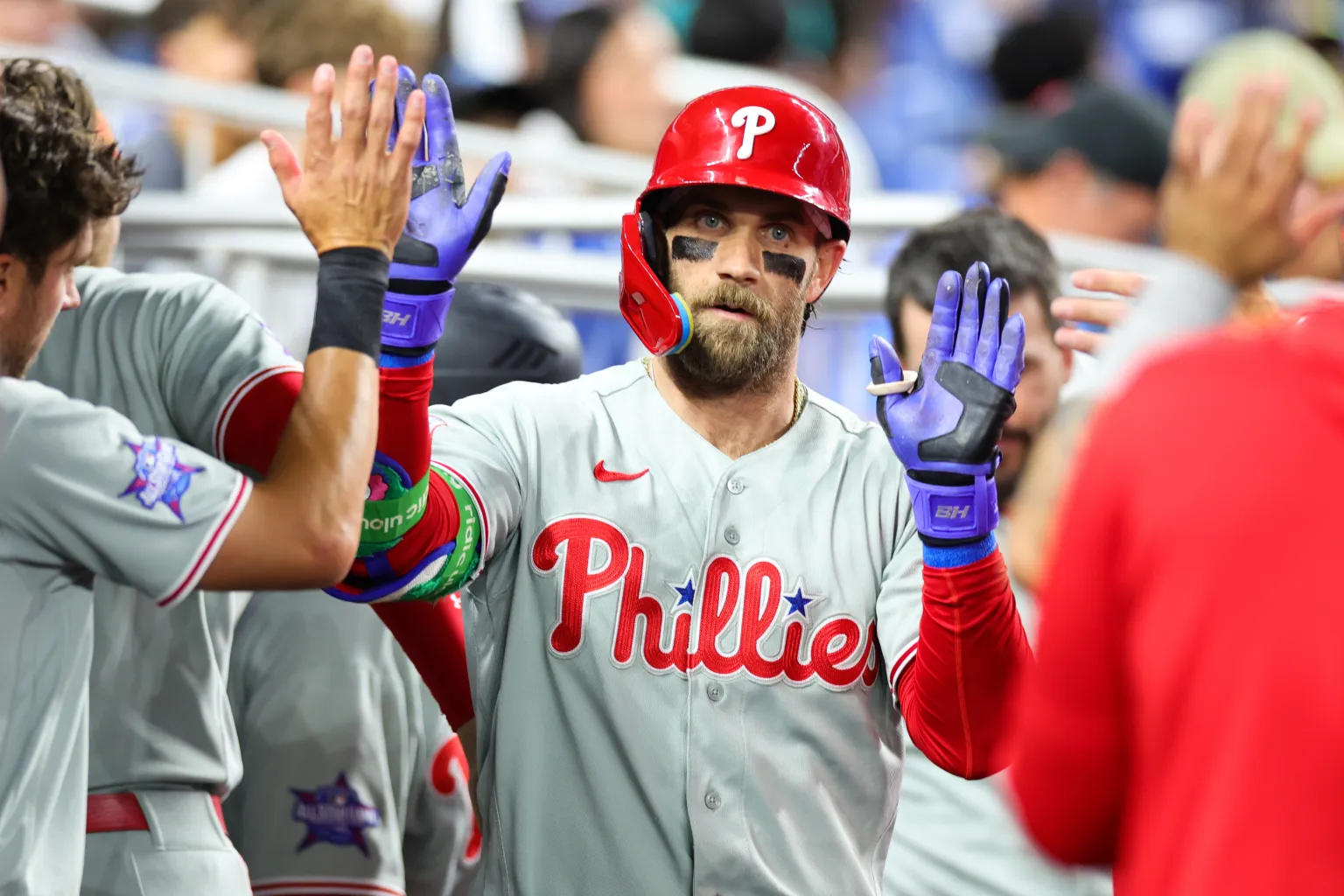
On a lively Tuesday evening in Philadelphia, the hometown Phillies delivered one of their most complete performances of the young 2026 MLB season, overpowering the Athletics in a decisive 9–1 victory at Citizens Bank Park. The game showcased not only the team’s growing momentum after an uneven start but also a standout individual performance from Bryce Harper, who once again reminded fans and critics alike why he remains one of baseball’s most impactful stars.
From the very first innings, the Phillies looked locked in. Their offense clicked early, their pitching staff kept the Athletics’ hitters in check, and the energy in the ballpark steadily built as the game progressed. But while the team effort was impressive, the night undeniably belonged to Harper, who delivered a performance that blended power, patience, and historical significance.
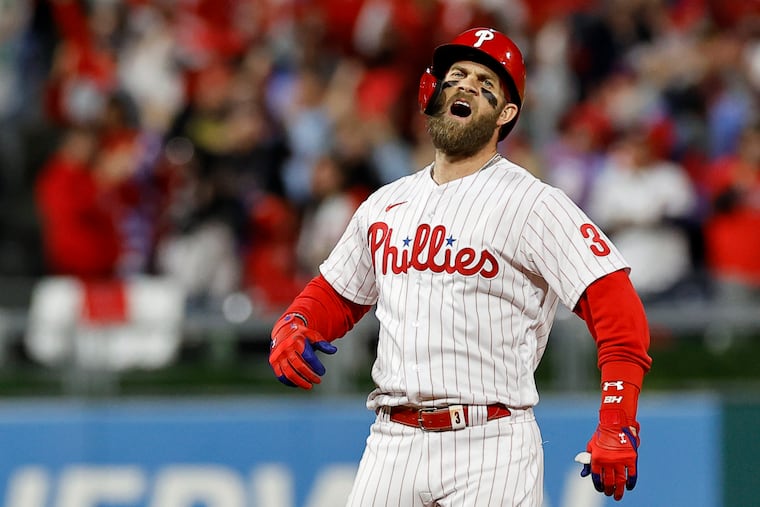
Harper finished the game with three hits and a walk, reaching base four times in total. More importantly, two of those hits left the yard, marking a multi-home run performance that electrified the crowd. Each swing seemed to carry weight, not just in terms of the scoreboard, but in the broader context of his already accomplished career.
The first home run came with authority, a clean shot that left little doubt. The second, however, was far more dramatic. Off the bat, there was uncertainty—both from the fans and even the players—about whether the ball had been caught near the wall. For a brief moment, it appeared as though Athletics infielder Zack Gelof might have made a highlight-reel robbery. But as the play unfolded, it became clear that the ball had indeed cleared the fence. The delayed realization only added to the excitement, creating a unique moment where confusion quickly turned into celebration.

Beyond the immediate impact on the game, Harper’s two home runs carried historical significance. With those swings, he recorded his 371st and 372nd career home runs, allowing him to move past both Freddie Freeman and Hall of Famer Gil Hodges on Major League Baseball’s all-time home run list. This milestone pushed Harper into 85th place all-time, further solidifying his legacy among the game’s great power hitters.
Moments like these serve as reminders of Harper’s consistency and longevity. While he is still actively adding to his totals, climbing a list filled with legends underscores just how impactful his career has been over the years. For Phillies fans, it also reinforces the value he brings not just as a player, but as a cornerstone of the franchise.
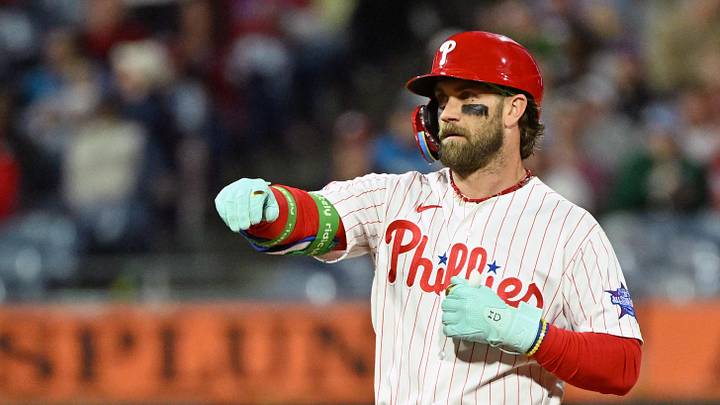
So far in the 2026 season, Harper has been producing at a high level. Through his first 36 games, he is batting .286, with 38 hits, nine home runs, 23 runs batted in, and 22 runs scored. These numbers reflect both his ability to generate offense and his role as a central figure in the Phillies’ lineup. His on-base plus slugging percentage (OPS) has also been particularly strong, hovering near elite levels and signaling that he is seeing the ball well and driving it with authority.
This season marks Harper’s eighth year with Philadelphia, a tenure that has included MVP-caliber campaigns, postseason appearances, and numerous memorable moments. Over time, he has evolved from a high-profile free-agent signing into a leader whose presence shapes the identity of the team.
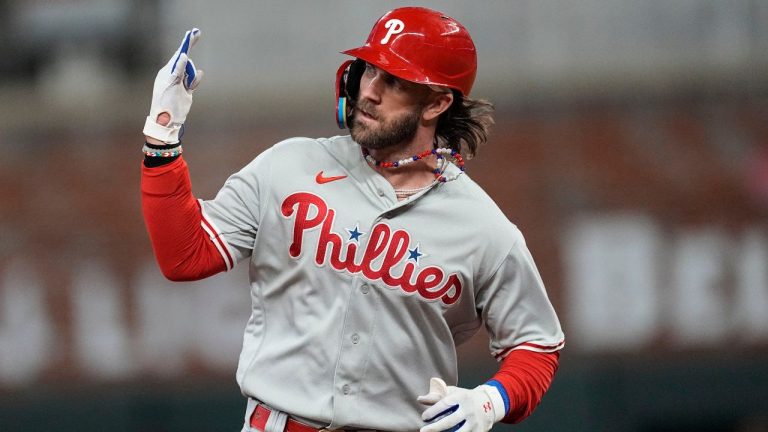
Unsurprisingly, Harper’s performance sparked a wave of reactions across social media, where fans, analysts, and commentators quickly weighed in on his big night. Many highlighted not only the raw numbers but also the dramatic nature of his second home run.
One widely shared reaction pointed out the initial confusion surrounding the play, noting how it appeared that Gelof might have made a spectacular catch before it became clear that the ball had actually gone out. The delayed realization added a layer of intrigue that made the moment even more memorable.
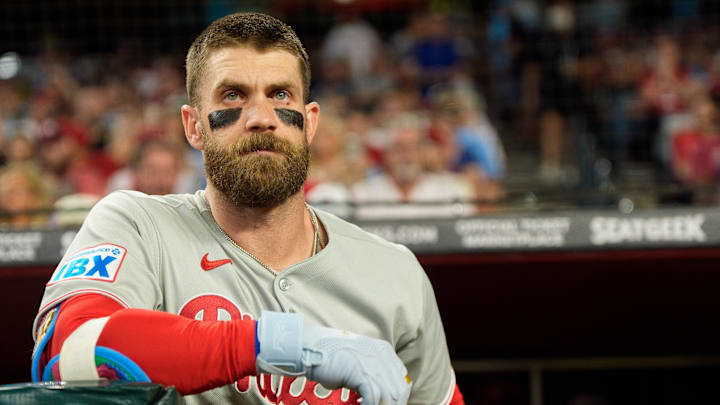
Another observer emphasized Harper’s overall impact on the team’s recent success, noting that the Phillies had won seven of their last eight games. That surge has helped them recover from an early-season slump, bringing renewed optimism to both the clubhouse and the fan base. Harper’s hot streak has been a central factor in that turnaround, with projections suggesting he could finish the season with over 40 home runs if he maintains his current pace.
There were also broader reflections on Harper’s standing within the city of Philadelphia. Some fans expressed relief and excitement at seeing him return to peak form, calling him the best athlete in the city when he is playing at this level. Others referenced earlier concerns from the preseason, when there had been some anxiety about his performance during spring training. In hindsight, those worries now seem premature, as Harper has clearly found his rhythm.
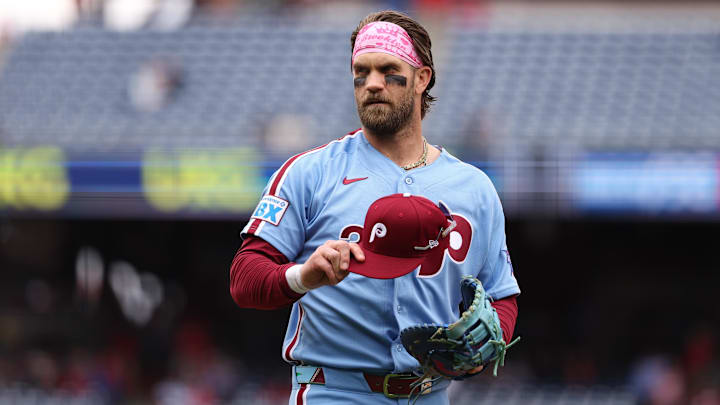
Statistics from the game further highlighted just how special the performance was. The multi-home run outing marked the 31st such game of Harper’s career, a number that speaks to his ability to deliver explosive offensive performances on a consistent basis. It’s not just that he hits home runs—it’s that he can take over games with them.
Meanwhile, those covering the team noted the unusual sequence surrounding his second homer. The uncertainty about whether the ball had been caught created a rare moment where even the players seemed unsure of what had happened. Stadium lights began to change, signaling a home run, even as Harper himself hesitated before beginning his trot around the bases. It was a moment of collective suspense that quickly turned into celebration once the call was confirmed.
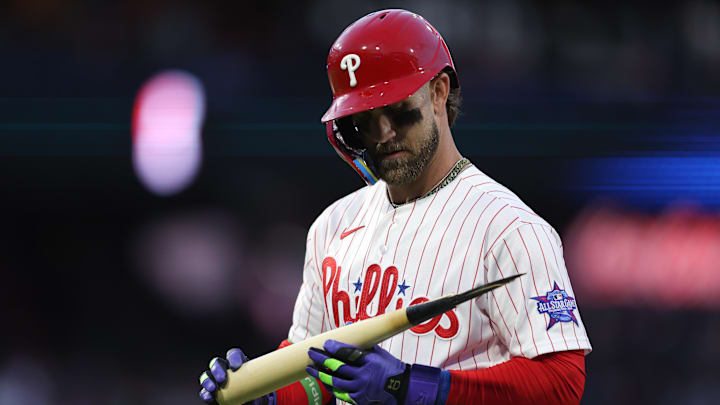
Looking beyond the individual performance, the Phillies as a team appear to be finding their footing. After a difficult start to the season, they have begun to string together wins, improving both their record and their confidence. Winning seven out of eight games is no small feat, especially in a competitive division, and it suggests that the team may be settling into a more consistent groove.
At present, the Phillies hold a 16–20 record, placing them fourth in the National League East. While still below the .500 mark, the recent surge has narrowed the gap and given them a clearer path toward climbing the standings. In a long MLB season, stretches like this can be pivotal, serving as turning points that reshape a team’s trajectory.
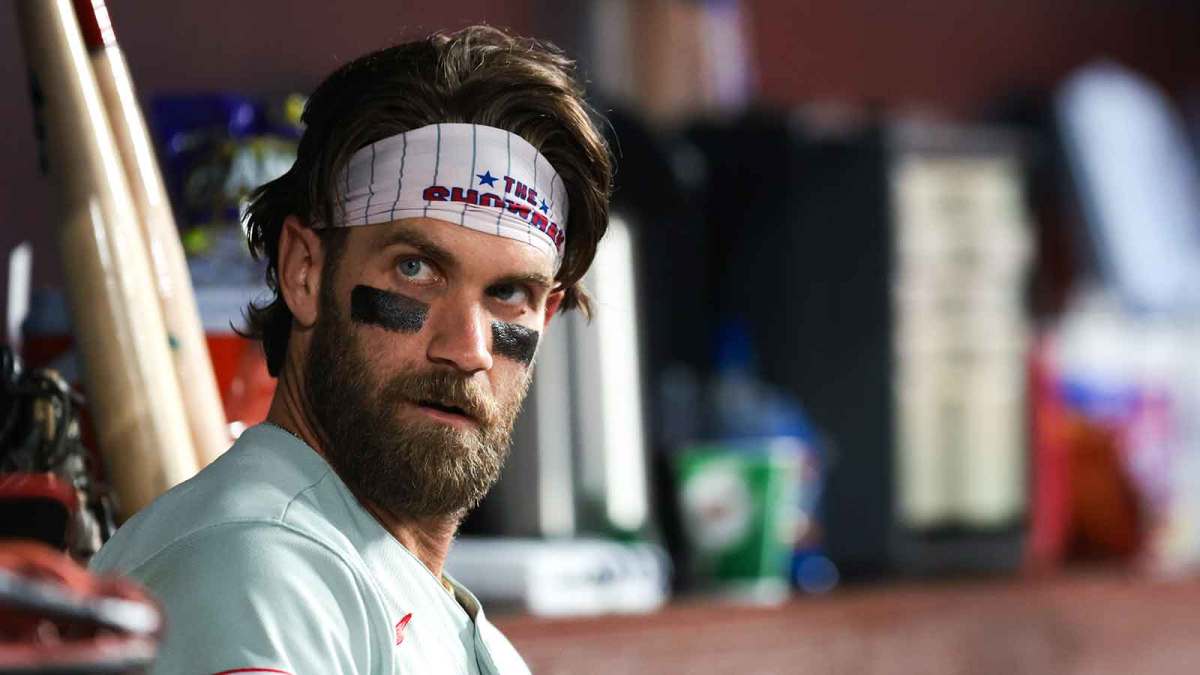
Their performance at home has been somewhat mixed so far. In 19 games at Citizens Bank Park, they have posted a 9–10 record. While not dominant, it’s a foundation they can build upon, especially if players like Harper continue to perform at a high level. Strong home-field play often becomes a key factor for teams looking to make a postseason push.
The combination of improving team performance and standout individual contributions creates a sense of cautious optimism. There is still plenty of season left, and challenges undoubtedly lie ahead, but the Phillies are showing signs of becoming a more cohesive and dangerous team.
Harper’s role in that evolution cannot be overstated. As both a veteran presence and a premier talent, he sets the tone for the lineup. When he is performing at an elite level, it tends to elevate those around him, creating more opportunities and putting pressure on opposing pitchers.
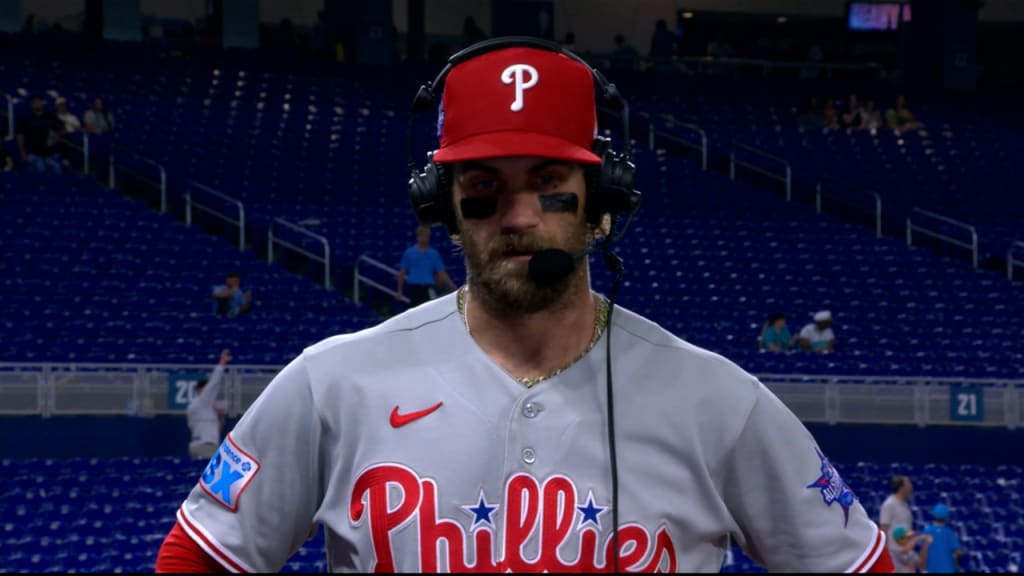
What makes his recent performance particularly encouraging is not just the power numbers, but the overall approach at the plate. Drawing walks, making consistent contact, and driving the ball to all fields are indicators of a hitter who is fully in control. That level of balance is often what separates good seasons from truly great ones.
For fans, nights like this are a reminder of why baseball can be so captivating. A single game can contain moments of suspense, bursts of excitement, and milestones that connect the present to the sport’s long history. Harper’s climb up the all-time home run list is one such connection, linking his achievements to those of players who came before him.
As the Phillies continue their season, the focus will be on maintaining this momentum and translating it into sustained success. If they can build on their recent run and continue to get contributions from key players, they have the potential to move up in the standings and become a more formidable contender.
In the meantime, performances like Harper’s will remain at the center of attention. Whether it’s the thrill of a towering home run, the significance of a career milestone, or the simple joy of watching a star player excel, these are the moments that define a season.
Tuesday night was one of those moments—a game where everything seemed to come together, where the team clicked, and where one player’s brilliance added an extra layer of meaning. For the Phillies and their fans, it was both a statement and a sign of what might still be to come.
READ MORE