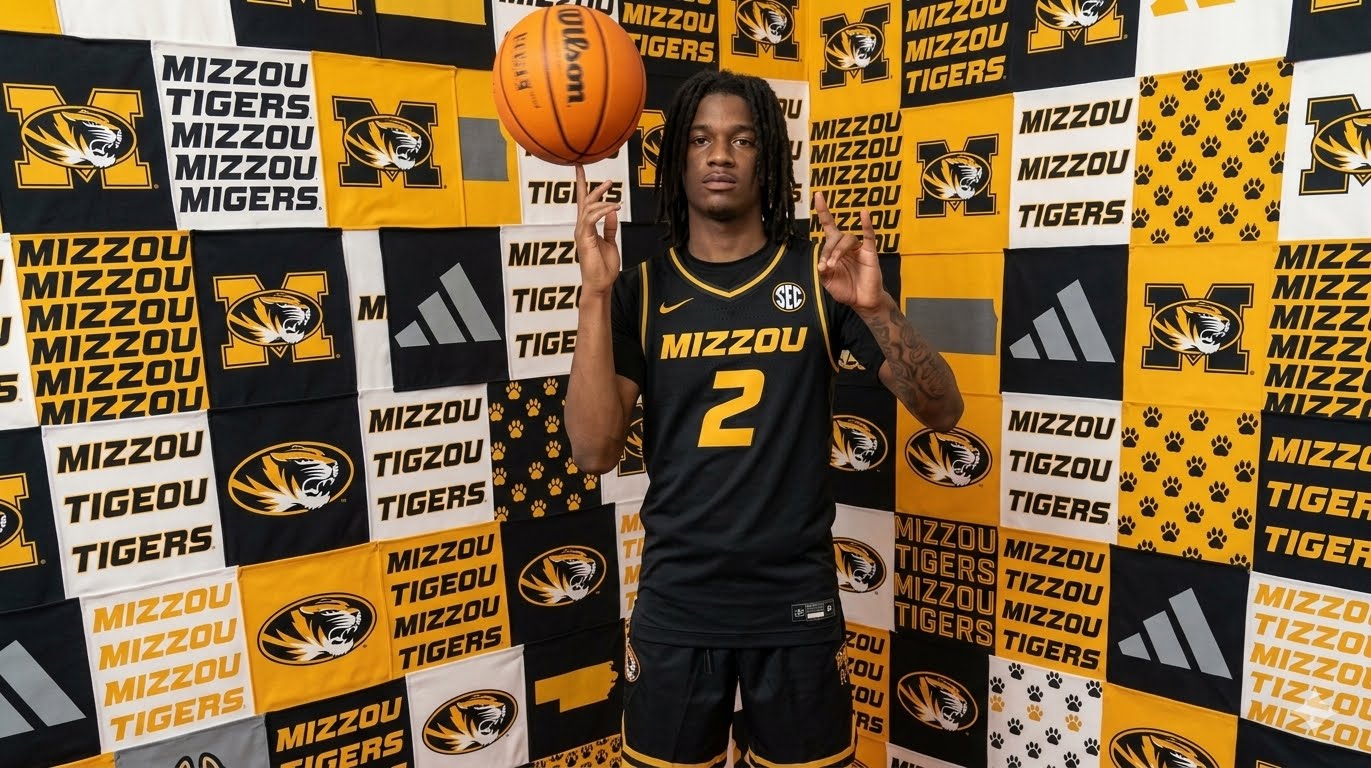
Missouri basketball’s offseason roster-building in the transfer portal appears to be reaching its conclusion, with the addition of another experienced guard who brings both scoring ability and positional flexibility. On Tuesday, South Dakota transfer guard Jordan Crawford announced via social media that he has committed to the Tigers, becoming the fifth incoming transfer for the program this offseason. With this move, Missouri looks as though it has addressed most of its remaining roster needs ahead of the 2026–27 campaign.
Crawford arrives in Columbia with a fairly extensive college journey already behind him, bringing experience from multiple programs and conferences. He began his career at the College of Charleston, where he spent two seasons after joining as part of the Class of 2022. After that initial stint, he transferred to Eastern Kentucky in 2024 for a single season before making another move to South Dakota, where he played last year. Now, as a 6-foot-3 redshirt senior originally from Charlotte, North Carolina, he joins Missouri with one final year of eligibility remaining.

That experience across different systems is part of what makes Crawford an intriguing addition for the Tigers. He is not arriving as a guaranteed starter or centerpiece of the rotation, but rather as a proven veteran who can stabilize minutes, provide scoring bursts, and handle multiple responsibilities depending on game situations. His profile suggests a player who is best suited to a supporting role rather than a high-usage starter, but one who can still influence games in short stretches.
Statistically, Crawford has shown himself to be a confident perimeter shooter and a player willing to take on offensive responsibility. At South Dakota last season, he averaged 14.4 points per game while also contributing 2.9 rebounds, 1.4 assists, and 1.2 steals per contest. His shooting efficiency from beyond the arc stood out in particular, as he connected on 36.8% of his three-point attempts while taking 6.5 shots from deep per game. Over the course of his entire college career, spanning 94 games, he has maintained a 34.7% three-point shooting percentage and averages 9.0 points per game.

Those numbers help explain why Missouri targeted him as a depth piece capable of stretching the floor. The Tigers needed additional spacing options and secondary ball-handling behind their primary guards, and Crawford’s skill set fits that niche. He is not expected to dominate possession or run the offense full-time, but he can help keep defenses honest by forcing them to respect his shooting range.
Advanced metrics also highlight just how much Crawford leans into perimeter scoring. According to CBB Analytics, he attempted more three-pointers per 40 minutes than any Missouri player last season, averaging 8.5 attempts from deep in that adjusted metric. That level of volume suggests a player who is comfortable letting it fly from long range and who does not hesitate when open looks are available. For a team like Missouri that is looking to diversify its offensive threats, that kind of aggressive shooting profile can be valuable in second-unit rotations.
He has also shown flashes of strong individual scoring performances. One of his standout outings came in Missouri’s win over South Dakota in November, where he posted a team-high 18 points. In that game, he knocked down three shots from beyond the arc and finished 7-of-15 overall from the field. That performance is representative of what he can offer in spurts: a guard who can get hot from outside and quickly shift momentum with scoring runs.
While Crawford is not expected to take on a starring role with the Tigers, his presence adds important depth to a backcourt that is still taking shape. Missouri’s rotation at guard is expected to be led by a mix of youth and experienced transfers, with different players filling specific roles depending on lineup combinations and matchups.
One of the key pieces projected to lead the offense is five-star freshman Jason Crowe Jr., who is expected to serve as the team’s primary ball-handler. Crowe brings significant expectations as a highly touted recruit, and Missouri’s coaching staff is likely to give him substantial responsibility early in his collegiate career. However, relying too heavily on a freshman point guard over the course of an SEC season can be risky, which makes experienced depth behind him especially important.
That is where players like Crawford become valuable. Even if he is not the primary playmaker, he can take on secondary ball-handling duties, relieve pressure from Crowe, and help stabilize possessions when needed. His experience across multiple programs gives him a level of adaptability that should allow him to function in different guard roles depending on lineup needs.
Behind Crowe, Missouri also has other options developing within the program. Former Tolton standout Aaron Rowe remains part of the roster, but he did not see game action as a true freshman. He will likely need additional development time, both physically and in terms of adjusting to the speed and physicality of SEC basketball, before he can be relied upon for consistent minutes at point guard.
Missouri has also added BYU transfer guard Kennard Davis Jr., a St. Louis native, who brings further versatility to the backcourt. Head coach Dennis Gates has publicly indicated that Davis is expected to function as a combo guard, meaning he should be able to play both on and off the ball. Davis previously gained experience at point guard during his time at Southern Illinois, but his role with Missouri is projected to lean more toward spacing the floor and contributing as a perimeter-oriented guard rather than a full-time lead initiator.
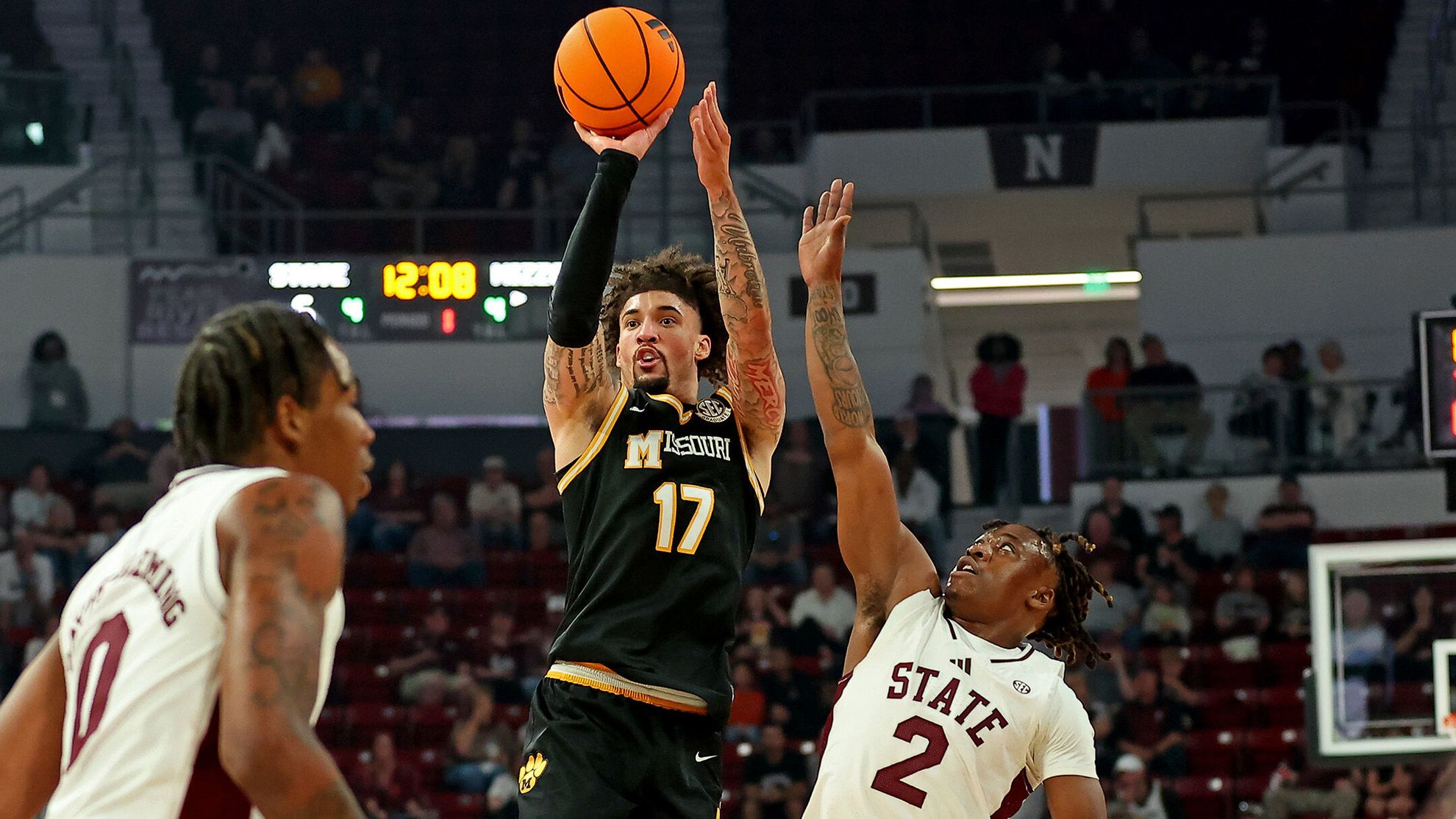
That distinction is important when evaluating how Crawford fits into the roster. While Davis provides size and versatility on the wing and can handle the ball in certain situations, he is not necessarily a traditional point guard solution. Crawford, even if not a primary starter, offers another layer of ball-handling insurance and shooting depth that helps balance the overall guard rotation.
In that sense, Missouri’s backcourt construction appears to be built around flexibility rather than rigid roles. Crowe is expected to run the offense, Davis can slide between guard positions, and Crawford offers a scoring-minded reserve who can also contribute as a secondary initiator. That structure gives the Tigers multiple ways to manage injuries, foul trouble, and lineup adjustments throughout the season.
Crawford’s arrival also signals that Missouri’s transfer portal activity may be nearing completion. With five incoming transfers already added to the roster, the program appears to have addressed its most pressing needs, particularly in terms of guard depth and perimeter shooting. Unless unexpected roster changes occur, the Tigers are likely shifting focus toward integrating their new pieces and preparing for preseason development rather than continuing aggressive roster reconstruction.
From a broader perspective, Crawford represents the type of experienced transfer who has become increasingly common in modern college basketball. Players with multiple stops across different programs often bring a blend of maturity and adaptability that can be especially useful for teams trying to quickly rebuild or retool their rotations. While he may not arrive with star expectations, his value lies in consistency, shooting confidence, and the ability to contribute in specific roles without needing extensive adjustment time.
For Missouri, that combination is exactly what makes the addition worthwhile. The Tigers are not necessarily asking Crawford to change the direction of their program, but rather to strengthen the edges of their rotation—providing shooting, depth, and situational scoring when needed. If he can replicate even part of his three-point volume and efficiency from South Dakota, while maintaining his willingness to attack offensively, he could become a reliable piece in Missouri’s second unit.
In the end, Crawford’s commitment fits neatly into Missouri’s broader offseason strategy: add experienced guards, increase perimeter shooting options, and build a rotation that can support a young but talented lead guard in Crowe. With the roster largely set, attention will now turn to how quickly these pieces can mesh and whether the blend of youth and experience can translate into competitive consistency in the SEC.
READ MORE