The Milwaukee Brewers will resume their pursuit of another National League Central title on Monday night when they open a crucial divisional series against one of their fiercest rivals, the St. Louis Cardinals. Although the standings won’t be decided by a single three-game set, every matchup within the division carries extra significance at this stage of the season, especially with the postseason race beginning to take shape.
Milwaukee enters the series with an impressive 55-33 record, giving the club a comfortable six-game advantage over the second-place Chicago Cubs and a 7.5-game cushion ahead of the third-place Cardinals. The Brewers have spent much of the season proving that last year’s success was no fluke, but they understand that maintaining their momentum is just as important as building it. With the All-Star break fast approaching, manager Pat Murphy’s club cannot afford to ease off the accelerator.
The National League Central remains one of baseball’s most competitive divisions, meaning every victory matters. While Milwaukee currently enjoys a healthy lead, history has shown how quickly things can change over the final months of a long season. Keeping pressure on the rest of the division has become just as important as piling up wins.
One of the biggest reasons for the Brewers’ continued success has been the organization’s remarkable ability to maximize talent without making splashy offseason moves. Year after year, Milwaukee manages to remain competitive despite operating with financial limitations that prevent it from chasing the biggest names in free agency. Instead, the front office has built one of Major League Baseball’s most respected player-development systems, consistently turning overlooked prospects, waiver claims, and low-cost acquisitions into valuable contributors.
This past offseason followed a familiar blueprint. Rather than aggressively pursuing marquee free agents, the Brewers placed their trust in internal development while making a handful of calculated roster decisions. As has often been the case under general manager Matt Arnold, the strategy has largely paid off.
Even trades that initially appeared questionable have begun to age favorably. The deal involving Freddy Peralta, for instance, drew criticism when it was completed, but Milwaukee’s ability to identify and develop pitching talent has once again shifted the narrative. The organization has repeatedly demonstrated an ability to extract value where other teams fail, making it difficult to doubt its long-term vision.
Still, no roster is perfect.
Despite owning one of the National League’s best records, the Brewers have several players who have struggled to meet expectations during the first half of the season. With the Aug. 3 MLB trade deadline approaching, the front office may begin exploring outside help if certain underperforming players fail to turn things around.
Several roster spots could be upgraded, particularly if Milwaukee believes strengthening those positions could improve its chances of making a deep postseason run.
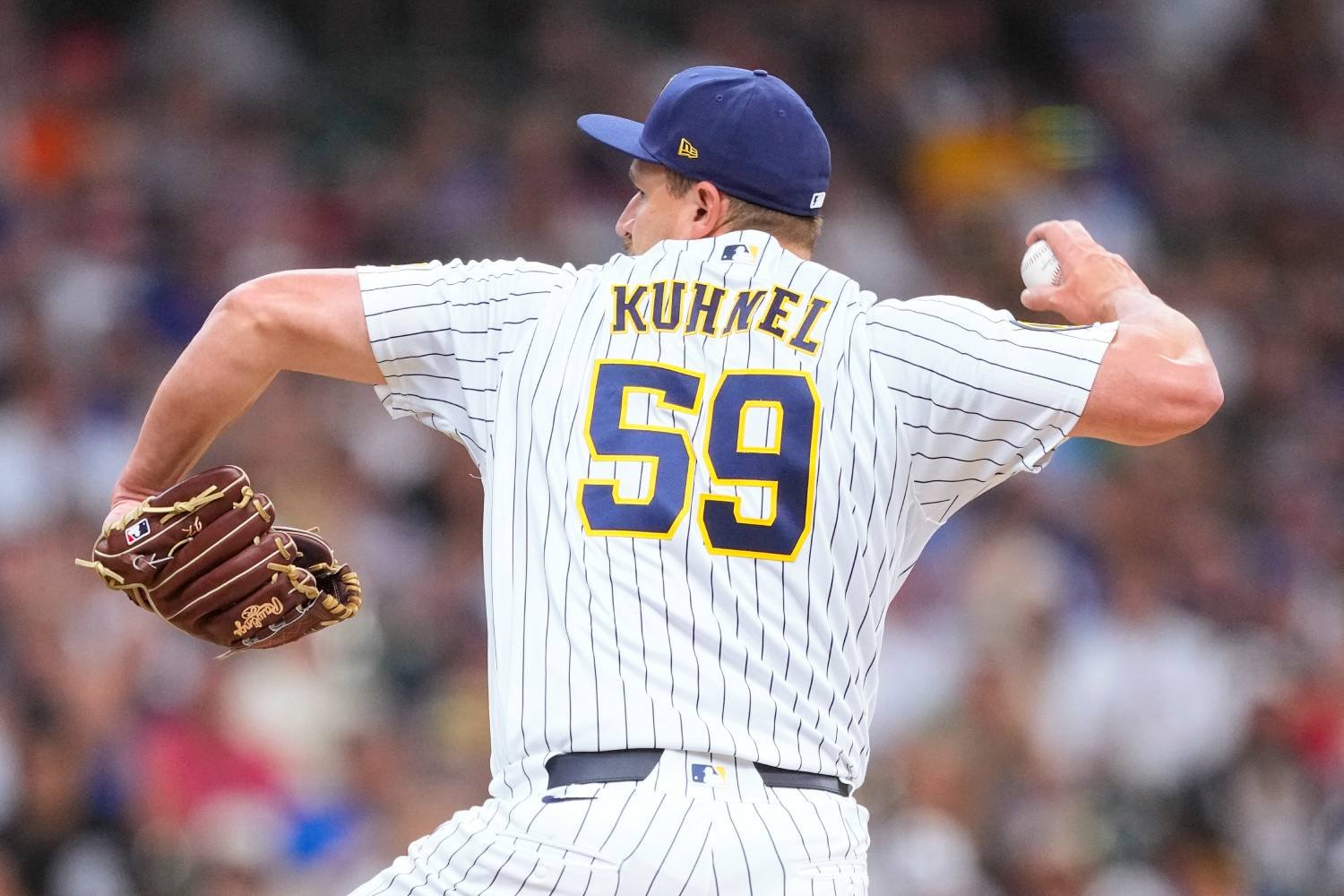
Joel Kuhnel has yet to reward Milwaukee’s confidence
When the Brewers acquired veteran reliever Joel Kuhnel in a relatively minor trade last month, the move generated little attention. Given Milwaukee’s outstanding reputation for revitalizing pitchers, however, there was understandable optimism that the organization might once again uncover another hidden gem.

Kuhnel entered Milwaukee after beginning the season with the Athletics, where he served as one of the club’s primary late-inning relievers. Across 25.2 innings, he posted a respectable 4.21 ERA while collecting several saves. Although those numbers were hardly dominant, many believed Milwaukee’s renowned pitching infrastructure could help unlock another level of performance.
After all, this is the same organization that has consistently transformed overlooked arms into reliable contributors. Whether through mechanical adjustments, pitch selection, or analytical refinement, the Brewers have repeatedly turned modest acquisitions into legitimate bullpen weapons. Recent success stories such as Kyle Harrison only strengthened confidence that Kuhnel might experience a similar resurgence.
Unfortunately, that turnaround has yet to materialize.
Through his first 9.2 innings with Milwaukee, Kuhnel has struggled badly. He has surrendered nine hits, including four home runs, while allowing seven earned runs for a disappointing 6.52 ERA. Hard contact has become a recurring problem, and opposing hitters have consistently punished mistakes left over the plate.
As if the poor performance wasn’t concerning enough, Kuhnel was placed on the 15-day injured list Sunday because of a right shoulder injury, creating additional uncertainty surrounding his immediate future.
At 31 years old, Kuhnel remains under team control since he has yet to reach arbitration, meaning Milwaukee is not under pressure to make an immediate decision regarding his future. The organization can afford to remain patient if it believes improvements are still possible.
However, patience from the fan base has been far more limited. Brewers supporters have grown accustomed to seeing overlooked pitchers flourish almost immediately after arriving in Milwaukee. Kuhnel has done little so far to inspire similar confidence, leaving many wondering whether another bullpen addition could eventually become necessary.
Joey Ortiz has not taken the next offensive step
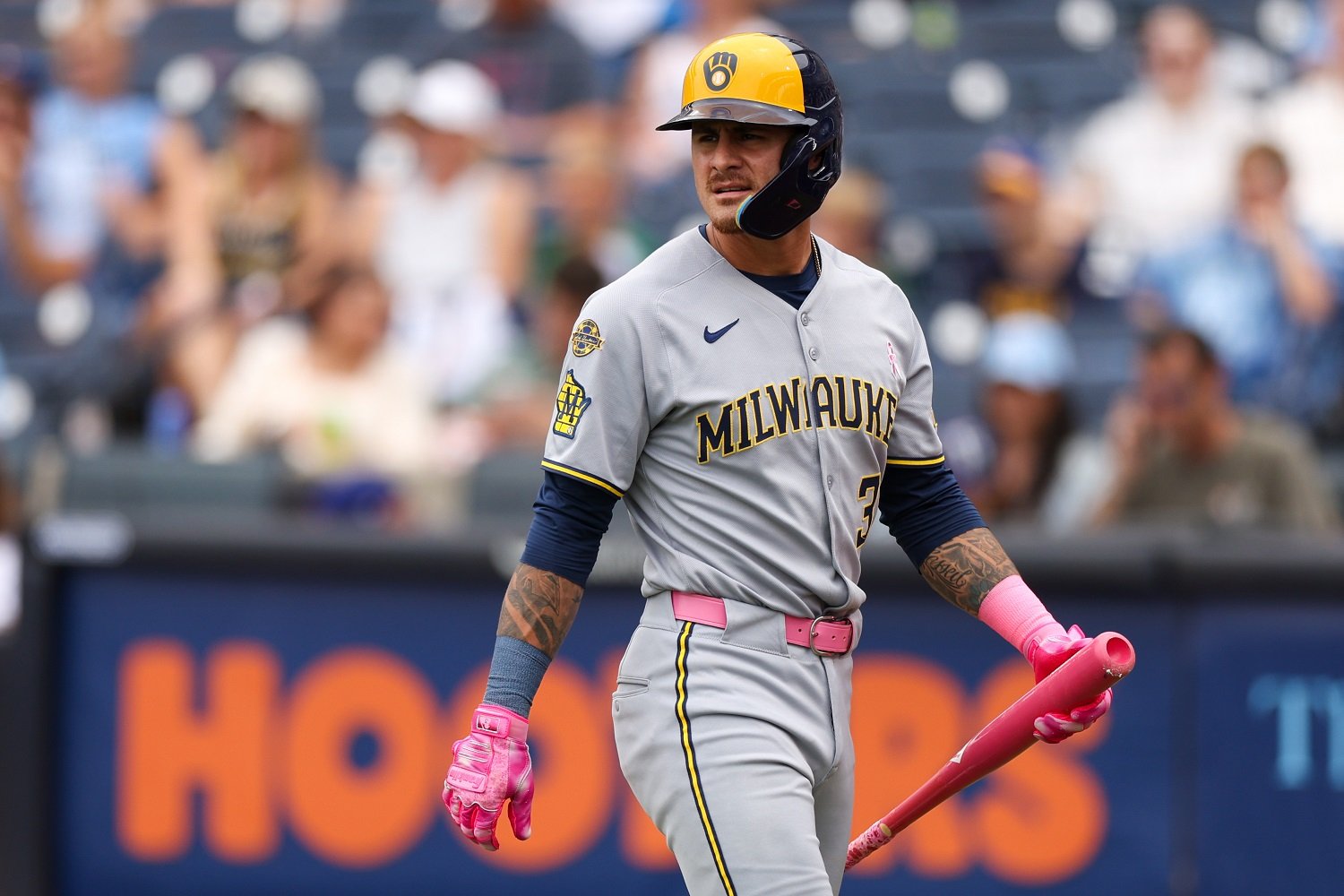
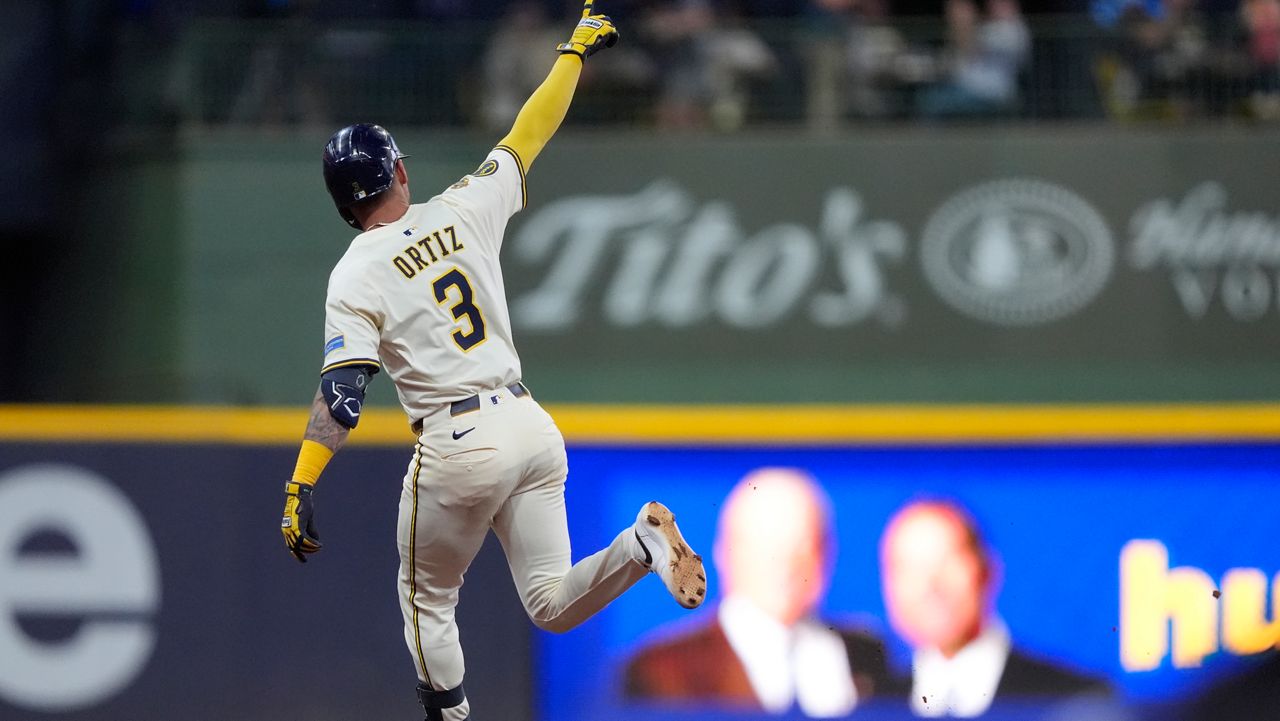
Few players entered 2026 carrying higher expectations than infielder Joey Ortiz.
Acquired from the Baltimore Orioles as one of the centerpiece returns in the blockbuster Corbin Burnes trade, Ortiz seemed like a perfect fit for Milwaukee’s organizational identity. His defensive versatility, baseball intelligence, and athleticism made him exactly the type of player the Brewers have traditionally valued.
Defensively, Ortiz continues to deliver.
He remains an above-average defender capable of handling both shortstop and third base at a high level. His instincts, quick reactions, and strong arm allow Milwaukee tremendous flexibility throughout the infield. He is also an aggressive baserunner whose awareness often forces opposing pitchers and defenses into uncomfortable situations.
Those strengths have helped him remain around replacement level despite significant offensive struggles.
Unfortunately, his production at the plate has fallen well short of expectations.
Ortiz owns just a .551 OPS and a disappointing 57 weighted runs created plus (wRC+), placing him well below league-average offensively. While his strikeout rate remains respectable at 18.3 percent, it has noticeably increased from last season’s impressive 14.6 percent, suggesting he has become less consistent in making quality contact.
Power has been another glaring issue.
Across 186 at-bats this season, Ortiz has managed only two home runs, offering little threat to opposing pitchers. His inability to consistently drive the baseball has significantly limited Milwaukee’s offensive ceiling, particularly against stronger pitching staffs.
These concerns become even more magnified when projecting toward October.
The Brewers have frequently dominated during the regular season through elite defense, aggressive baserunning, and consistent contact hitting. Yet those same strengths have repeatedly failed to produce postseason success, where pitching is stronger and opportunities become far more limited.
Players who struggle to impact the baseball can become liabilities during playoff series, where one swing often changes everything.
Ortiz still provides plenty of value across a 162-game schedule thanks to his defense and versatility, but unless his offensive production improves, Milwaukee may find it increasingly difficult to rely on him as an everyday contributor when the games matter most.
Blake Perkins’ role continues to shrink
Outfielder Blake Perkins has quietly remained part of the Brewers organization for four seasons, primarily earning his roster spot through exceptional defense and elite speed.
At his best, Perkins has been one of Milwaukee’s most valuable defensive outfielders. During the 2024 season, he recorded 10 Outs Above Average, ranking among baseball’s elite defenders while also stealing a career-high 23 bases.
His athleticism allowed him to impact games even when his bat wasn’t producing.
That formula, however, has become less effective.
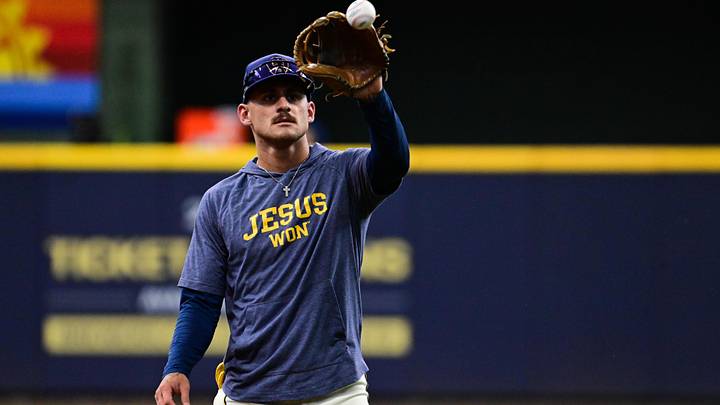
Perkins saw his playing time decrease last season, and his role has diminished even further in 2026. Rather than serving as an everyday contributor, he has largely been limited to occasional starts, late-inning defensive replacements, and pinch-running assignments.
His offensive numbers have simply become too difficult to overlook.
Perkins currently owns the lowest offensive production on Milwaukee’s roster, posting a .508 OPS alongside a 45 wRC+. Even more concerning, the defensive excellence that once justified his limited offensive output has not been nearly as impactful this season. In limited opportunities, he has already accumulated negative Outs Above Average, indicating that even his glove has regressed.
There will always be room in today’s game for specialists capable of changing contests with their speed or defensive ability. Perkins still possesses those qualities to some extent, making him useful in carefully selected situations.
Nevertheless, Milwaukee’s organizational depth creates a legitimate question.
The Brewers boast one of baseball’s deepest farm systems, particularly when it comes to athletic outfielders capable of playing premium defense while offering greater offensive upside. If Perkins cannot rediscover his defensive excellence, the front office may eventually determine that another player could provide similar speed while contributing far more consistently at the plate.
Sal Frelick faces the most disappointing season of his career
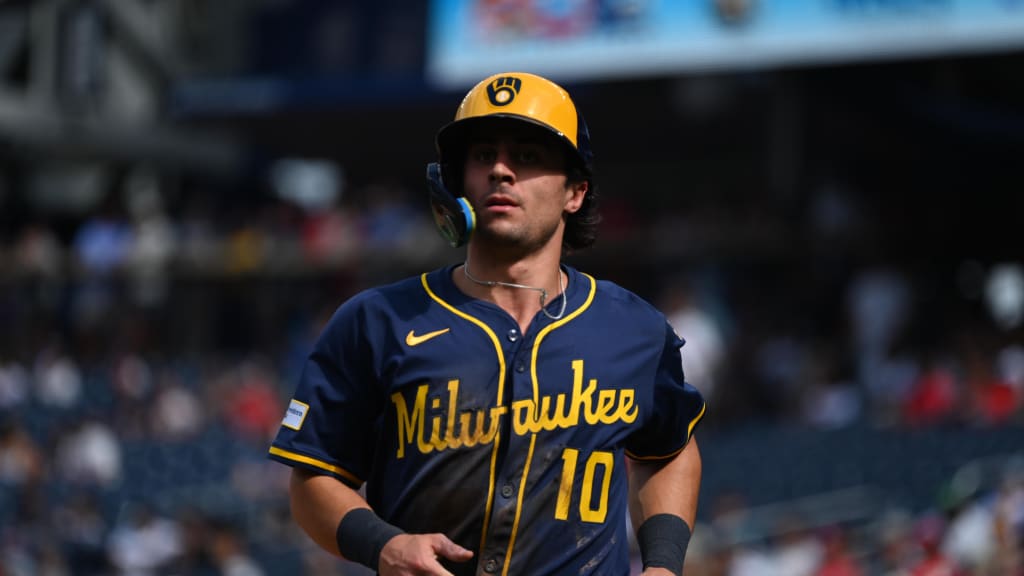
Among Milwaukee’s everyday players, no one has experienced a more frustrating first half than Sal Frelick.
Just one season ago, Frelick emerged as one of the Brewers’ most important offensive contributors. Building on his Gold Glove-winning defensive campaign in 2024, he delivered the finest offensive season of his young career by posting a .756 OPS, hitting 12 home runs, and stealing 19 bases.
His development represented exactly the kind of internal improvement Milwaukee had hoped to see.
Frelick combined elite contact skills with smarter swing decisions, allowing him to drive the baseball into the gaps more consistently. While he has never profiled as a traditional power hitter, his improved ability to elevate the ball helped maximize his outstanding speed and create extra-base opportunities.
Defensively, he remained one of baseball’s premier right fielders, recording seven Outs Above Average while continuing to establish himself as one of the game’s most reliable defenders.
This season has looked dramatically different.
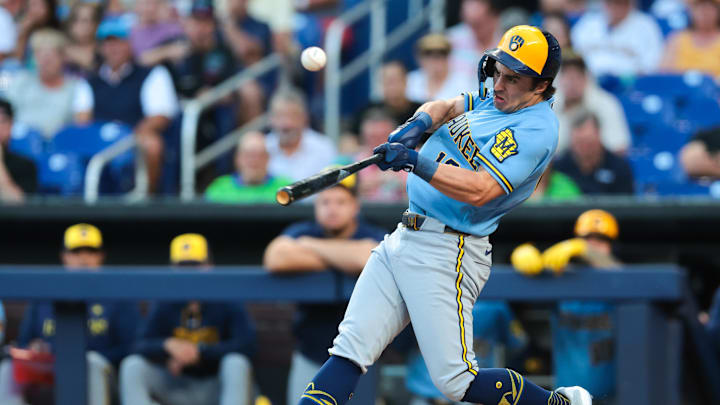
Frelick has fallen to a career-worst .641 OPS while producing an 80 wRC+, representing a significant decline from last year’s breakthrough performance. More alarmingly, he currently owns a negative Wins Above Replacement figure, making him the only regular Brewers starter performing below replacement level.
Many of the adjustments that fueled last year’s success have disappeared.
Although he still avoids strikeouts at an impressive rate, the quality of his contact has regressed considerably. The line drives and gap shots that once fueled his offensive production have become far less frequent, leaving opposing pitchers increasingly comfortable challenging him inside the strike zone.
Despite the disappointing results, there is little indication that Milwaukee has lost confidence in the 26-year-old.
Frelick remains young, possesses outstanding defensive value, and has already demonstrated that he can be an important contributor when everything is working. His work ethic and baseball instincts continue to make him an integral part of the organization’s long-term plans.
Still, legitimate questions remain.

The Brewers have repeatedly entered October with offenses built around contact hitting, speed, and defense, only to watch those strengths disappear against elite postseason pitching. Frelick’s limited power profile naturally raises concerns about whether his style of play can consistently succeed during playoff baseball.
Milwaukee certainly is not ready to move on from one of its most talented young players, but the remainder of the regular season will be crucial. If Frelick can rediscover the offensive adjustments that fueled last year’s breakout, he could once again become one of the club’s most valuable players heading into October.
If not, the Brewers may have no choice but to explore additional offensive upgrades before the trade deadline.
For a team with legitimate championship aspirations, standing still is rarely an option. Milwaukee has built one of baseball’s strongest organizations through exceptional player development and smart roster construction, but even the league’s best-run clubs must recognize when reinforcements are necessary. As the trade deadline draws closer, the performances of Kuhnel, Ortiz, Perkins, and Frelick could ultimately determine whether the Brewers make only minor adjustments or aggressively pursue outside help in hopes of finally translating regular-season excellence into postseason success.
READ MORE