The St. Louis Cardinals find themselves in an increasingly difficult position after suffering another brutal setback on Tuesday night. Their latest loss was not merely another defeat in a disappointing season. It was a 13-1 demolition at the hands of the Baltimore Orioles, a result that pushed the Cardinals back below the .500 mark and highlighted many of the problems that have followed them throughout the year.
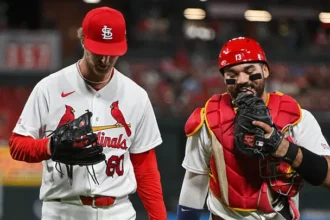
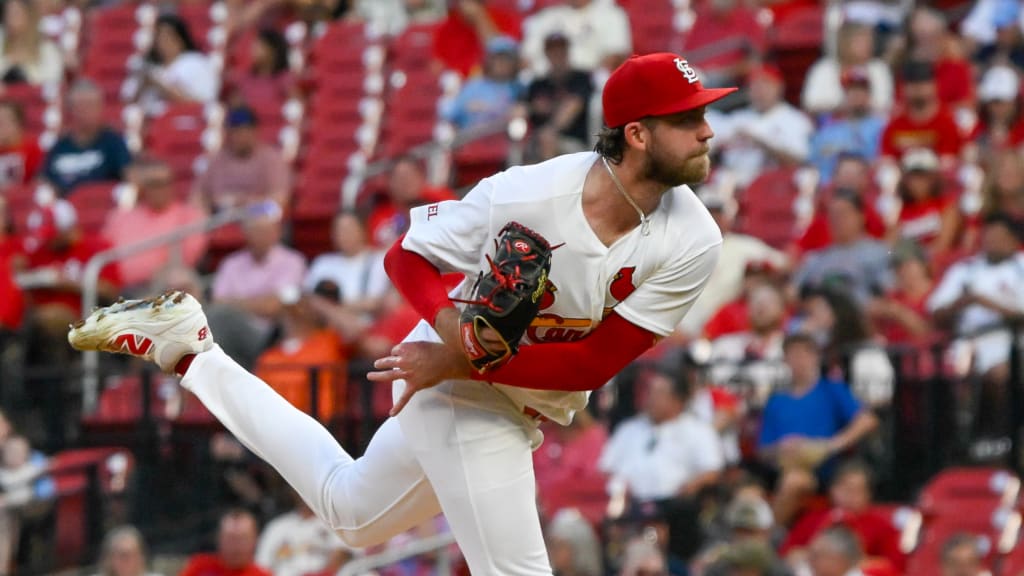
Matthew Liberatore was at the center of the latest collapse. The young left-hander received the starting assignment but struggled almost immediately, surrendering eight runs across just four innings. Against an Orioles lineup that took advantage of nearly every mistake, Liberatore was unable to settle into a rhythm or provide the Cardinals with the length they desperately needed.
The performance was particularly frustrating because Liberatore entered the game after showing some encouraging signs in his previous two outings. There had been reason to believe that the pitcher was beginning to find some consistency, but his outing against Baltimore quickly erased much of that optimism.

Now, the Cardinals are facing an uncomfortable reality. They may not have a better alternative.
Liberatore’s struggles have created a complicated situation for a team that is already looking toward the future. Under normal circumstances, St. Louis could consider removing him from the starting rotation and moving him into the bullpen. That would allow the organization to reduce his workload, give him a different environment in which to work through his problems and potentially help him regain confidence.
Unfortunately for the Cardinals, the current state of their pitching staff makes that solution extremely difficult.
The organization has already lost important pitching depth because of injuries. Andre Pallante and Hunter Dobbins have both landed on the injured list, leaving the Cardinals with fewer reliable options to fill rotation spots. Pallante is expected to return relatively soon, which should provide some much-needed relief, but Dobbins’ situation is considerably more concerning and could potentially keep him out for the remainder of the season.

That leaves the Cardinals with a problem that cannot simply be solved by changing Liberatore’s role.
The situation is even more notable because Liberatore entered the season carrying additional responsibility. After St. Louis traded Sonny Gray to the Boston Red Sox during the offseason, the Cardinals needed someone to step into a much larger role. Liberatore ultimately became the team’s Opening Day starter, an indication of the organization’s confidence in him and the importance it placed on his development.
But being named an Opening Day starter does not guarantee that a pitcher will have a smooth season.
Liberatore has experienced plenty of inconsistency, and his performance against Baltimore was a reminder of just how difficult things can become when a young starter is still trying to establish himself at the major league level. Giving up eight runs in four innings is the kind of outing that can force an organization to consider drastic changes.
Yet the Cardinals may not have the luxury of making one.
St. Louis does have promising pitching prospects developing within its farm system. Liam Doyle and Jurrangelo Cijintje are among the names that could eventually become important pieces of the Cardinals’ rotation. Both represent potential solutions for the future, particularly as the organization continues reshaping its roster.

However, neither prospect should be rushed simply because the major league rotation is struggling.
Calling up young pitchers before they are ready can create problems that extend far beyond one bad season. A prospect’s development can be disrupted when an organization asks him to handle major league hitters before he has adequately prepared for that challenge. The Cardinals have already invested significant resources in developing their young pitchers, so sacrificing that development merely to patch a temporary hole would be difficult to justify.
There is also the matter of organizational depth.
If Doyle or Cijintje were promoted prematurely and struggled, the Cardinals could potentially find themselves with even fewer options later. Instead of solving their pitching problem, they could create another one.
That is why the most logical solution may also be the least exciting one: keep Liberatore in the rotation.
It is not necessarily because the Cardinals believe he is currently pitching at an acceptable level. Rather, it is because the alternatives are not significantly better.
The organization could explore the free-agent market or look for another veteran capable of eating innings. Signing an experienced depth starter would give St. Louis another option and potentially allow the club to move Liberatore into a different role. But whether the Cardinals are willing to spend resources on a short-term pitching solution remains another question.
The reality is that the Cardinals are no longer operating like a team desperately trying to save its season.
Their postseason hopes have effectively faded, and the organization appears increasingly focused on evaluating players and determining which pieces should remain part of its next competitive team. That changes how Liberatore’s situation should be viewed.
If St. Louis were still firmly in the playoff race, there would be much greater pressure to find an immediate solution. A team competing for a postseason berth cannot afford to repeatedly send a struggling pitcher to the mound every fifth day.
But that is not where the Cardinals are right now.
With the season moving toward its conclusion, there is value in allowing Liberatore to continue pitching and giving the organization additional information about what it has in the young left-hander.
Every start gives the Cardinals another opportunity to evaluate him.
They can examine how he responds after a disastrous outing. They can determine whether he can make adjustments between starts. They can evaluate his command, pitch selection and ability to navigate opposing lineups multiple times. Those observations could be far more valuable to a rebuilding organization than simply removing him from the rotation after one ugly performance.
Liberatore has also demonstrated enough potential to justify giving him more opportunities.
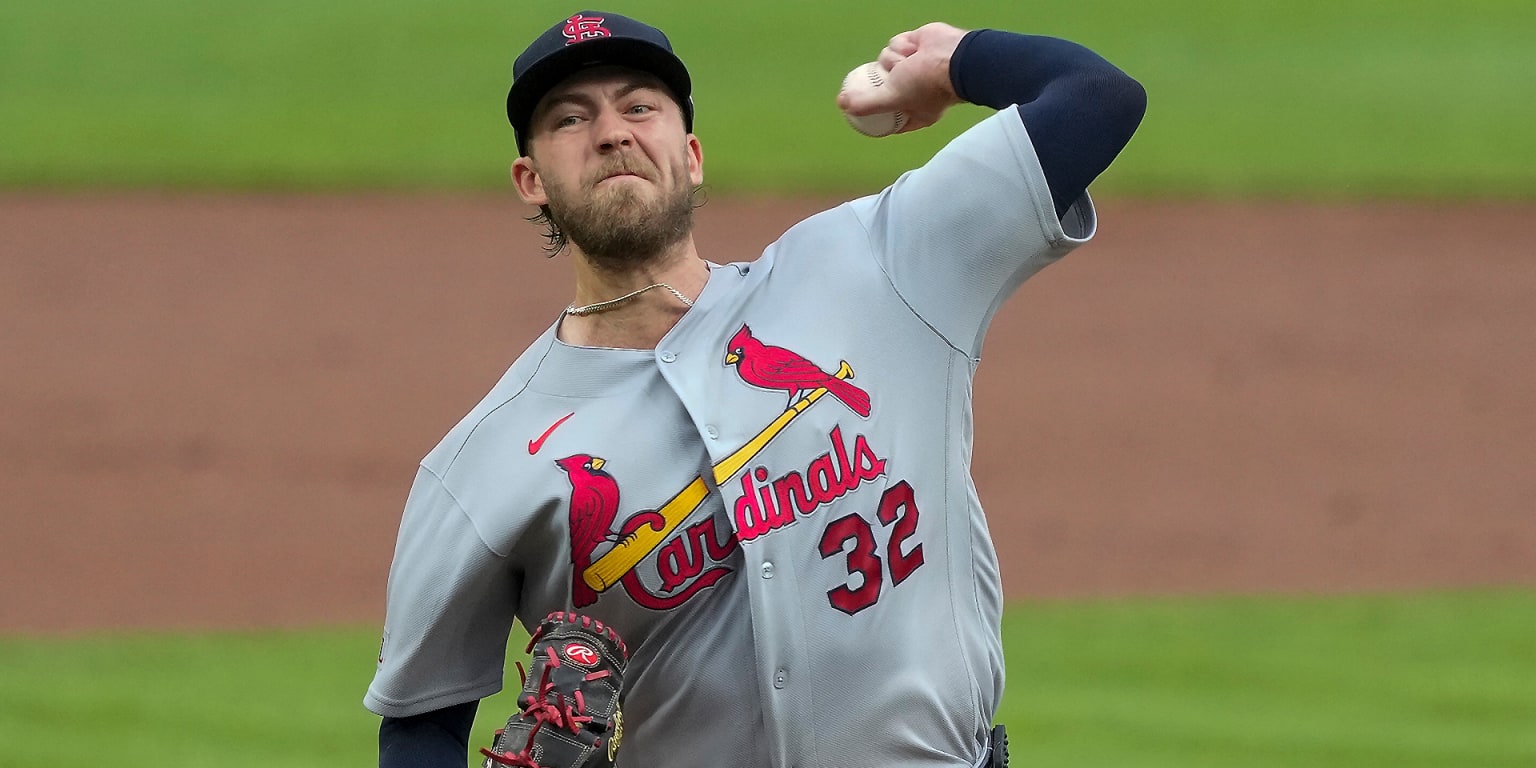
His recent starts before the Baltimore game showed that he can provide the Cardinals with reasons for optimism. Young pitchers rarely develop in a perfectly straight line. There will be strong outings, difficult outings and stretches in which a pitcher appears to take a step backward before finding his footing again.
The Cardinals need to determine whether Liberatore’s struggles are part of that normal development process or evidence of a deeper problem.
The only way to make that determination is to give him opportunities.
That does not mean the organization should ignore his problems. Quite the opposite. St. Louis needs to use the remainder of the season to identify exactly what is going wrong and whether those issues can be corrected.
The coaching staff can work with Liberatore on his mechanics, pitch sequencing and command. The organization can also study his performance closely to determine which pitches are producing results and which are consistently getting punished.
A disastrous game like the one against Baltimore can provide useful information, even if it is painful to watch.
For now, though, the Cardinals appear to be stuck.
Pallante’s eventual return could ease some of the pressure, but it is unlikely to completely eliminate the issue. With Dobbins potentially unavailable for the remainder of the season and the organization’s top pitching prospects not necessarily ready for major league responsibilities, the Cardinals have limited options.
That makes Liberatore’s continued presence in the rotation almost inevitable.
There is also little reason to believe the Cardinals will send him to the minor leagues at this stage. A demotion might have made more sense earlier in the year if the organization believed he needed a fundamental reset. But with the major league season already reaching its later stages, the benefits of keeping him in the rotation may outweigh the benefits of sending him back down.
The Cardinals can evaluate him against major league competition while simultaneously determining what adjustments need to be made during the offseason.
That brings the conversation to 2027.

If St. Louis ultimately decides that Liberatore should not remain in the starting rotation long term, next season provides a much more logical opportunity to make that change. The organization will have an entire offseason to evaluate its pitching options, potentially acquire additional arms and determine where Liberatore fits best.
He could potentially enter 2027 competing for a rotation job, transition into a bullpen role or find himself fighting for a roster spot altogether.
But those decisions do not have to be made immediately.
For the remainder of this season, the Cardinals have a much simpler objective: get through the schedule while learning as much as possible about their current roster.
That makes Liberatore an important player to watch, even when the results are ugly.
The 13-1 loss to Baltimore certainly does not inspire confidence. Giving up eight runs in four innings is the type of performance that can cause fans to question whether a pitcher belongs in a major league rotation. After losing Sonny Gray in the offseason and turning to Liberatore as the Opening Day starter, the contrast between expectations and reality is especially noticeable.
Still, the Cardinals cannot make decisions based entirely on one night.
The larger picture matters.

Liberatore remains a young pitcher with an opportunity to establish himself. The Cardinals remain a team in transition. Their pitching depth has been damaged by injuries, their top prospects need more development time and their postseason hopes have essentially disappeared.
Under those circumstances, continuing to start Liberatore may actually be the most sensible move available.
It may not be the solution Cardinals fans want to hear, but it is the solution that makes the most sense given the circumstances.
There is no immediate fix waiting in the bullpen. There is no obvious minor league replacement ready to step in. And rushing one of the organization’s top pitching prospects would create unnecessary risk.
So, barring an unexpected acquisition or significant change in the injury situation, Liberatore should remain in the rotation.
The rest of the season will give the Cardinals a valuable opportunity to evaluate him without the pressure of a postseason race. If he responds positively, the organization could enter the offseason with renewed confidence in his ability to contribute. If he continues to struggle, the Cardinals will have enough information to explore other options before the 2027 season begins.
Either way, St. Louis needs answers.

The Cardinals’ disappointing season has created plenty of questions about the roster, but the pitching staff may be among the most important areas to address. Liberatore’s future is now part of that conversation.
For the moment, however, the decision appears to have already been made by circumstances.
Matthew Liberatore is likely to continue taking the ball every fifth day for the remainder of the season.
He is unlikely to be moved to the bullpen, and a trip to the minors does not appear to be the preferred option. The Cardinals simply do not have enough healthy, major league-ready alternatives to justify making that change right now.
That could change once the offseason arrives.
For now, though, St. Louis has little choice but to live with the growing pains. The organization needs to find out whether Liberatore can turn those struggles into development and whether he can eventually become the dependable starter the Cardinals hoped he could be when they handed him the ball on Opening Day.
The 13-1 loss to Baltimore was unquestionably a step in the wrong direction. But with the postseason no longer the priority, the Cardinals have the rare opportunity to treat the remaining starts as an extended evaluation period.
Liberatore will have to make the most of it.
And if the Cardinals are right about his potential, these difficult months could ultimately become an important part of his development rather than the final chapter of his time in St. Louis.
READ MORE