The St. Louis Cardinals officially ended Ramón Urías’ time with the organization on Saturday, closing the book on a stint that never developed the way either side likely hoped.
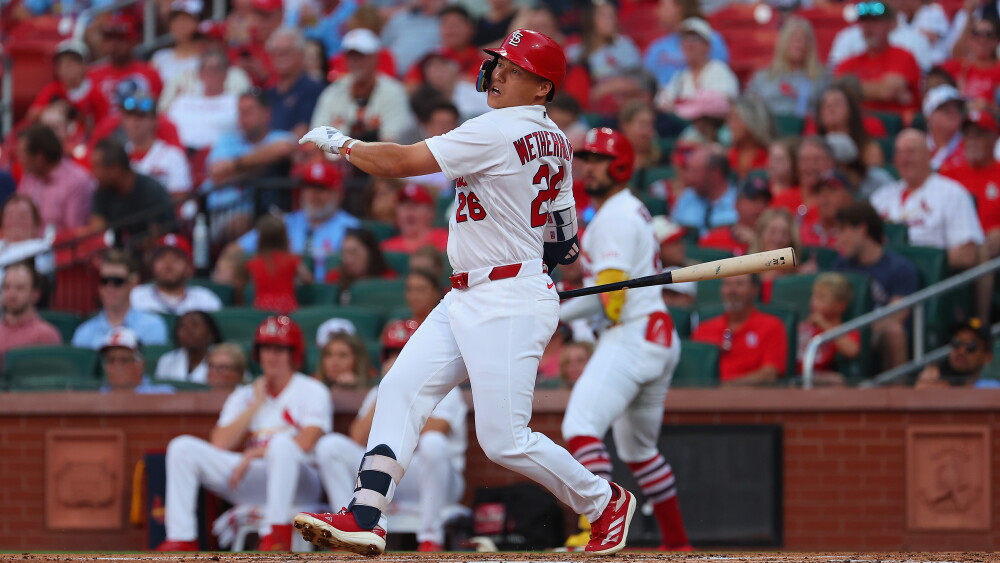
Earlier in the week, St. Louis designated Urías for assignment to create a roster spot for rookie JJ Wetherholt, who was ready to return. That decision already made it clear that Urías had fallen out of the club’s immediate plans. On Saturday, the Cardinals took the final step by releasing the veteran infielder instead of keeping him in the organization or sending him outright to the minors. The transaction was reflected on Major League Baseball’s official log, making his departure official.
It was a disappointing ending for a player who appeared to make sense for St. Louis when he first joined the roster.

Urías brought experience, defensive value and versatility to a team that was leaning heavily on younger players. The 32-year-old is a former Gold Glove Award winner, has seven seasons of major league experience and owns a career .252 batting average.
At one stage of the season, Urías was receiving consistent playing time at third base.
Then injuries changed everything.
Urías played his final game before landing on the injured list on May 3. He did not return to the major league roster until Aug. 23, meaning he missed more than three months of the season.
By the time Urías returned, the roster around him had changed significantly.
The Cardinals had other players pushing for playing time, and the margin for error was much smaller. He needed to produce quickly, but his bat never really came around after the layoff.
From Aug. 23 through Sept. 15, Urías slashed .138/.219/.345 with a .564 OPS. In 18 games during that stretch, he hit two home runs, drove in four runs and scored five times.
Those numbers made it difficult for St. Louis to justify keeping him in the lineup when other infielders were producing more consistently and offering similar positional flexibility.
Thomas Saggese became one of the biggest reasons the Cardinals could move on.
Since returning to the major leagues on Aug. 29, Saggese has been one of the club’s most productive infielders. He slashed .355/.394/.548 with a .943 OPS during that stretch, adding three home runs and nine RBIs. More importantly, he showed the ability to contribute at several spots on the field.
Saggese has seen time at second base, shortstop and third base, giving the Cardinals the kind of flexibility that Urías was originally expected to provide. The difference was that Saggese was also producing at the plate.
That made the roster picture much clearer.

Masyn Winn is healthy. JJ Wetherholt is healthy again. Nolan Gorman remains on the major league roster. Saggese has continued to earn opportunities with his performance. With those players available, there were simply fewer reasons to keep Urías around.
The Cardinals reached the point where they had more infield options than available spots.
That does not mean Urías suddenly became a player with no value. His track record suggests otherwise. He has already shown that he can handle major league competition, and winning a Gold Glove Award is evidence of the defensive impact he has provided at his best.
But late-season roster decisions are rarely made on résumé alone.
Current production matters. Health matters. Positional need matters. Future planning matters. In all of those areas, the situation had shifted away from Urías.
St. Louis is also nearing the end of the 2026 regular season, leaving only a small number of games for the organization to evaluate its roster. At this stage, giving opportunities to younger players who could be part of the club’s future carries more value than continuing to invest playing time in a veteran who struggled after returning from a long absence.
Wetherholt’s return forced the immediate decision, but the Cardinals’ broader infield picture had already been moving in this direction.
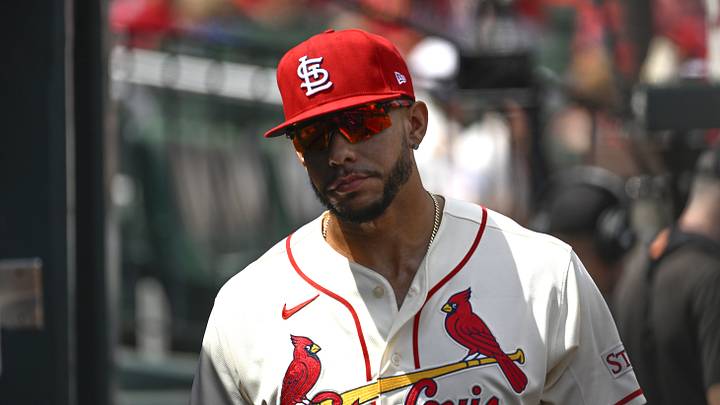
Urías simply became the player without a clear role.
His release also shows how quickly circumstances can change during a season.
Earlier in the year, there was a believable path for Urías to receive regular at-bats. The Cardinals needed experienced depth. He could play multiple infield positions. He had enough major league experience to help stabilize a young roster. At the time, the fit looked reasonable.
A few months later, that same role had almost disappeared.
Injuries kept him off the field while other players developed. Saggese reestablished himself. Wetherholt returned. Winn remained healthy. Gorman was still available. By the time Urías was back in uniform, he was competing for playing time in a much more crowded group.
His offensive struggles made it nearly impossible to reclaim his earlier place.
A .138 batting average over 18 games is a small sample, but there was not much season left for St. Louis to wait for a turnaround. The Cardinals were dealing with a roster decision in September, not April. They had alternatives, and some of those alternatives were playing very well.
Saggese’s performance stands out in particular.
He did not merely return to the majors and occupy a bench spot. He produced immediately and gave the Cardinals more freedom with their defensive alignment. When a younger player is hitting at that level while also covering second base, shortstop and third base, it becomes increasingly difficult to justify holding a roster spot for a veteran with limited offensive production.
That is essentially what happened to Urías.
His career numbers still suggest he can contribute somewhere else. A .252 career average over seven major league seasons is not insignificant, and teams regularly look for experienced infielders who can play multiple positions, handle defensive assignments and provide depth.
The question now is whether another opportunity will come before the 2026 season ends.
With just over one week remaining on the schedule, there is not much time for another club to add Urías and give him a meaningful role.
The offseason could be a different story.
A team looking for infield depth ahead of 2027 could view Urías as an inexpensive veteran option. His defensive background could still appeal to clubs that value flexibility on the bench, and his poor finish in St. Louis may be viewed in the context of the long injury layoff.
That will depend on how teams evaluate his health and whether they believe his late-season offensive struggles were temporary.
For the Cardinals, however, the decision is already made.
The organization is moving forward with younger players and giving them a chance to establish themselves. Wetherholt is back. Saggese is producing. Winn remains an important part of the infield. Gorman is still in the mix. In that environment, Urías no longer had a clear path to regular playing time.
His stint with St. Louis will probably be remembered as one that never had the chance to fully settle.
The logic behind the addition was understandable. The Cardinals wanted another experienced infielder. Urías had a strong defensive résumé and enough major league experience to help. There were openings in the infield, and he had a chance to fill one.
Then he missed more than three months.
That absence changed the shape of his season. It removed valuable opportunities, gave other players time to step forward and left him trying to find his timing again in late August.
When he returned, the results did not come quickly enough.
The Cardinals were not in a position to wait indefinitely, especially with Wetherholt ready and Saggese playing well. The organization had to make room, and Urías was the most logical player to move.
It is an unfortunate ending, but it does not necessarily mean the end of his major league career.
At 32, Urías still has enough experience and defensive credibility to draw interest. Players with his background often find new opportunities as utility infielders, bench pieces or veteran depth. A team may decide that a healthy offseason and a fresh start could allow him to return closer to the player he has been for much of his career.
What happened in St. Louis was a combination of bad timing, injury and increased competition.
Urías arrived when the Cardinals needed him. Then he disappeared from the lineup for months. When he returned, the roster had evolved and his bat did not respond quickly enough.
That made the final decision easier for St. Louis.
Now the Cardinals can spend the remaining games of the season evaluating players who are more likely to factor into their 2027 plans, while Urías turns his attention toward finding his next opportunity.
The ending may be disappointing, but it also reflects the reality of roster management late in a season. Teams have to choose between what a player has done in the past and what makes the most sense in the present.
For the Cardinals, the present pointed toward Wetherholt, Saggese, Winn, Gorman and the rest of their younger infield group.
For Urías, it pointed toward the open market.
His time in St. Louis is over, and now both sides move on.
READ MORE