The San Francisco Giants have reportedly reached an agreement on a one-year contract with veteran right-handed starting pitcher Tyler Mahle, according to a report from Shayna Rubin of the San Francisco Chronicle. While the financial details of the deal have not yet been disclosed, the signing represents a calculated move by the Giants as they look to strengthen their starting rotation without taking on long-term financial risk. Mahle, who is 31 years old, brings experience, upside, and some health-related uncertainty to a Giants pitching staff that has prioritized depth and flexibility in recent seasons.
Mahle began his Major League Baseball career with the Cincinnati Reds, where he spent parts of six seasons from 2017 through 2022. During that span, he established himself as a reliable rotation arm, logging 593 2/3 innings across multiple roles, including both starter and occasional long reliever. While he was rarely viewed as a true ace, Mahle consistently provided league-average to slightly above-average production. Over his tenure in Cincinnati, he recorded a 4.25 earned run average, a figure shaped in part by pitching in hitter-friendly environments and facing strong divisional competition.

At the trade deadline on August 2, 2022, the Reds dealt Mahle to the Minnesota Twins in exchange for a package of prospects that included Spencer Steer, Christian Encarnacion-Strand, and Steve Hajjar. At the time, Minnesota viewed Mahle as a mid-rotation starter who could help stabilize their pitching staff during a postseason push. Unfortunately, his time with the Twins was almost immediately derailed by injury. Mahle made just four starts for Minnesota during the 2022 season before being placed on the injured list with right shoulder inflammation. The injury ultimately sidelined him for the remainder of the year, preventing him from contributing down the stretch.
The following season did little to improve Mahle’s fortunes. In 2023, he was limited to only three starts for the Twins due to continued arm issues, including right arm posterior impingement and a flexor pronator strain. These injuries raised serious concerns about his long-term durability and effectiveness, and by the end of the season, Mahle entered free agency with his value significantly diminished compared to earlier in his career.
Despite the uncertainty surrounding his health, the Texas Rangers took a chance on Mahle during the 2023–24 offseason, signing him to a two-year contract worth $22 million. The structure of the deal reflected both optimism and caution: Mahle was scheduled to earn $5.5 million in 2024 and $16.5 million in 2025. For Texas, the signing was a gamble that Mahle could recover fully and provide meaningful innings in support of a rotation aiming to contend.

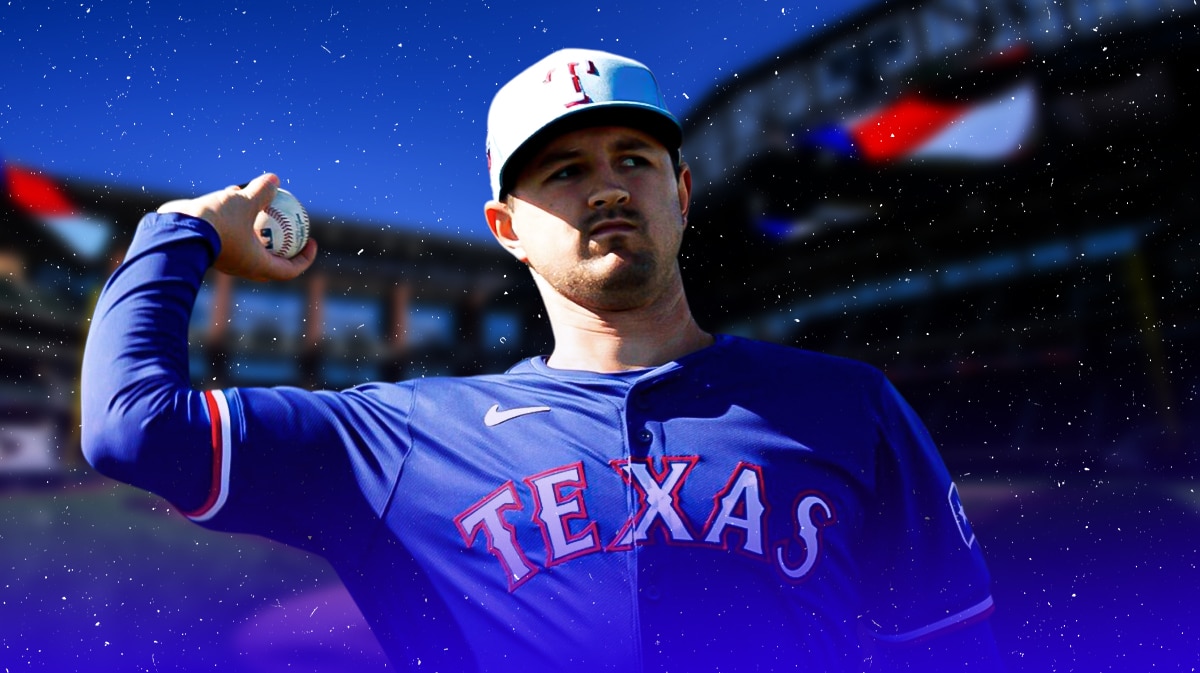
However, Mahle’s first season with the Rangers was largely lost to injury. He appeared in just three games during the 2024 campaign while continuing to recover from right elbow surgery. Later in the year, he also dealt with right shoulder tightness, further limiting his availability. The pattern continued into 2025, when Mahle missed approximately three months due to right shoulder fatigue. While the Rangers had hoped for stability, they instead faced ongoing uncertainty regarding his ability to stay on the mound.
That said, when Mahle was healthy and able to pitch during the 2025 season, the results were extremely encouraging. In a limited sample of 16 appearances, he was highly effective, producing 2.2 wins above replacement (bWAR) and posting an impressive 2.18 ERA. His fielding independent pitching (FIP) sat at 3.37, suggesting that while some regression might be expected over a larger workload, his performance was far from fluky. Mahle also struck out 66 batters while walking 29 over 86 2/3 innings, demonstrating solid command and the ability to miss bats at an above-average rate.
Those numbers highlight why the Giants were willing to take a chance on Mahle despite his lengthy injury history. From San Francisco’s perspective, the signing represents a classic low-risk, high-reward move. Because the deal is only for one year, the financial and roster-related downside is limited. If Mahle were to miss significant time due to injury, the Giants would not be burdened with a long-term contract or forced to reshuffle their rotation plans for years to come. On the other hand, if Mahle can remain healthy for most of the 2026 season and replicate anything close to his 2025 performance, the Giants could find themselves with one of the better value signings of the offseason.
For a team that has often leaned on pitching depth and run prevention as core organizational strengths, adding a veteran like Mahle fits neatly into the Giants’ broader strategy. He does not need to be the ace of the staff to justify the signing; instead, he simply needs to provide quality innings and consistency when available. In the best-case scenario, Mahle could outperform expectations and give San Francisco a reliable mid-rotation starter capable of delivering strong outings against both division rivals and playoff-caliber opponents.

From the Minnesota Twins’ standpoint, the decision not to pursue a reunion with Mahle also makes sense. While adding an experienced starter could theoretically improve their rotation, several factors worked against the idea of bringing him back. The Twins entered the offseason with a relatively tight budget, forcing them to be selective about where they allocate resources. Given Mahle’s extensive injury history over the past several seasons, committing even short-term money to him would have carried meaningful risk.
Additionally, Minnesota already has an abundance of starting pitching options, particularly younger arms who are cost-controlled and capable of filling rotation spots. As a result, the marginal upgrade Mahle might have provided did not outweigh the potential downsides. Instead, the Twins have more pressing needs, especially in the bullpen, where depth and reliability have been ongoing concerns. The team could also benefit from adding a right-handed-hitting position player to balance their lineup, making those areas a higher priority than re-signing an injury-prone starter.

In the end, Mahle’s agreement with the Giants represents a logical outcome for all parties involved. San Francisco gains a pitcher with proven ability and upside without sacrificing long-term flexibility. Mahle receives an opportunity to reestablish his value on a competitive team and potentially set himself up for another contract if he stays healthy. Meanwhile, the Twins avoid taking on additional risk in an area where they already have sufficient depth, allowing them to focus their limited resources on more urgent roster needs.
As the 2026 season approaches, much of Mahle’s impact will hinge on his health. His recent track record suggests that durability remains a legitimate concern, but his performance when available shows that he is still capable of pitching at a high level. For the Giants, that balance of uncertainty and potential reward makes the signing a worthwhile gamble—and one that could pay significant dividends if Mahle is able to take the ball consistently throughout the season.
READ MORE