The Seattle Mariners have spent years trying to figure out exactly what they want their offense to be. Unfortunately, the biggest problem may be that the search has become the identity itself.
One season, the message is about power, pulling the baseball and hunting for home runs. The next, the emphasis changes completely, with hitters encouraged to stay through the middle of the field, focus on line drives and trust their approach. Now, with another season beginning to slip away, the message has seemingly been simplified once again: Be ready for the fastball, get on time and attack a pitch you can handle.
On paper, that sounds perfectly reasonable.
In reality, it also sounds like a team trying to rediscover its offensive philosophy in the middle of August.
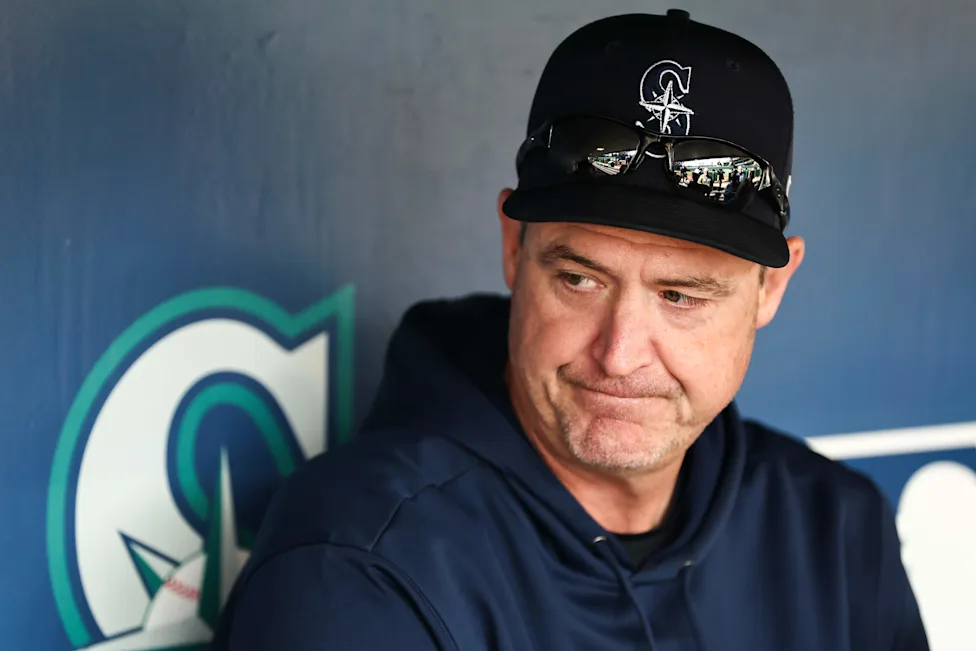
As Adam Jude of The Seattle Times recently detailed, Mariners hitting coach Kevin Seitzer is attempting to eliminate some of the confusion that has surrounded Seattle’s hitters. The goal is to simplify things, clear away unnecessary information and allow players to focus on hitting the baseball instead of thinking about too many mechanical or philosophical concepts.

That is a reasonable approach.
The bigger question is why Seattle has reached this point again.
The Mariners have changed their offensive messaging repeatedly over the past couple of seasons, and while each individual philosophy may have made sense on its own, the constant shifts have created a larger problem. Players need adjustments, but they also need stability. They need to know what their organization believes about hitting and how their individual approaches fit into that larger vision.
Right now, that foundation appears shaky.
Seattle’s Hitting Philosophy Has Changed Again and Again
The Mariners’ offensive philosophy in 2024 leaned heavily toward the modern power-oriented approach that has become increasingly common throughout Major League Baseball.
The message was straightforward: Pull the baseball. Attack pitches you can drive. Look for power. Try to create home runs rather than simply putting the ball in play.
There was logic behind it.
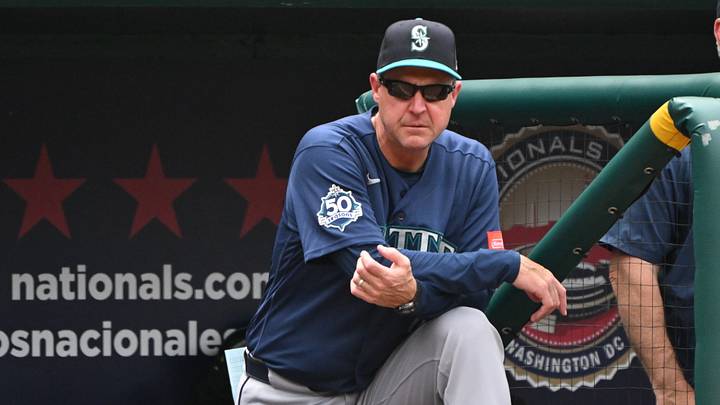
Baseball has changed dramatically over the years, and teams understand the value of extra-base hits and home runs. A well-struck fly ball can change an inning instantly, while a series of singles requires more things to go right. For an offense trying to compete in the American League, developing legitimate power is obviously valuable.
But the Mariners eventually moved away from that philosophy.
Under Seitzer and former assistant hitting coach Bobby Magallanes, with Edgar Martinez also involved in the offensive process, Seattle’s message shifted toward staying through the middle of the field and producing line drives. Rather than constantly hunting for the pull-side home run, hitters were encouraged to use the entire field and allow their swings to produce hard contact.
Again, there was logic behind that approach.
And, at least statistically, it appeared to produce results.
The Mariners finished second in the American League with 238 home runs last season, suggesting that the club was capable of combining its new approach with considerable power. That should have given the organization something to build on.
Instead, another offensive struggle has emerged this season.
There is nothing wrong with adjusting when something isn’t working. Good baseball organizations are constantly evaluating information, making corrections and searching for ways to improve.

But there is a difference between making smart adjustments and constantly changing the foundation.
When players receive different messages year after year—or even throughout the same season—they can begin to wonder what they are actually supposed to be doing.
That appears to be where Seattle finds itself.
The Biggest Problem May Be the Disconnect
The most interesting part of Jude’s reporting wasn’t necessarily what Seitzer or manager Dan Wilson said.
It was what one unnamed Mariners hitter said.
That player’s comments offered a glimpse into how at least one member of the clubhouse views the current situation. The hitter acknowledged that Seattle tends to perform better when it hits home runs and recognized the connection between power production and pulling the baseball.
Most importantly, the player described the lineup as being “a group at a crossroads.”
That phrase says a lot.
It suggests uncertainty.
It suggests players are trying to figure out how different pieces of the organization’s offensive philosophy fit together.
And perhaps most importantly, it suggests that what sounds perfectly logical to coaches does not necessarily feel equally clear to the players standing in the batter’s box.

Wilson pushed back against the idea that an up-the-middle approach is incompatible with hitting home runs.
Technically, he is right.
A hitter does not have to completely abandon power simply because he is trying to stay through the middle. A batter can react to an inside pitch, turn on it and drive it to the pull side while still maintaining an approach built around controlling the middle of the field.
Seitzer’s argument also makes sense.
When hitters become obsessed with hitting home runs, they can start expanding the strike zone, chasing pitches and taking violent swings at pitches they cannot consistently drive. The result can be ugly at-bats, weak contact and more strikeouts.
So, from a technical perspective, there is no contradiction.
But that is not really the heart of the issue.
The real problem is communication.
If the coaching staff believes all of these concepts fit together seamlessly, but the players experience them as competing instructions, then something has gone wrong.
A hitting philosophy isn’t useful simply because it makes sense when written on a whiteboard.
It has to make sense to the hitter.
A player stepping into the batter’s box cannot be thinking about five different philosophical concepts at once. He needs a clear plan. He needs to understand what he is hunting, what he is willing to take and how his swing is supposed to work within that approach.
If the message changes constantly, hesitation can creep into the process.
And hesitation is deadly for hitters.
The Mariners Don’t Need More Complexity
Wilson recently praised Seattle’s offense after the club scored its first 14 runs over two games in Houston without hitting a home run.
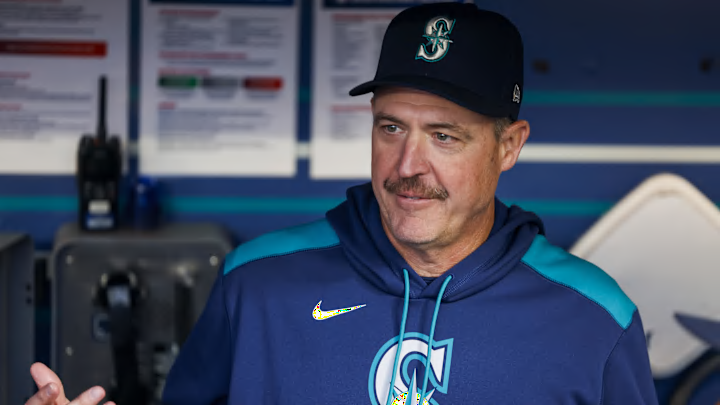
The Mariners were able to string together singles, create pressure and put together competitive at-bats. Wilson pointed to the importance of developing a more combative mentality and simply looking for opportunities to produce hits.
That sounds good.
And there is nothing wrong with celebrating an offense that finds ways to score without relying on the long ball.
Seattle’s two games in Houston were encouraging. The Mariners scored 20 runs and collected 35 hits while taking two of three games from the Astros. That is exactly the type of offensive production the club has been searching for.
But two productive games cannot erase months of inconsistency.
That is the danger of looking at one good weekend and treating it as proof that an organizational problem has been solved.
The Mariners have had stretches like this before.
They have shown they can explode offensively against good opponents. They have demonstrated that they can string together hits, score runs and put pressure on opposing pitching.
The challenge has always been maintaining that production.
One successful series is encouraging.
It is not an offensive identity.
And “looking for hits” certainly isn’t an identity either.
Every hitter in Major League Baseball is looking for hits.
The question is how Seattle’s hitters are supposed to create those hits consistently.
Injuries Have Made the Situation Even More Difficult
There is another factor that deserves consideration.
The Mariners have dealt with injuries throughout the season, making it difficult for Wilson to consistently deploy his preferred lineup. Seattle has reportedly used its preferred lineup only 16 times this season.
That kind of instability can make it extremely difficult for an offense to develop rhythm.
Players are moving around. Roles change. Lineup combinations change. Some hitters are asked to perform in unfamiliar spots. Others are forced to carry more responsibility because key teammates are unavailable.
In that environment, the coaching staff has to be even more precise.
Injuries should make the offensive message simpler, not more complicated.
Every hitter should have an individual plan based on his strengths. A power hitter should not necessarily be treated the same way as a contact-oriented hitter. A player with elite bat speed may be encouraged to attack different pitches than someone who relies more heavily on plate discipline and opposite-field contact.
Individualization is important.
But those individual plans still need to exist underneath one recognizable organizational philosophy.
That is where Seattle appears to be struggling.
Dan Wilson Has to Connect the Dots
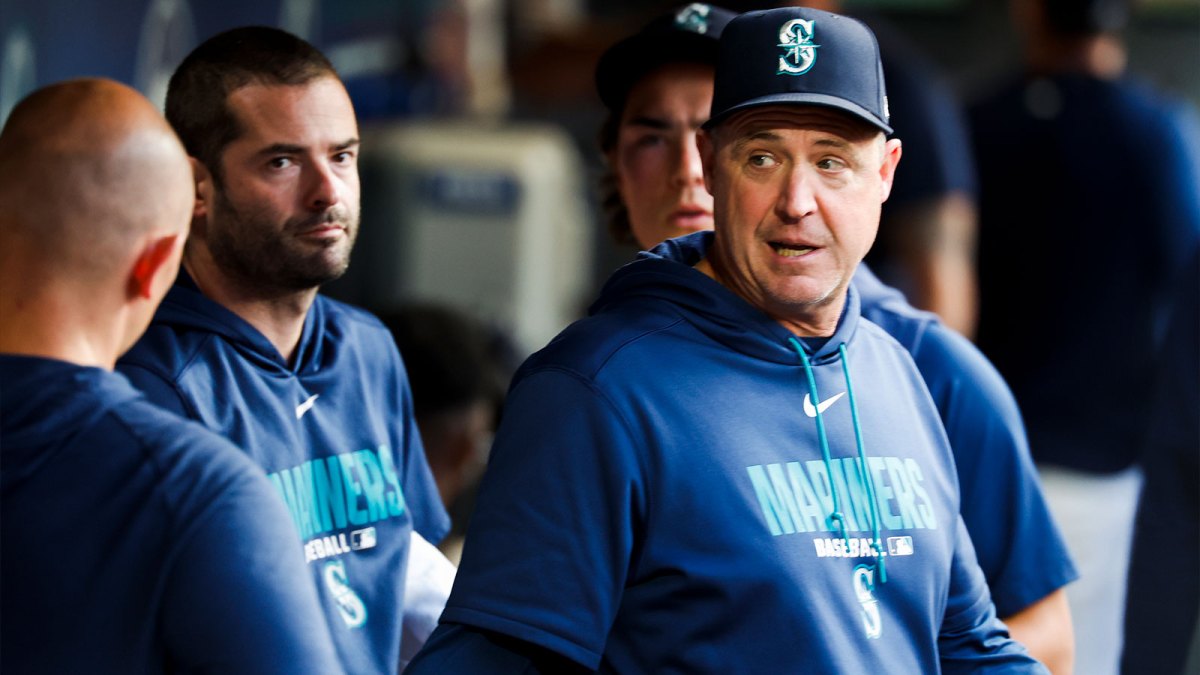
Ultimately, the responsibility falls on Wilson.
The manager doesn’t necessarily have to dictate every detail of every hitter’s swing. That’s what hitting coaches and player-development personnel are there to help with.
But Wilson has to make sure everyone is working from the same blueprint.
The players, coaches and front office don’t necessarily have to use identical language. But the fundamental message needs to be consistent.
If one coach is telling hitters to stay through the middle, another is emphasizing pull-side power and another is telling them to simply hunt fastballs, players can easily become confused unless those concepts are clearly connected.
The solution isn’t necessarily to choose one philosophy and completely abandon everything else.
Seattle can value power while still encouraging hitters to control the strike zone.
The Mariners can encourage middle-of-the-field contact while still allowing hitters to capitalize on pitches they can pull.
They can ask hitters to attack fastballs without turning every at-bat into a home-run swing.
Those ideas can coexist.
But they need to be presented as parts of the same offensive plan rather than separate philosophies competing for attention.
That is the distinction the Mariners need to establish.
The Houston Series Was Encouraging—But It Isn’t the Answer
There is plenty to like about what Seattle accomplished in Houston.
Scoring 20 runs across three games and collecting 35 hits is significant. Doing it without relying exclusively on home runs demonstrates that the Mariners are capable of generating offense in different ways.
It also provides a reminder that this lineup isn’t hopeless.
There is talent here.
The problem is getting that talent to perform consistently.
Seattle has shown flashes of what its offense could look like. The issue is that those flashes have too often been followed by stretches of frustration.
That is why the organization’s current messaging matters so much.
The Mariners don’t need another temporary offensive philosophy that produces a short-term spark before eventually giving way to another change.
They need a foundation.
They need hitters to understand what the organization values and how they can use their individual strengths to contribute to that vision.
Most importantly, they need everyone—from the coaching staff to the clubhouse—to understand the same message.
The Mariners Are Running Out of Time
The timing makes the situation even more important.
This isn’t April.
There isn’t an entire season available to experiment with different approaches and wait for the offense to eventually figure things out.
The season is approaching its most important stretch, and Seattle cannot afford to spend another month searching for answers.
The Mariners need clarity now.
They need their hitters to step into the box knowing exactly what they are trying to accomplish.
They need coaches who reinforce that plan instead of creating additional uncertainty.
And they need Wilson to make sure the entire organization is communicating in the same language.
The unnamed hitter’s description of the lineup being “at a crossroads” should not be dismissed as a minor comment.
It may be the clearest indication yet that Seattle’s biggest offensive problem isn’t simply hitting mechanics, pitch selection or power production.
It may be that the players don’t have enough confidence in the overall plan.
That is something the Mariners have to fix.
Because baseball players can survive a bad night at the plate. They can survive slumps. They can survive injuries and even survive a few bad strategic decisions.
What is much harder to overcome is uncertainty.
The Mariners have spent too long changing directions.
Pull the ball.
Stay through the middle.
Hit line drives.
Create power.
Don’t sell out for home runs.
Attack the fastball.
Look for hits.
All of those instructions can have value. But without a clear connection between them, they become noise.
Seattle doesn’t need another catchy phrase.
It needs an identity.
And with the season hanging in the balance, the Mariners need to find it quickly.
READ MORE