Fans of the Philadelphia Phillies can finally breathe a little easier. The team’s ace, Zack Wheeler, appears to be on the verge of returning to the starting rotation, offering a much-needed boost to a pitching staff that has struggled early in the season.
According to reporting from Scott Lauber on April 17, Wheeler is scheduled to make one final rehab start on Sunday with Double-A Reading in Bridgewater, New Jersey, assuming weather conditions cooperate. If everything goes as planned, this outing would set him up to rejoin the Phillies’ rotation the following weekend during their series in Atlanta. That timeline also means that Taijuan Walker would likely make one more scheduled start on Wednesday in Chicago before potentially being displaced.

Wheeler’s most recent rehab performance, however, offered a mixed picture. In that outing, he pitched four innings and threw 77 pitches, recording four strikeouts. At the same time, he allowed six hits and gave up four earned runs. While those numbers may not jump off the page in a positive way, they don’t necessarily tell the full story of his progress. Wheeler himself acknowledged that his velocity was slightly below his usual standard, though he also noted that the cold weather likely played a role in that dip.
Speaking candidly after the game, Wheeler explained that he is accustomed to operating in the mid-to-high 90s with his fastball, but that level of velocity simply isn’t there at the moment. As a result, he emphasized the need to adjust his approach on the mound. Rather than relying purely on overpowering hitters, he is focusing more on pitch location, movement, and deception. He pointed out that when velocity isn’t at its peak, a pitcher must become more strategic—mixing pitches effectively, hitting precise spots, and keeping hitters off balance. Wheeler suggested that this adjustment could be the biggest challenge he faces upon returning, particularly if his velocity hasn’t fully rebounded by then.

While Wheeler’s impending return is clearly significant, there is another equally important storyline unfolding for the Phillies: the likely removal of Taijuan Walker from the starting rotation. Walker’s struggles this season have been difficult to ignore, and the team may have little choice but to make a change once Wheeler is ready.
Wheeler has been working his way back from Thoracic Outlet Syndrome (TOS), a serious condition that required surgery to remove a blood clot in his right shoulder. The injury occurred in September 2025 and forced him to miss the postseason—a major setback for a Phillies team that relied heavily on his presence at the top of the rotation. Losing Wheeler at that critical time underscored just how valuable he is to the organization.

Now, as he nears his return, the expectation is that Wheeler will reclaim his role as a cornerstone of the pitching staff. Barring any unexpected setbacks, he should be back in the rotation sometime next week. For a team that has stumbled out of the gate, that timing couldn’t be better.
AJ Eustance noted on April 18 that the Phillies have been cautious with Wheeler’s recovery, which is hardly surprising given his importance to the team. Even in his mid-30s, Wheeler has continued to perform at an elite level, making him far too valuable to rush back prematurely. Earlier in the spring, manager Rob Thomson indicated that Wheeler’s return would likely come not long after Opening Day. Based on his progress in rehab, it now appears that timeline is holding true, with a late-April return firmly within reach.

Wheeler’s recent track record only reinforces why the Phillies have exercised such patience. Before his diagnosis last season, he was in the midst of another outstanding campaign. Over 24 starts in 2025, he logged 149.2 innings with a 2.71 ERA and an impressive 195 strikeouts. The year prior, in 2024, he was equally dominant, posting a 2.57 ERA across 200 innings while striking out 224 batters. Those numbers place him firmly among the elite pitchers in Major League Baseball when healthy.
Given that level of production, it’s easy to see why his absence has been so deeply felt. The Phillies have struggled to find consistency early in the 2026 season, and their record reflects that. After dropping the first two games of a weekend series against the Atlanta Braves at home, the team sits at 8-12. While it’s still relatively early in the season, the lack of stability in the rotation has been a clear issue.
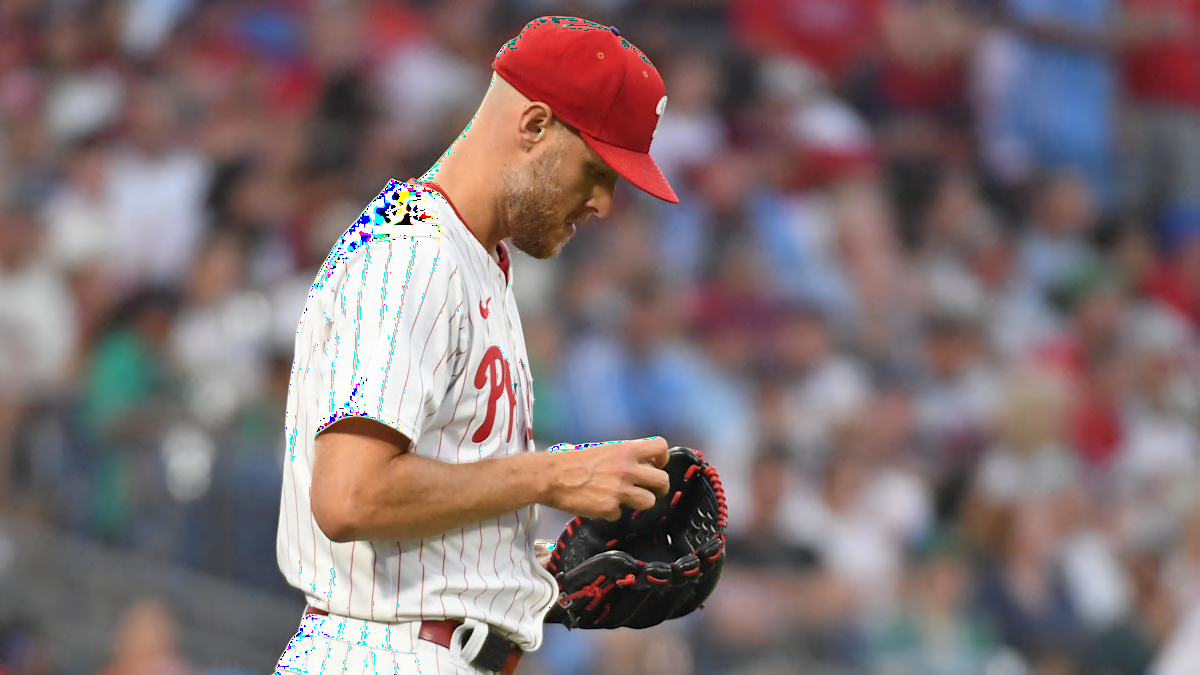
Some pitchers have held their own. Christopher Sanchez and Jesus Luzardo, for instance, have delivered solid performances and helped keep the team competitive in their outings. However, the problem has been what comes after them. The back end of the rotation has been unreliable, putting additional pressure on both the bullpen and the offense.
Walker, in particular, has struggled significantly. Over the course of 18.2 innings this season, he has posted an ERA above 9.00, allowing 19 earned runs. Opposing hitters have also taken him deep six times in that span, highlighting his difficulty in keeping the ball in the park. These struggles have made it increasingly difficult for the Phillies to justify keeping him in a starting role, especially with Wheeler nearing his return.
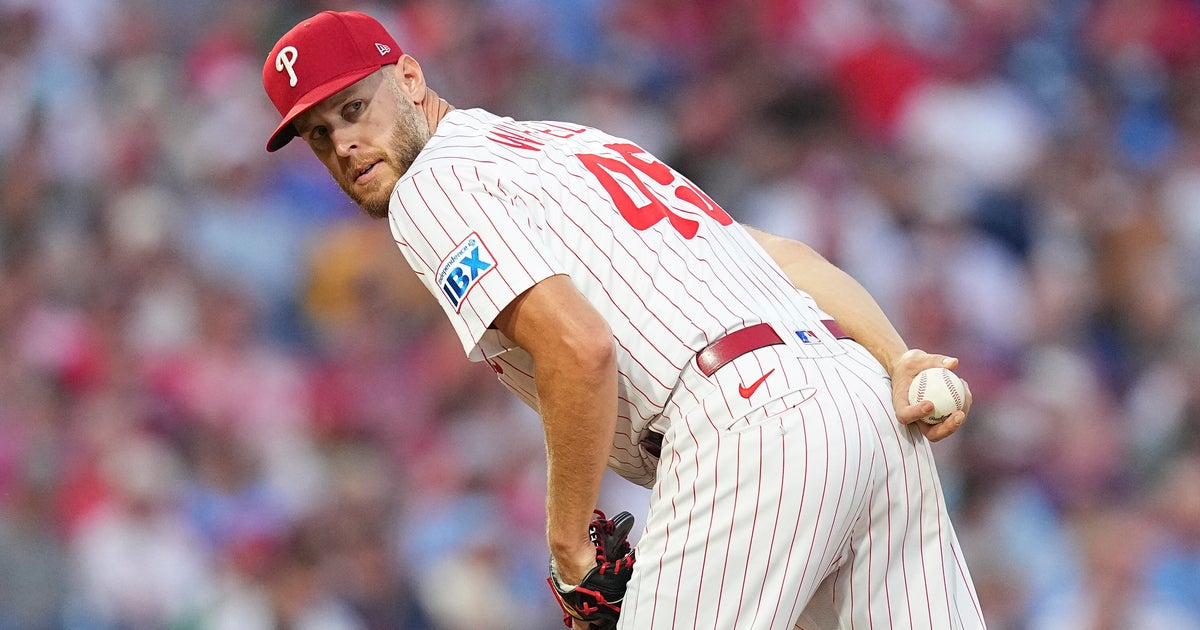
Once Wheeler is officially back, it seems almost inevitable that Walker will lose his spot in the rotation. The bigger question is what role, if any, he will play moving forward. Given his current form, it’s hard to envision him being used in high-leverage situations. The Phillies may need to explore alternative roles for him, such as long relief, or even consider more drastic options depending on how his performance evolves.
Complicating matters is Walker’s contract situation. He is in the midst of a four-year, $72 million deal, a significant financial commitment that has not yielded the desired results so far. That investment makes it more challenging for the team to simply move on, but performance ultimately has to take precedence if the Phillies hope to turn their season around.

Wheeler’s return, therefore, represents more than just the addition of a top-tier pitcher—it could also serve as a turning point for the team as a whole. A healthy and effective Wheeler brings stability, leadership, and a level of consistency that the rotation has been lacking. His presence can also have a ripple effect, easing the burden on other starters and reducing the strain on the bullpen.
Of course, there are still questions to be answered. How quickly will Wheeler regain his full velocity? Will he be able to pitch deep into games right away, or will the team take a more gradual approach with his workload? And perhaps most importantly, can his return help spark a turnaround for a Phillies team that has yet to find its rhythm?

For now, though, the outlook is encouraging. Wheeler has made it through his rehab process and is on the cusp of rejoining the major league roster. Even if he isn’t at peak form immediately, his experience and adaptability should allow him to remain effective while continuing to build strength.
In the bigger picture, the Phillies are banking on Wheeler being the anchor they need. His track record suggests he is more than capable of delivering, and if he can return to anything close to his previous level, the team’s fortunes could change quickly.
In short, help is on the way—and for a team searching for answers, that help couldn’t arrive soon enough.
READ MORE