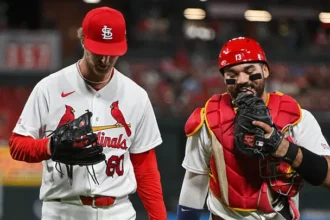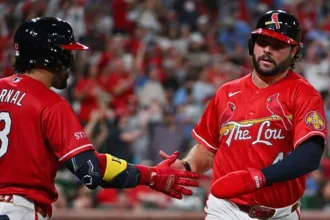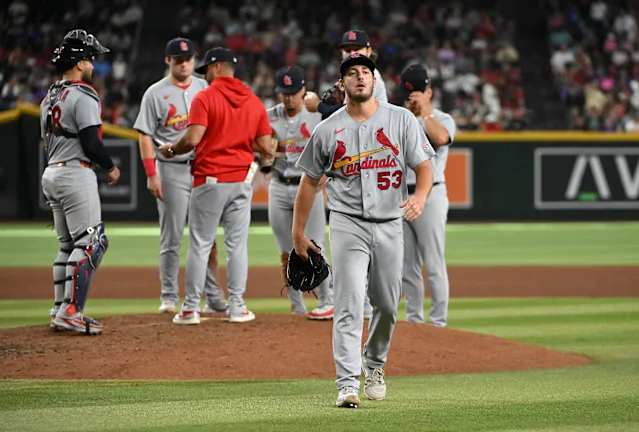
The St. Louis Cardinals entered the 2026 Major League Baseball season with modest expectations. Many preseason projections had them finishing near the bottom of the National League Central, predicting a rebuilding year rather than a legitimate postseason push. Instead, the Cardinals exceeded nearly every expectation during the first half of the campaign, consistently remaining in the National League Wild Card picture and proving they were far more competitive than critics anticipated.
For months, St. Louis played disciplined baseball, received strong contributions from both veterans and emerging players, and positioned itself among the league’s surprise contenders. The club’s resilience kept them in playoff position despite facing injuries, inconsistent offensive stretches, and fierce competition across the National League.

However, momentum can disappear quickly in baseball.
The Cardinals have stumbled since returning from the All-Star break, dropping three of their first four games of the second half while extending a troubling slump that has seen them lose nine of their last 13 contests. What once looked like a comfortable postseason position has become increasingly uncertain, with every defeat placing additional pressure on a team that suddenly appears vulnerable.
Although St. Louis remains firmly in the race, entering Tuesday locked in a three-way tie for the final National League Wild Card spot, the recent slide has exposed weaknesses that cannot be ignored. Their pitching has become inconsistent, the offense has struggled to produce timely hits, and several players expected to provide stability have failed to deliver when the team has needed them most.
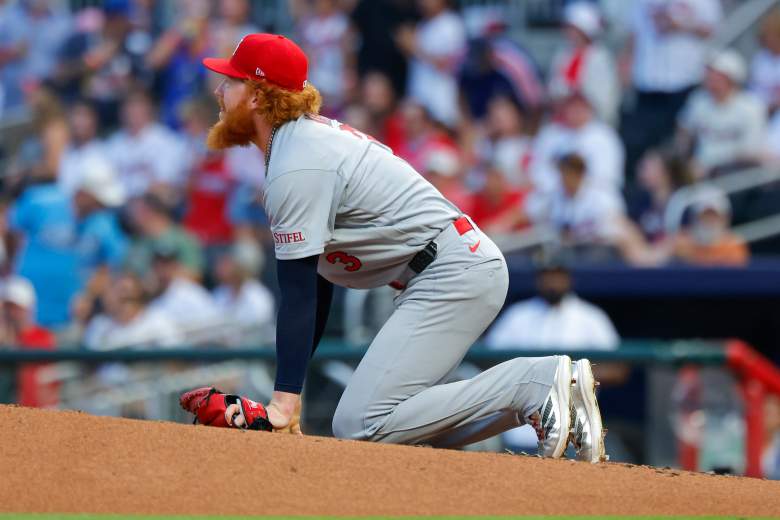
As the MLB trade deadline approaches, Cardinals president of baseball operations Chaim Bloom faces perhaps his toughest decision since taking over baseball operations. Should St. Louis continue buying in hopes of making a postseason run, or should they take advantage of a seller-friendly market by moving valuable assets that could strengthen the organization’s long-term outlook?
If Bloom ultimately decides that selling is the smarter path, several players stand out as logical trade candidates.
Dustin May’s Difficult Stretch Raises Questions
Few players have experienced a bigger swing in perception this season than right-handed starter Dustin May.
Earlier in the summer, May appeared to be one of the Cardinals’ biggest success stories. After battling injuries throughout much of his career, the hard-throwing right-hander looked as though he had finally rediscovered the form that once made him one of baseball’s most intriguing young pitchers.
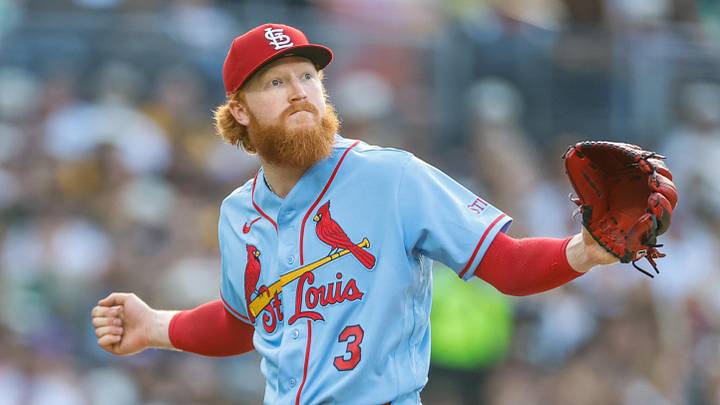
His dominant one-hit shutout in mid-June seemed to signal a major breakthrough. Cardinals fans began believing they had landed one of the biggest bargains in baseball, while the coaching staff finally appeared to have unlocked the tremendous potential scouts had long seen in May.
Unfortunately, those encouraging signs have disappeared almost as quickly as they arrived.
Over his last five starts, May has posted an alarming 9.92 ERA while struggling to give the Cardinals quality innings. Opposing hitters have consistently made hard contact against him, and command issues have prevented him from working deep into games.

During that difficult stretch, May has surrendered at least five earned runs in three separate outings. Even more concerning, he has completed five innings only once over those five appearances, forcing the Cardinals’ bullpen to absorb additional innings and placing greater strain on the pitching staff.
Health has once again become part of the conversation.
Minor injuries have disrupted May’s rhythm throughout the season, making it difficult for him to establish any consistency. While his raw talent remains undeniable, availability and durability have become recurring concerns that every interested team must weigh.
Because May is playing on an expiring contract, the Cardinals have an important decision to make.
If St. Louis believes it can still compete for a playoff spot, May’s recent performance makes it difficult to justify keeping him in the rotation without considering alternatives.
If the organization instead shifts toward selling, moving May becomes an even more logical option.
Pitching remains one of the most sought-after commodities at every trade deadline, and despite his recent struggles, rival clubs may still be intrigued by May’s elite velocity and upside. A change of scenery could appeal to both player and acquiring team, while the Cardinals might secure a prospect or controllable major leaguer capable of contributing beyond this season.
Considering the current market heavily favors sellers due to the limited number of teams willing to move established talent, Bloom could capitalize on May’s remaining value before he reaches free agency.
Ryne Stanek Has Quietly Increased His Trade Value
Unlike May, veteran reliever Ryne Stanek has steadily improved as the season has progressed.
While his overall statistics may not immediately grab attention, they fail to tell the complete story of how effective he has been over the last several months.
Stanek owns a 4.70 ERA for the season, a number that appears relatively ordinary at first glance. However, since the beginning of May, he has emerged as one of the Cardinals’ most dependable bullpen arms.
Across 28 appearances during that stretch, Stanek has posted an impressive 2.84 ERA while consistently handling important late-inning situations.
His role as one of the club’s primary setup relievers has been invaluable.
Stanek has accumulated 17 holds while blowing only three save opportunities, frequently bridging the gap between the starting rotation and the closer. His experience, strikeout ability, and willingness to pitch in high-pressure moments have made him a trusted option for manager Oliver Marmol.
Still, no reliever is without flaws.

Opponents have managed a .789 OPS against Stanek in high-leverage situations, indicating that while he has generally performed well, he has occasionally struggled when the pressure reaches its highest point.
Contract considerations further complicate his future.
The Cardinals hold a $3.5 million club option for Stanek next season, but declining that option would make him a free agent. With uncertainty surrounding whether the organization intends to exercise it, moving him now could maximize his value.
Bullpen help is always in demand during the trade deadline, particularly among contenders looking to strengthen the back end of their relief corps before October.
Given the lack of proven relief pitchers expected to become available this summer, Stanek could attract considerable interest from playoff hopefuls.
While losing him would weaken the bullpen in the short term, the Cardinals possess enough internal relief depth that replacing his innings may prove easier than replacing an impact starting pitcher or everyday position player.
If another club presents an attractive prospect package, Bloom may determine that trading Stanek represents smart long-term asset management.
Lars Nootbaar Could Become the Most Surprising Trade Candidate
Perhaps the most difficult decision facing the Cardinals involves outfielder Lars Nootbaar.
Unlike May or Stanek, Nootbaar is not an obvious trade candidate.
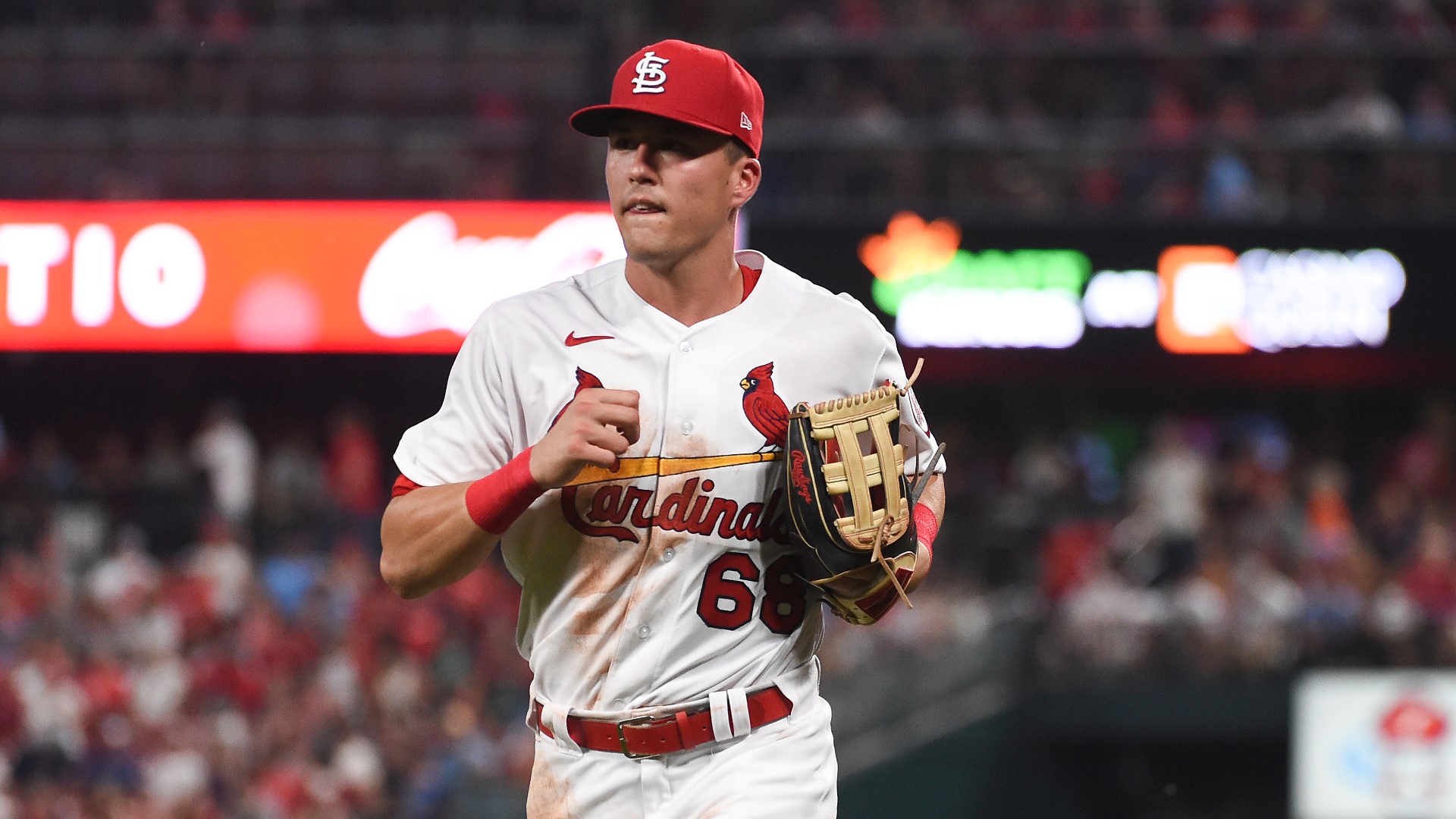
He remains one of the organization’s most popular players, bringing energy, defensive versatility, and leadership qualities that extend beyond the box score. His connection with Cardinals fans has made him one of the franchise’s most recognizable personalities, making any discussion of trading him emotionally complicated.
Nevertheless, baseball operations often require difficult decisions that prioritize long-term success over short-term popularity.
The question the Cardinals must answer is straightforward:
Is Nootbaar truly part of the organization’s long-term championship core?
His overall production has been respectable, but he has yet to establish himself as a consistent star.
Throughout his career, Nootbaar has generally produced offense slightly above league average without developing into the middle-of-the-order force many envisioned. While he reaches base at a solid rate and provides dependable defense, he has not emerged as one of baseball’s elite offensive outfielders.
Durability has also limited his impact.
Nootbaar has never appeared in more than 135 games during a single season, with injuries repeatedly interrupting his development. Those missed games have prevented him from putting together the type of complete campaign that would firmly establish him as an indispensable cornerstone.
Adding further complexity is his contractual situation.
After this season, Nootbaar will have only one remaining year of team control before approaching free agency. Unless the Cardinals intend to negotiate a long-term extension, his trade value may never be higher than it is right now.

The organization’s growing collection of outfield prospects strengthens the argument for exploring potential deals.
Young talents such as Joshua Baez and Chase Davis continue progressing through the Cardinals’ system and appear increasingly close to earning meaningful opportunities at the major league level.
Both prospects possess significant upside and could eventually claim everyday roles in St. Louis. Opening a path for their development may become an important organizational priority.
If Bloom believes a long-term extension with Nootbaar is realistic, retaining him certainly remains a sensible option.
However, should negotiations appear unlikely to produce an agreement, trading him before his remaining club control diminishes could ultimately provide the greatest organizational benefit.
An established major league outfielder with postseason experience, defensive versatility, and offensive upside would likely generate strong interest from contenders seeking help for both this season and next.
The return for Nootbaar could include premium prospects or young major league talent capable of contributing for years to come.
Cardinals Face a Defining Deadline
The next several days may shape the Cardinals’ future for seasons to come.
If the club rebounds quickly and regains momentum in the Wild Card race, Bloom could decide to reinforce the roster in pursuit of October baseball.
If the recent struggles continue, however, the front office may conclude that maximizing long-term value outweighs chasing an increasingly uncertain playoff berth.
Whether the Cardinals ultimately buy, sell, or pursue a combination of both, Dustin May, Ryne Stanek, and Lars Nootbaar represent three players whose futures deserve close attention.
Each presents a different case, but all could help St. Louis reshape its roster while positioning the franchise for sustained success beyond 2026.
With the trade deadline rapidly approaching and the market expected to favor sellers, the Cardinals’ next moves could determine not only how this season ends, but also the direction of the organization for years ahead.
READ MORE