The Missouri Valley Conference Player of the Year is officially available in the transfer portal, and among the many schools potentially interested, Kansas State appears to be a compelling destination for the sharp-shooting redshirt senior who also has historical ties to the Big 12. The Wildcats’ recent staff changes make this an intriguing opportunity. Belmont’s head coach, Casey Alexander, has made the move to Manhattan, Kansas, bringing along his system and style of play that has proven to maximize the talents of his players. One player, in particular, who could be a perfect fit for that system, is Tyler Lundblade, who recently entered the transfer portal himself.
At this stage, there is no definitive word on whether Lundblade is actively interested in Kansas State, but logic suggests the Wildcats could be an attractive option. Players often gravitate toward systems and coaches where they have previously excelled, and the success he experienced under Alexander at Belmont is hard to ignore. Alexander’s offensive approach has historically enabled his players to thrive in scoring, spacing, and shooting efficiency—qualities that define Lundblade’s game. With Alexander now coaching at Kansas State, the Wildcats immediately become a viable and competitive option for a player looking to leverage his skills to the fullest.

Lundblade’s accolades speak for themselves. As the 2026 Missouri Valley Conference Player of the Year, he averaged 16 points, 2 assists, and 3 rebounds per game, while shooting an impressive 41 percent from three on 283 attempts. While that percentage represents a modest decline from the previous season—when he made 48 percent of his 216 three-point attempts—it still positions him among the elite shooters in the college basketball transfer landscape. Simply put, Lundblade is one of, if not the, premier shooting threats in the current portal. Any program looking to bolster its perimeter scoring could do far worse than adding him to the roster.
Tracing back his journey, Lundblade’s path to this point has been unconventional and demonstrates resilience and determination. He began his collegiate basketball career at Southern Methodist University (SMU) as a legacy walk-on during the 2021–22 season, following in the footsteps of his father, who had played for SMU in the early 1980s. Lundblade earned a scholarship midway through that season but opted to maintain his redshirt status, preserving a year of eligibility while positioning himself for future opportunities.

Afterward, he transferred across town to Texas Christian University (TCU), hoping to find a better fit and more playing time. Unfortunately, the move didn’t result in significant minutes; over the next two seasons, he appeared in only 15 games. It became clear that the Texas environment wasn’t the right platform for him to showcase his talents. Recognizing this, he made a bold decision to move across the country, heading east to Tennessee to join Coach Casey Alexander at Belmont University—a decision that would ultimately redefine his career trajectory.
Upon arriving at Belmont, Lundblade made an immediate impact. In his first season under Alexander, he excelled as a sharpshooter, knocking down 47 percent of his three-point attempts, ranking him fifth nationally. His true shooting percentage was an astonishing 70.9 percent, good for second in the nation, and his effective field goal percentage of 68.1 percent placed him fourth nationally. This performance earned him First Team All-MVC honors in what was essentially his first full season of college basketball, demonstrating his ability to adapt quickly to a new environment and thrive under a system tailored to his strengths.
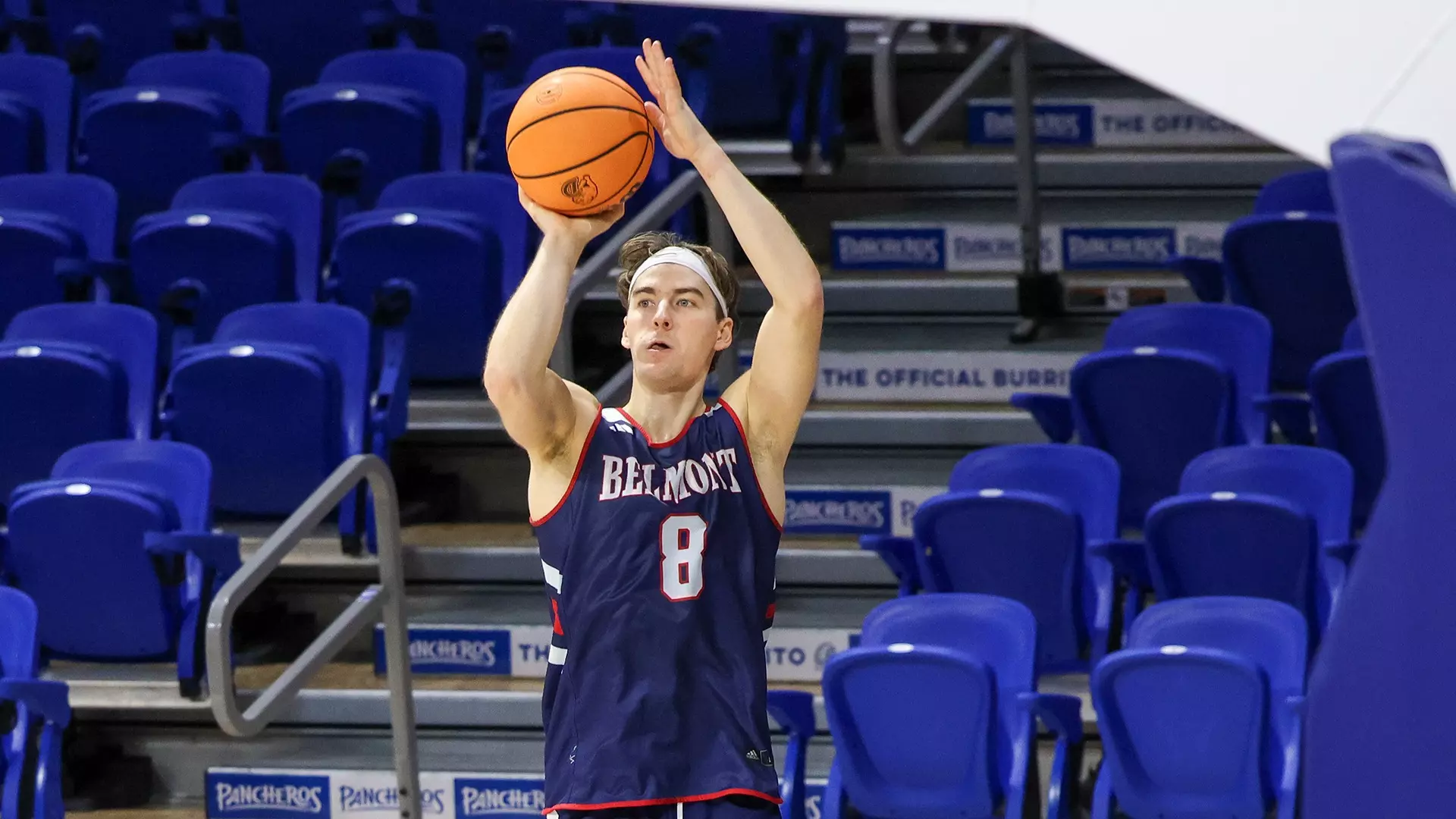
The following season, 2026, saw Lundblade increase his volume of shots, which naturally impacted his efficiency. Still, he remained an elite scorer. His effective field goal percentage of 59.7 percent ranked 124th nationally, and his true shooting percentage of 64 percent was 73rd nationally—a slight drop, but still highly impressive in a high-volume role. Additionally, Lundblade showcased his proficiency at the free-throw line, hitting 93 percent of 90 attempts, placing him second nationally in that category. These numbers underscore not only his shooting ability but also his consistency and reliability as an offensive weapon.
While Lundblade’s game is not built around defense, he remains a capable and serviceable wing defender within Belmont’s scheme. His primary value, however, is on offense, where he is arguably the most lethal shooter available in the current transfer portal. Programs across the country will likely pursue him, but the critical question for Lundblade is where he will find the freedom to fully play his game. History shows that players often struggle when entering systems that are rigid or emphasize athleticism over skill. A cautionary example is Belmont transfer Cade Tyson, who spent a year on the bench at North Carolina because the Tar Heels were looking for a different athletic profile, despite originally recruiting him. Tyson’s fortunes changed when he transferred to Minnesota, where in his final season he averaged 19.6 points and 5.4 rebounds per game, proving that environment and fit can make all the difference.
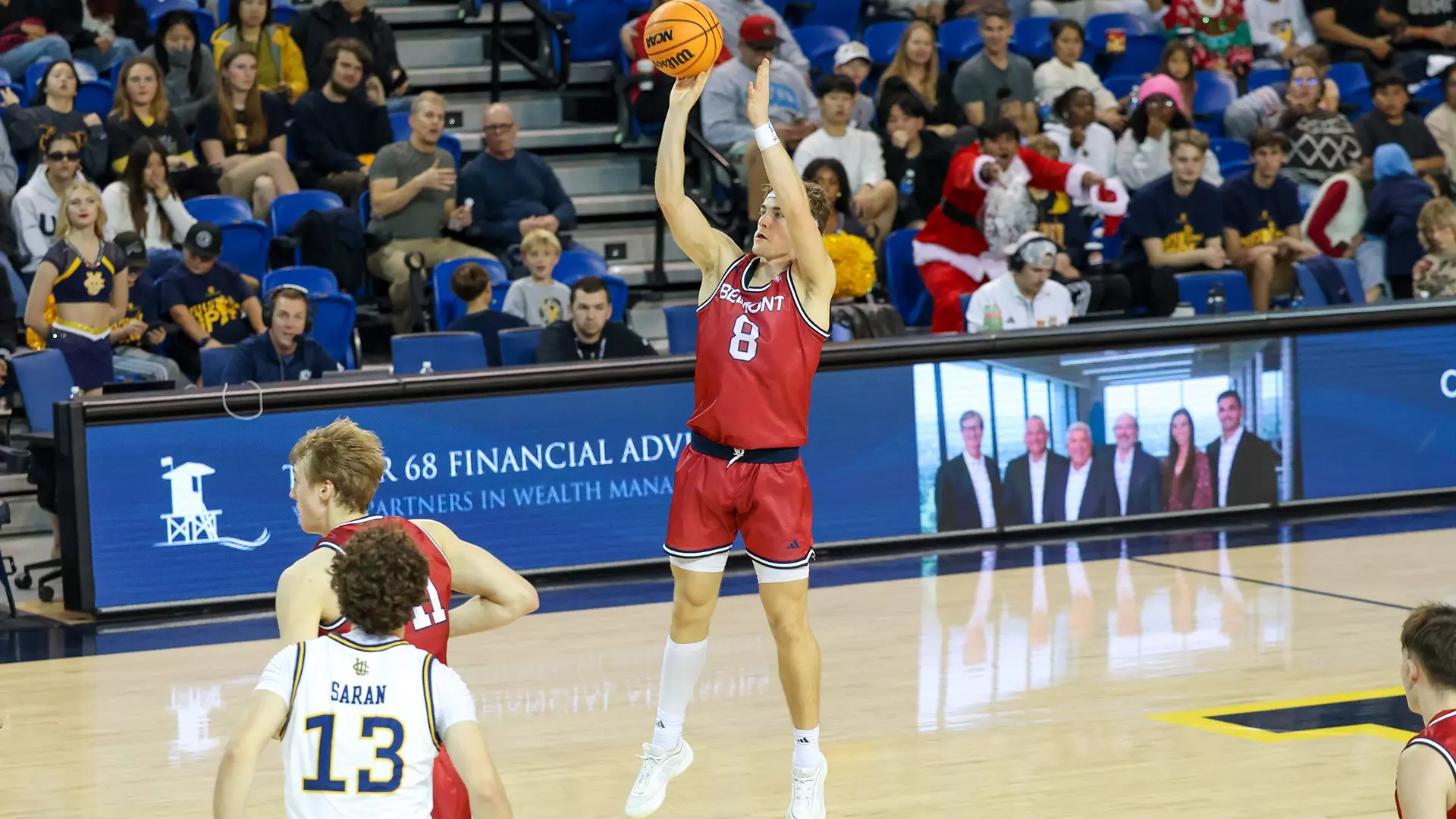
For Lundblade, time is of the essence. With only one season of eligibility remaining, he cannot afford to waste a year on a blue-blood program’s bench, regardless of the prestige that might come with it. Instead, he needs a situation where he can play a central role, maximize his skill set, and put himself on a national stage. Kansas State represents a nearly perfect alignment of circumstances: a familiar coach in Alexander, a system that emphasizes spacing and shooting, and a program that is eager to make an impact in the early days of the Alexander Era.
From the Wildcats’ perspective, landing Lundblade would be a significant coup. Beyond his shooting, he brings experience, basketball IQ, and a proven track record of production at a high level. Integrating a player of his caliber into the system could dramatically enhance Kansas State’s offensive versatility and scoring efficiency. Moreover, the timing is impeccable; Alexander’s first season at Kansas State is a foundational year, and adding an elite shooter like Lundblade could accelerate the program’s progress and set a tone for future recruits.
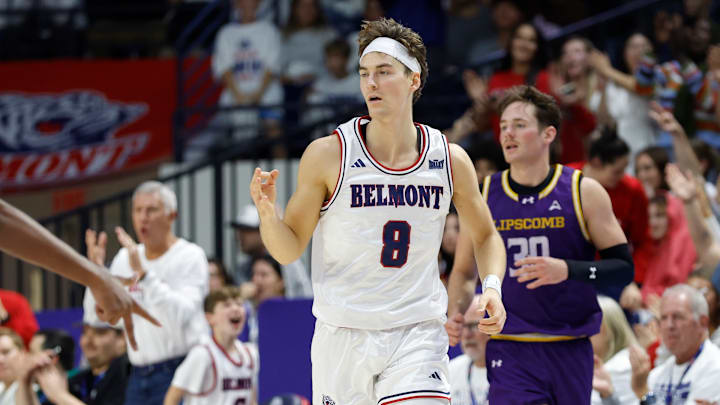
It’s worth considering what Lundblade’s presence could mean for team dynamics. As a veteran player, he brings maturity and leadership, qualities that can help younger players adjust to the demands of a new coaching philosophy and conference competition. His experience in multiple programs—SMU, TCU, and Belmont—has likely exposed him to a range of coaching styles and competitive environments, giving him adaptability that can benefit the Wildcats both on and off the court.
Statistically, Lundblade’s value is clear. His three-point shooting alone would make him a transformative player in any system, but when combined with his true shooting percentages and free-throw accuracy, it’s evident that he is a highly efficient scorer. While his defensive contributions may not turn heads, his offensive impact more than compensates, particularly in a high-tempo, spacing-oriented offense like Alexander’s. Teams that can effectively leverage his skill set while minimizing defensive mismatches are likely to see significant gains from his addition.

The Missouri Valley Conference has historically been a proving ground for players who may not have entered the national spotlight immediately but have the talent to excel when given the right opportunity. Lundblade’s trajectory mirrors this narrative. After limited opportunities in Texas, he found the right fit at Belmont, flourished under a system designed for his strengths, and now enters the portal as one of the most attractive and proven offensive players available. This makes him a rare commodity: a ready-made contributor who can immediately impact games at a high level.
From a recruiting standpoint, Kansas State has a strong case to make. They can offer him a familiar system under a coach he already trusts, significant playing time without the uncertainty of competing for a blue-blood bench spot, and the opportunity to showcase his talents in the competitive Big 12. These elements, combined with his proven track record, make the Wildcats a realistic and appealing option. For Lundblade, this represents not just a chance to continue playing but an opportunity to cement his legacy and potentially elevate his profile for professional opportunities post-college.
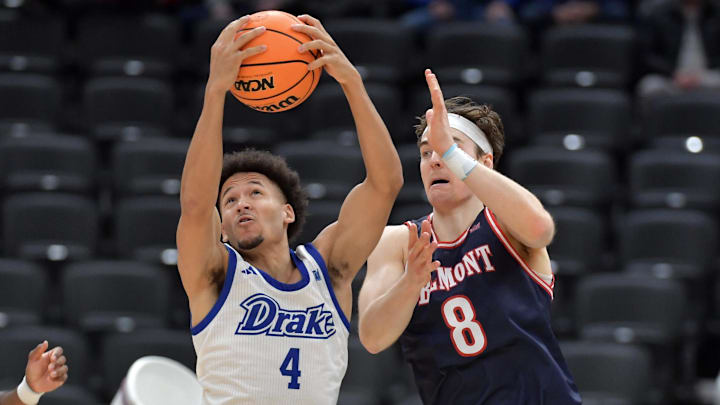
It’s also worth noting that players like Lundblade often thrive in systems where their skill set is maximized rather than compromised. Kansas State’s current roster and Alexander’s offensive philosophy appear designed to do just that. His ability to shoot at high efficiency, combined with his experience as a wing who can move without the ball and hit open looks, means that he can slot seamlessly into the Wildcats’ backcourt rotation or even take on a primary scoring role if needed. The alignment of player, system, and coach cannot be overstated in importance.
Ultimately, the story of Tyler Lundblade is one of persistence, adaptability, and finding the right environment to succeed. From a walk-on legacy at SMU to brief stops at TCU, and finally to stardom at Belmont, he has demonstrated resilience and the ability to capitalize on opportunity. Now, as he enters the transfer portal with just one year of eligibility remaining, the stakes are higher than ever. Choosing the right program could define his college legacy, impact his professional prospects, and play a crucial role in the evolution of the Alexander Era at Kansas State.
While the transfer portal is filled with possibilities, few players offer the combination of proven production, shooting excellence, and familiarity with a successful system that Lundblade does. Kansas State, with its recent coaching additions and a clear need for elite perimeter scoring, appears uniquely positioned to provide both him and the program with mutual benefit. The fit is almost textbook: a player in search of opportunity, a coach familiar with his strengths, and a program ready to integrate him as a cornerstone of its future.
In conclusion, Tyler Lundblade’s arrival on the transfer market presents an exciting narrative for college basketball observers and Kansas State fans alike. His proven shooting, efficiency, and experience make him one of the most compelling players available. Coupled with the move of Casey Alexander to Manhattan, the Wildcats offer a rare combination of familiarity, fit, and immediate impact. For Lundblade, this could be the ideal environment to showcase his abilities, avoid wasting a season on a bench, and make the most of his final year of eligibility. For Kansas State, landing him could be a transformational step in the program’s early stages under Alexander, providing a potent offensive weapon and signaling that the team is serious about competing at the highest level. The pieces are in place; now it comes down to whether this mutual opportunity is seized.
READ MORE