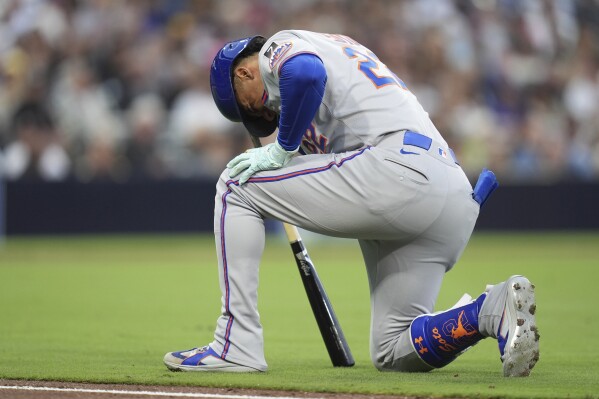
The atmosphere at Citi Field on Saturday was supposed to center around another exciting chapter in the Subway Series rivalry between the New York Mets and the New York Yankees. Instead, the focus quickly shifted to concern and disappointment after Mets pitcher Clay Holmes suffered a significant injury during the game. What began as a difficult night for the Mets turned into an even more devastating situation when the team later confirmed that Holmes had fractured a bone in his leg.
The Mets entered the matchup looking to rebound after dropping Friday’s game to the Yankees by a score of 5-2. However, the club now faces a much bigger challenge than simply trying to win a series against its crosstown rival. Holmes, who had emerged as one of the team’s most dependable and productive players this season, is expected to miss an extended period of time.

The injury occurred during Holmes’ outing on the mound. Before leaving the game, the right-hander pitched 4.1 innings and surrendered seven hits while allowing four earned runs. While those numbers alone represented a rough performance by his standards, the real concern developed after he was struck by a sharply hit comebacker during the game.
The moment immediately created anxiety among teammates, coaches, and fans in attendance. Holmes was visibly in pain after the play, and medical staff quickly came out to evaluate him. Although he initially attempted to remain composed, it soon became clear that the injury was serious.

Not long after the game, MLB.com reporter Anthony DiComo shared the troubling update that Holmes had suffered a fractured bone in his leg. According to Mets manager Carlos Mendoza, the pitcher is expected to be sidelined “for a long time.” The announcement instantly sent shockwaves through the organization and among the fanbase because of how valuable Holmes has been to the team throughout the season.
For the Mets, the timing could not be much worse. The team has already struggled through an inconsistent first portion of the year and has dealt with a growing list of injuries. Losing a key starting pitcher only adds more uncertainty to a season that has already featured plenty of frustration.
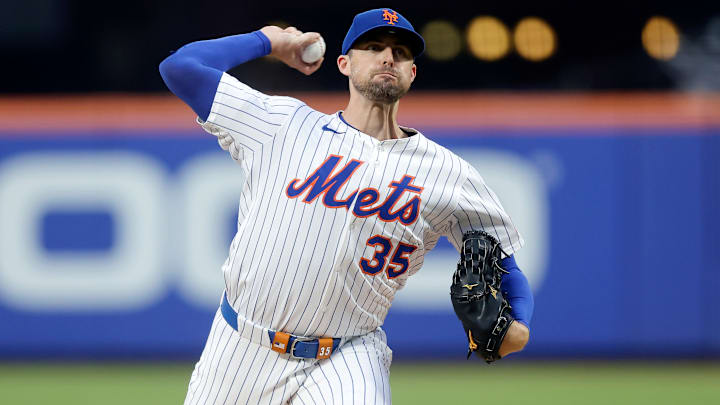
Holmes has been one of the few bright spots for New York this year. Across nine appearances, he compiled a 4-4 record with an impressive 2.39 earned run average. He also logged 52.2 innings while consistently giving the Mets a chance to compete nearly every time he took the mound. His performances helped stabilize the pitching rotation during a stretch in which the team desperately needed reliability.
Beyond the statistics, Holmes earned praise throughout the clubhouse for his work ethic and professionalism. Teammates often pointed to his preparation and competitiveness as examples for the rest of the roster. That is why the emotional response following the injury was so noticeable.

Among the players who addressed the situation was superstar outfielder Juan Soto, who expressed both sadness and admiration for Holmes after learning the severity of the injury.
Soto spoke honestly about the impact Holmes has had on the team and how difficult it was to watch someone so dedicated suffer such a major setback.
“It’s tough,” Soto said while discussing the news. He explained that Holmes is the kind of player who consistently shows up every day ready to work and compete. Soto also described him as one of the hardest-working teammates he has encountered during his professional career.
The Mets star added that the entire organization plans to support Holmes throughout his recovery process in every way possible. Still, Soto admitted that the situation was painful for everyone involved because Holmes had been contributing so much to the club.
His comments reflected the mood surrounding the team after the game. Injuries are always difficult in professional sports, but they become especially devastating when they involve players who have become essential to a team’s success.
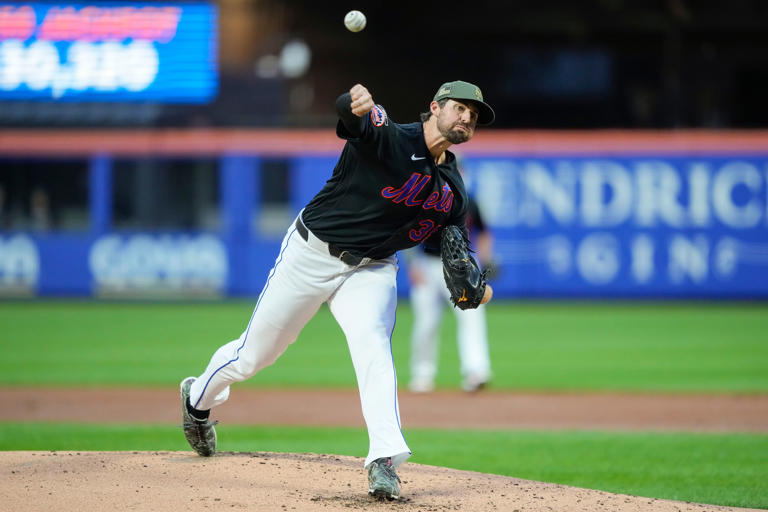
Holmes joined the Mets after previous stops with both the Pittsburgh Pirates and the New York Yankees. Over the course of nine major league seasons, he established himself as a dependable pitcher and earned two All-Star selections. His experience and consistency made him a valuable addition to the Mets roster, and this season appeared to be one of the strongest stretches of his career.
In many ways, Holmes had reinvented himself as a starter and become one of the most important pieces of the Mets pitching staff. His ability to limit runs, work deep into games, and handle pressure situations gave New York confidence whenever he was scheduled to pitch.
That is why reactions on social media were immediate and emotional once the injury update became public.
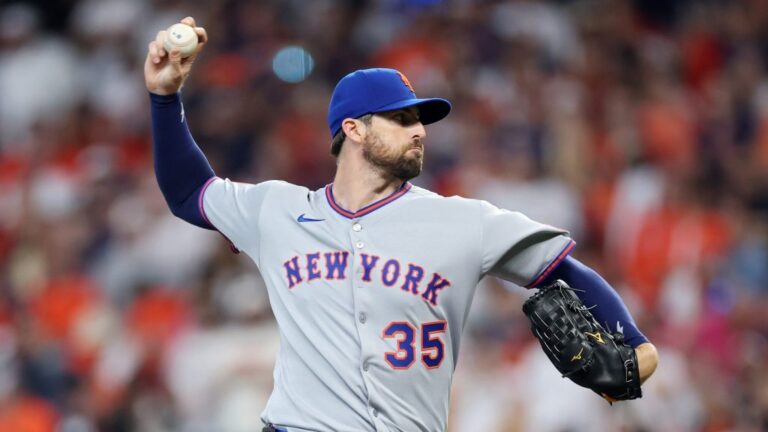
Baseball writers, analysts, and fans all acknowledged how damaging the loss could be for the Mets moving forward.
Pat Ragazzo noted that injuries have started piling up for the Mets and emphasized that Holmes had arguably been the team’s best starting pitcher this season. His observation highlighted a growing concern for New York, as the roster has struggled to stay healthy while trying to remain competitive in the standings.
The baseball outlet Just Baseball also reacted strongly to the injury, pointing out that Holmes fractured his fibula after being struck by a 111-mile-per-hour line drive. The outlet described the development as a brutal setback, especially considering how well Holmes had been pitching during what many considered the best season of his career as a starter.
Another popular Mets-focused account, MetsMuse, posted a breakdown of Holmes’ impressive numbers from the season. The account listed his appearances, innings pitched, strikeouts, earned run average, and WHIP while emphasizing that he had been the team’s top pitcher. The post also suggested that the injury could keep Holmes out for nearly the remainder of the season, making the loss even more difficult for the organization.
Meanwhile, Joe Randazzo focused on the toughness Holmes displayed immediately after the injury occurred. He pointed out how remarkable it was that Holmes managed to walk off the field after taking a 111-mile-per-hour line drive to the leg and later being diagnosed with a fractured fibula. Randazzo described Holmes as incredibly tough and suggested most people would have collapsed under similar circumstances.
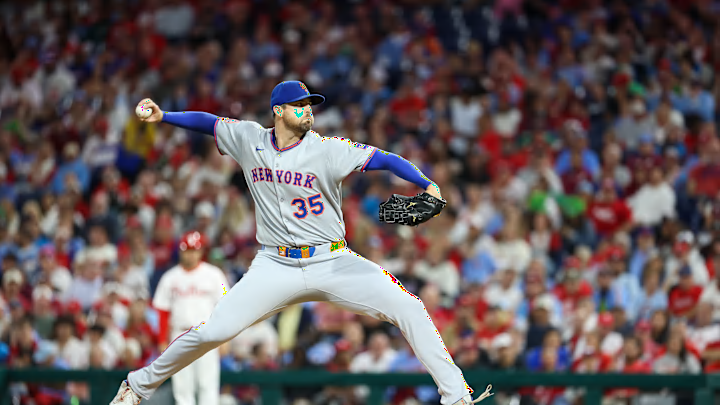
The reactions illustrated how respected Holmes has become around baseball. Even rival fans and neutral observers recognized both the severity of the injury and the determination he showed in handling the situation.
Unfortunately for the Mets, the injury also raises major questions about how the team will move forward over the next several months.
At the time of the injury, New York sat at the bottom of the National League East standings with an 18-26 record through 44 games. The club had already struggled to establish consistency, especially at home, where it held a disappointing 9-13 record.
Now, the Mets must attempt to recover from the loss of one of their most dependable players while also trying to climb back into contention.
Pitching depth could quickly become a serious issue for the team. Holmes had regularly provided quality starts and helped preserve the bullpen by pitching effectively into later innings. Without him in the rotation, additional pressure will fall on the remaining starters to perform at a high level.
The coaching staff may also be forced to explore different roster options, including potential call-ups from the minor leagues or adjustments within the existing rotation. While teams often face adversity throughout a long baseball season, replacing a pitcher performing at Holmes’ level is never easy.
The injury could also affect the team emotionally. Holmes was not only one of the most productive players on the roster, but also a respected veteran presence inside the clubhouse. Losing a player with that type of influence can impact morale, particularly during an already challenging stretch of the season.
Still, the Mets understand they must continue moving forward despite the setback.
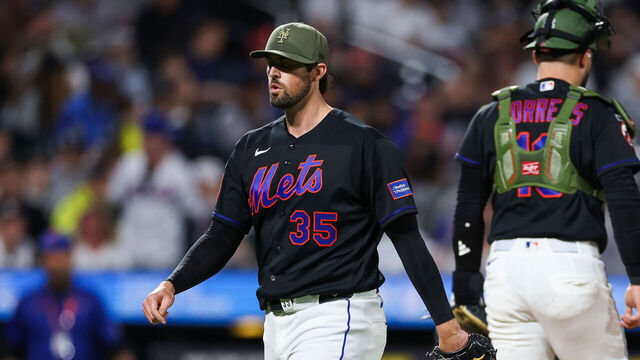
Veteran teams often rally together during difficult moments, and the organization will likely try to use Holmes’ injury as motivation. Players and coaches have repeatedly stressed the importance of staying united during adversity, especially in a season filled with ups and downs.
For Holmes personally, the focus now shifts entirely toward recovery and rehabilitation. Fractured leg injuries can require extensive healing time, particularly for pitchers whose mechanics depend heavily on lower-body strength and balance.
The recovery process will likely involve rest, medical treatment, rehabilitation exercises, and a gradual return to baseball activities once doctors determine he is healthy enough to resume throwing and conditioning.
Although no exact timetable has been provided, Mendoza’s comments strongly suggested that Holmes could miss a significant portion of the season. That reality is difficult for both the player and the organization to accept given how important he had become to the Mets’ plans.
Fans also expressed sympathy online after seeing footage of the injury and hearing the diagnosis. Many praised Holmes for his resilience and wished him a successful recovery.
Injuries caused by hard-hit comebackers remain among the scariest moments in baseball because pitchers have very little time to react once the ball leaves the bat. Modern hitters regularly produce exit velocities exceeding 100 miles per hour, leaving pitchers vulnerable despite protective instincts and defensive positioning.
Holmes unfortunately became the latest player to experience the dangerous side of that reality.
Despite the disappointment surrounding the injury, his performance before getting hurt should not be overlooked. Holmes had firmly established himself as one of the Mets’ most reliable contributors this season and played a major role in keeping the team competitive during difficult stretches.
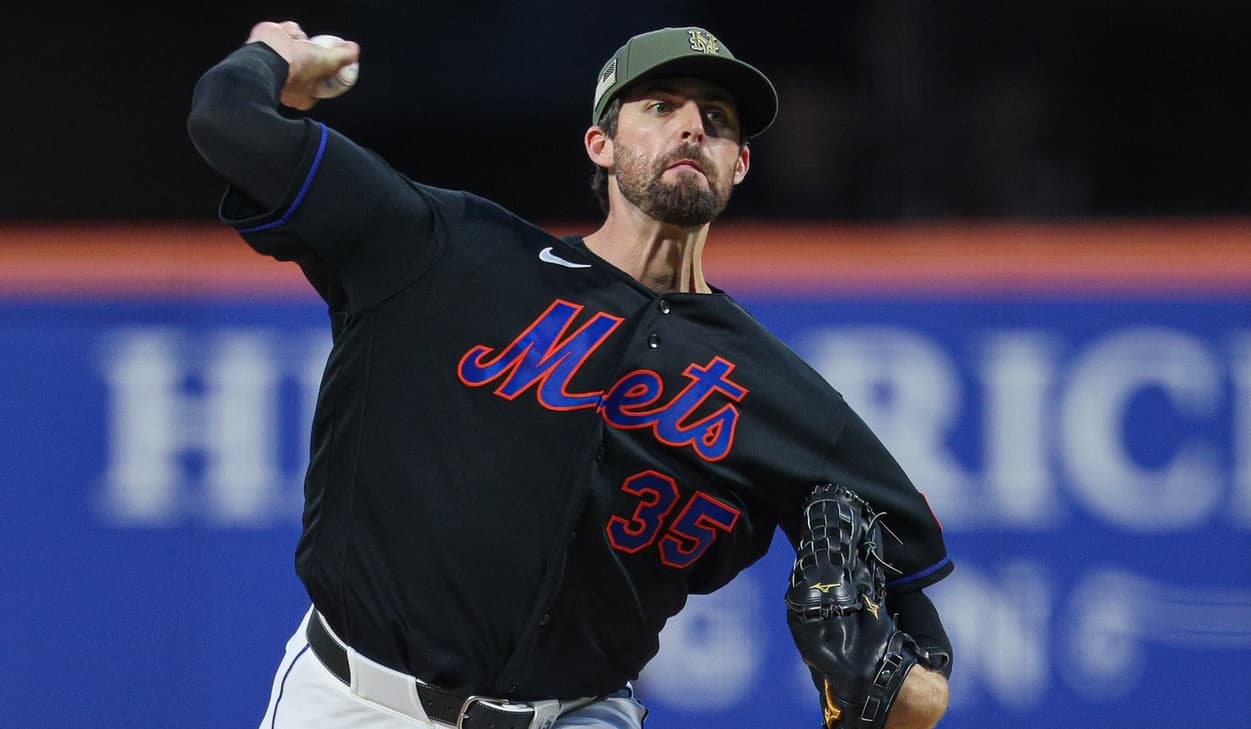
Whether it was working out of jams, controlling opposing lineups, or simply bringing stability to the rotation, Holmes consistently delivered for New York.
That is why his absence will be felt so strongly.
As the Mets continue their series against the Yankees and attempt to regain momentum in the standings, the organization will also be thinking about one of its most valuable players beginning a long recovery journey.
For now, teammates, coaches, and fans can only hope that Holmes heals successfully and eventually returns to the mound healthy.
Until then, the Mets face the difficult challenge of navigating the remainder of the season without one of the pitchers who had become central to their success.
The road ahead suddenly became much tougher for New York, and the impact of Holmes’ injury could shape the direction of the season moving
READ MORE