For much of his career, Craig Kimbrel has been a persistent nuisance for the New York Mets. Now, as another Major League Baseball season approaches, the veteran closer finds himself in an unusual position: instead of trying to defeat the Mets, he is hoping to earn a spot on their roster. As spring training winds down and Opening Day draws near, Kimbrel is facing questions about his role, his performance, and whether he still has enough left in the tank to contribute at the highest level.
Kimbrel, a longtime relief pitcher known for his signature pre-pitch stance and overpowering fastball, signed a minor-league deal with the Mets during the offseason. The agreement gives him an opportunity to compete for a bullpen job, but it does not guarantee him a place on the team’s major-league roster. As a result, his spring training performance is being closely evaluated by the organization as it decides who will fill the final spots in its bullpen.

One of the biggest concerns surrounding Kimbrel’s bid for a roster spot is his declining velocity. Throughout his prime years, the right-hander built his reputation by throwing a blazing fastball that regularly reached the mid-to-upper 90s. That power pitch helped him dominate hitters and accumulate a remarkable number of saves over the course of his career. However, during this spring training, his fastball has topped out at around 92 miles per hour, noticeably lower than the speed he once relied upon.
Despite the drop in velocity, Kimbrel insists that physically he feels healthy and strong. He acknowledged, though, that he wishes he could demonstrate more speed on the radar gun as the season approaches. According to comments reported by MLB.com’s Anthony DiComo, Kimbrel admitted that while many of his pitches are coming out the way he intends, not every pitch is exactly where he wants it to be. In other words, he feels reasonably good about his mechanics and overall condition but knows there is still room for improvement before the regular season begins.

Kimbrel’s honesty about his current situation reflects the reality of a pitcher nearing the later stages of a long and successful career. The 35-year-old reliever has built an impressive résumé during his time in Major League Baseball. He has appeared in nine All-Star Games, earned the National League Reliever of the Year award, and captured a World Series championship with the Boston Red Sox in 2018. Over the years, he has been one of the most dominant closers in the sport, racking up hundreds of saves and frequently shutting down opposing offenses in high-pressure situations.
In fact, Kimbrel’s career total of 440 saves ranks second among all active relievers, trailing only Kenley Jansen. That number alone places him among the most accomplished closers of his generation. His track record also includes strong performances against the Mets themselves. In 46 career appearances against the team, Kimbrel has recorded a 1.38 earned run average, notched 30 saves, and maintained a WHIP below 1.00, specifically an impressive 0.876. Those statistics highlight just how effective he has been in the past when facing the organization he is now hoping to join.

However, spring training results have provided mixed signals about whether Kimbrel can still perform at a high level. Statistically, his numbers are somewhat respectable on the surface. In Grapefruit League play, he has posted a 3.60 ERA. Yet a closer look reveals several troubling indicators. Over five innings of work, he has issued five walks and hit two batters, suggesting that his command has been inconsistent. Additionally, he has struck out only two hitters, a surprisingly low number for a pitcher who once dominated opponents with strikeouts.
Those control issues have contributed to a 1.60 WHIP across five appearances this spring. While spring training statistics often come with the caveat of small sample sizes, they still play a role in roster decisions, particularly for players trying to earn a job. For Kimbrel, each outing represents another opportunity to convince the Mets that he deserves to be part of their bullpen.

Even with the uneven results, Kimbrel remains confident in his ability to contribute. When asked about the possibility of making the team, he emphasized that the decision ultimately rests with the organization. The Mets’ front office and coaching staff will determine what they want their roster to look like and which pitchers they believe will give the team the best chance to start the season successfully. Still, Kimbrel expressed belief in his own capabilities, stating that he absolutely feels he can help the team if given the opportunity.
At the same time, he acknowledged that the outcome is out of his hands. The Mets will evaluate not only Kimbrel but also several other candidates competing for bullpen spots. Whether he begins the season in the majors, continues in the minors, or potentially looks for opportunities elsewhere will depend on the team’s final roster decisions.

The situation is complicated by the fact that the Mets’ bullpen is nearly complete. Entering the final stretch of spring training, there appears to be only one remaining spot available among the team’s relief pitchers. That limited opening means Kimbrel must outperform other contenders if he hopes to secure a place on the roster.
Realistically, Kimbrel’s most dominant days are probably behind him. Over the past two seasons, he has struggled with both velocity and control, two elements that once defined his success. During that stretch, he has pitched for several teams, including the Baltimore Orioles, Houston Astros, and Atlanta Braves. Across those seasons, he compiled a combined record of 7-6 with a 4.76 ERA and a 1.37 WHIP. He also recorded 23 saves but produced a negative bWAR value of minus-0.7, reflecting the inconsistency that has marked his recent performances.
Even so, there have been glimpses that he may still have something left to offer. In 2025, Kimbrel showed signs of a potential resurgence, albeit over a limited workload. Over 12 innings, he struck out 17 batters and posted an impressive 2.25 ERA. Although that sample size was small, it hinted that the veteran reliever might still be capable of contributing in the right circumstances.
Before spring training began, that brief rebound season made Kimbrel something of a favorite to claim the Mets’ final bullpen spot. His experience, track record, and ability to handle high-leverage situations gave him an edge over many other candidates. Teams often value veteran relievers who have been through the pressures of closing games and pitching in postseason environments.

However, as camp has progressed, other pitchers have also emerged as possible options. If the Mets decide that Kimbrel’s declining velocity or inconsistent command raises too many concerns, they could turn to other familiar names instead.
One such option is Austin Warren, who spent time with the Mets previously and has shown promise in limited opportunities. During the 2025 season, Warren delivered strong results in a very small sample size, posting a 1-0 record with a remarkable 0.96 ERA over just 9⅓ innings. Although those numbers come from a tiny workload, they demonstrate the potential he has shown when given chances to pitch.
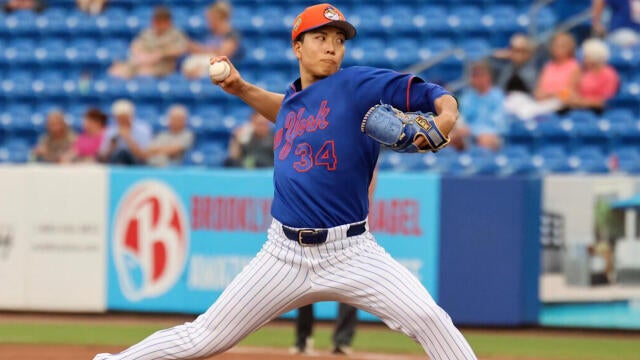
Another possibility is left-hander Richard Lovelady. The Mets claimed Lovelady off waivers recently despite his struggles during the previous season. In 2025, he posted a 6.38 ERA across 10 innings with the team. While that performance was far from impressive, the organization may still see value in having a left-handed reliever available in the bullpen, which could factor into their decision.
The Mets also have the option of looking outside the organization. As teams finalize their 26-man rosters before Opening Day, several players across the league may become available through waivers or other roster moves. That process sometimes allows clubs to acquire pitchers who were squeezed out of crowded bullpens elsewhere. If the Mets believe a stronger option becomes available, they could choose to add a different reliever instead of selecting from their current internal candidates.

Regardless of who fills the final spot, the Mets already have several established pitchers set to anchor the bullpen. The back end of the relief corps features a mix of newcomers and returning arms. Among the most notable additions are Luke Weaver and Devin Williams, both of whom bring experience and talent to the group. Their presence adds depth and reliability to the bullpen as the team prepares for the season.
Alongside those newcomers are several returning relievers who remain key pieces of the pitching staff. A.J. Minter, Huascar Brazoban, and Brooks Raley are expected to play important roles in late-inning situations. Together, this group forms the core of a bullpen that the Mets hope will be capable of protecting leads and closing out games throughout the season.

For Kimbrel, the coming days will likely determine whether he becomes part of that group or continues searching for another opportunity. His career achievements have already secured his place among the most notable relief pitchers of his era. Yet baseball is a sport that constantly evolves, and even the most accomplished players must prove themselves year after year.
If he does earn a spot with the Mets, Kimbrel could provide valuable veteran experience and potentially stabilize the bullpen in certain situations. On the other hand, if the team decides to go in a different direction, he may still attract interest from other clubs seeking bullpen depth during the long and demanding season.
Ultimately, Kimbrel’s situation highlights both the uncertainty and competitiveness of Major League Baseball rosters. Every spring, experienced veterans and younger players alike battle for limited opportunities. For Kimbrel, the goal is simple: show that he can still be an effective pitcher and earn one more chance to compete at the highest level.

Whether that opportunity comes with the Mets or another team remains to be seen. But as the final decisions approach, the veteran closer continues to work, hoping that his long career will include another chapter on a major-league mound.
READ MORE