For college football fans who enjoy the suspense and drama of quarterback competitions during fall camp, Missouri’s upcoming season may offer far less uncertainty than usual. Instead of allowing the battle for the starting quarterback position to stretch into preseason practices, the Tigers have already made their decision well ahead of time.
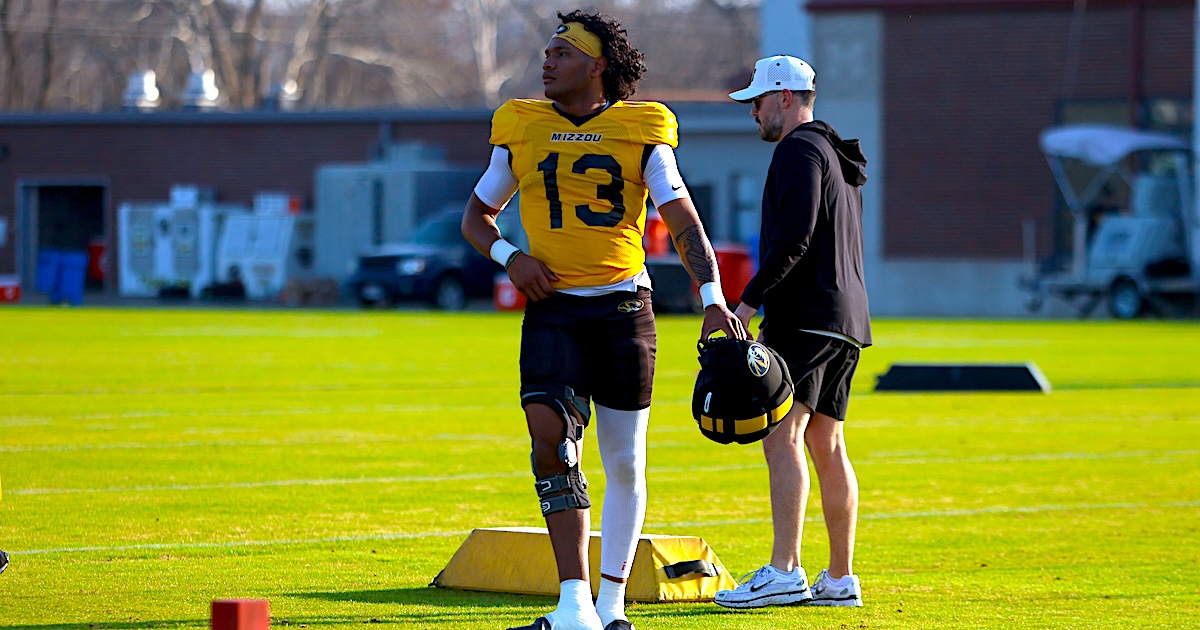
Missouri football officially confirmed on Thursday that Austin Simmons will serve as the team’s starting quarterback heading into the 2026 season. Simmons, a left-handed passer who transferred from Ole Miss, has earned the role of QB1 as Missouri prepares to conclude its spring camp practices this week.
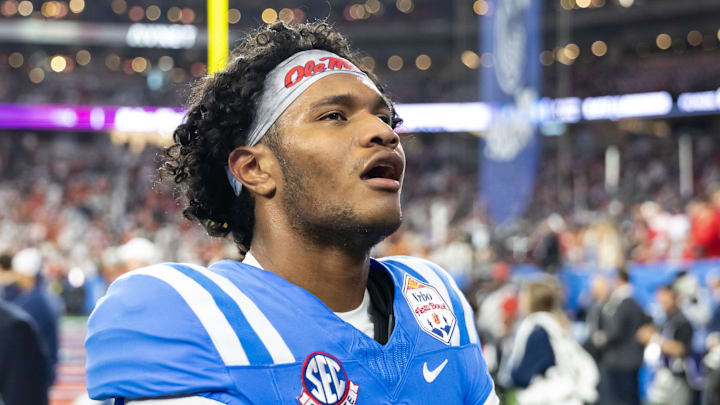
The announcement effectively brings an early end to what had initially been described as a competitive race for the position. At the start of spring practices, seventh-year head coach Eli Drinkwitz indicated that the quarterback job would be open for competition among the players in the room. Simmons, however, ultimately emerged as the coaching staff’s preferred option after several weeks of practices and evaluations.
Throughout the spring, Simmons competed against two other quarterbacks for the top spot on the depth chart. One of those challengers was Matt Zollers, a sophomore who had already seen playing time for Missouri and was considered a promising returning talent. The other contender was Nick Evers, a veteran transfer from UConn who had also spent time at other programs earlier in his college career.

The trio spent the spring practices battling for the starting role, each attempting to demonstrate their command of the offense, decision-making ability, and overall leadership. For Drinkwitz and his coaching staff, the evaluation process included more than simply assessing arm strength or passing accuracy. The quarterbacks were also tasked with learning and adapting to a modified offensive system while trying to show consistency in their execution.
When Drinkwitz addressed reporters on Wednesday—just one day before the official announcement—he did not give any indication that the coaching staff was about to name a starter. Instead, he spoke about the ongoing process of evaluating the quarterbacks and how the learning curve associated with the offense had made the competition unique.
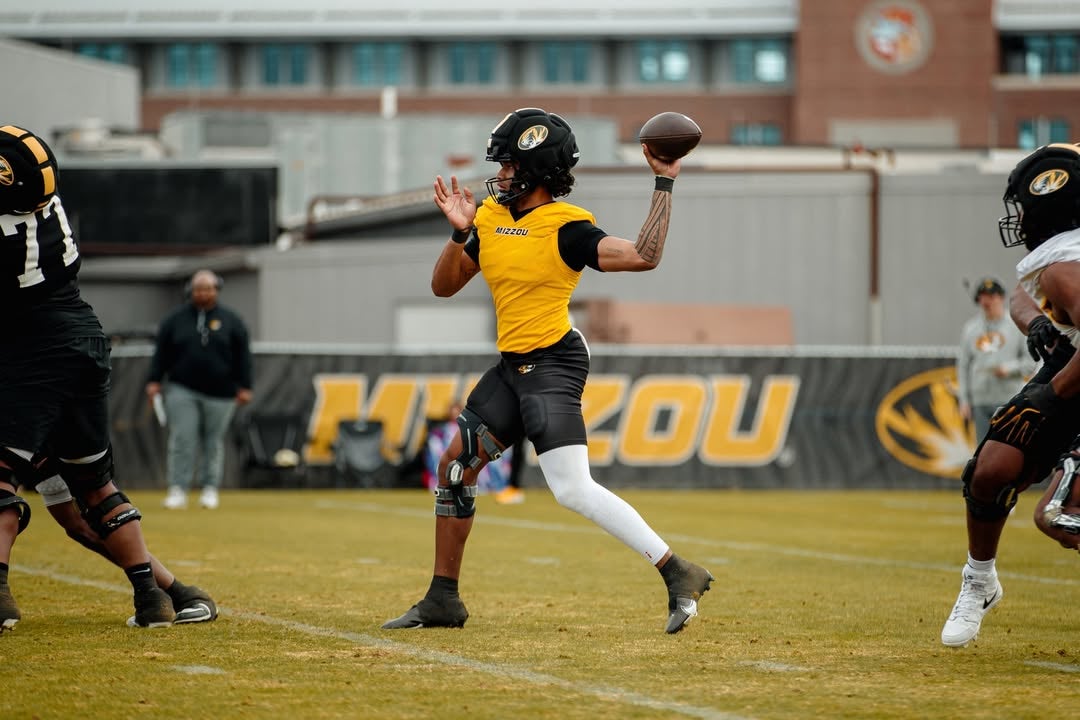
Drinkwitz explained that the challenge extended beyond simply determining which quarterback performed best in a traditional position battle. Because the offense included new concepts and adjustments, the players also had to demonstrate their understanding of the system and their ability to operate within it.
According to Drinkwitz, the quarterbacks had experienced both positive and challenging moments throughout the spring practices. Some days featured strong performances and encouraging progress, while others revealed inconsistencies that the coaching staff hoped to see improve.
Despite the ups and downs, Drinkwitz said he was pleased with the progress the quarterbacks had shown in the final stretch of practices. He noted that over the previous four practices in particular, all of the players had demonstrated noticeable improvement.
One area the coaching staff emphasized was decision-making. Drinkwitz said the quarterbacks were encouraged to play intelligently without becoming overly cautious. In other words, they needed to balance protecting the football with recognizing opportunities to take calculated risks and push the ball downfield.
The coaches wanted their quarterbacks to understand when to attempt aggressive throws and when to avoid putting the ball in dangerous situations that could lead to turnovers. According to Drinkwitz, the players responded well to that message and showed improvement in executing those principles during practice.
While Missouri has experienced quarterback competitions in previous seasons under Drinkwitz, this year’s situation is different in a significant way. Rather than allowing the battle to continue into fall camp or even the early portion of the season, the Tigers have chosen to settle the matter during the spring.

In past seasons, Missouri often allowed quarterback competitions to extend much longer. For example, during the previous year, the team entered the season with Beau Pribula and Sam Horn competing for the starting role. The coaching staff allowed that contest to continue into the opening week of the season.
However, an unfortunate injury to Horn ultimately resolved the competition, resulting in Pribula taking over as the team’s starting quarterback.
Similarly, earlier in Drinkwitz’s tenure, Brady Cook found himself competing with multiple quarterbacks for the starting job. Those competitions occurred during both the 2022 and 2023 seasons as the coaching staff evaluated different options for the offense.
By contrast, the 2024 season did not feature much uncertainty at the quarterback position. Cook had already established himself as the team’s starter for multiple seasons, and as a third-year starter he was not required to battle for the QB1 role that year.
Looking further back, Missouri also had a different quarterback situation during the early years of the Drinkwitz era. In 2021, Connor Bazelak returned as the team’s starting quarterback after taking over the role midway through the 2020 season. Bazelak had replaced Shawn Robinson during that campaign and entered the following year as the established starter.

Because of those circumstances, Missouri rarely declared a starting quarterback as early as the spring. This year’s decision to name Simmons as QB1 before fall camp marks the first time during Drinkwitz’s tenure that the program has made such an early announcement.
For Simmons, the opportunity to lead Missouri’s offense represents an important new chapter in his college football career.
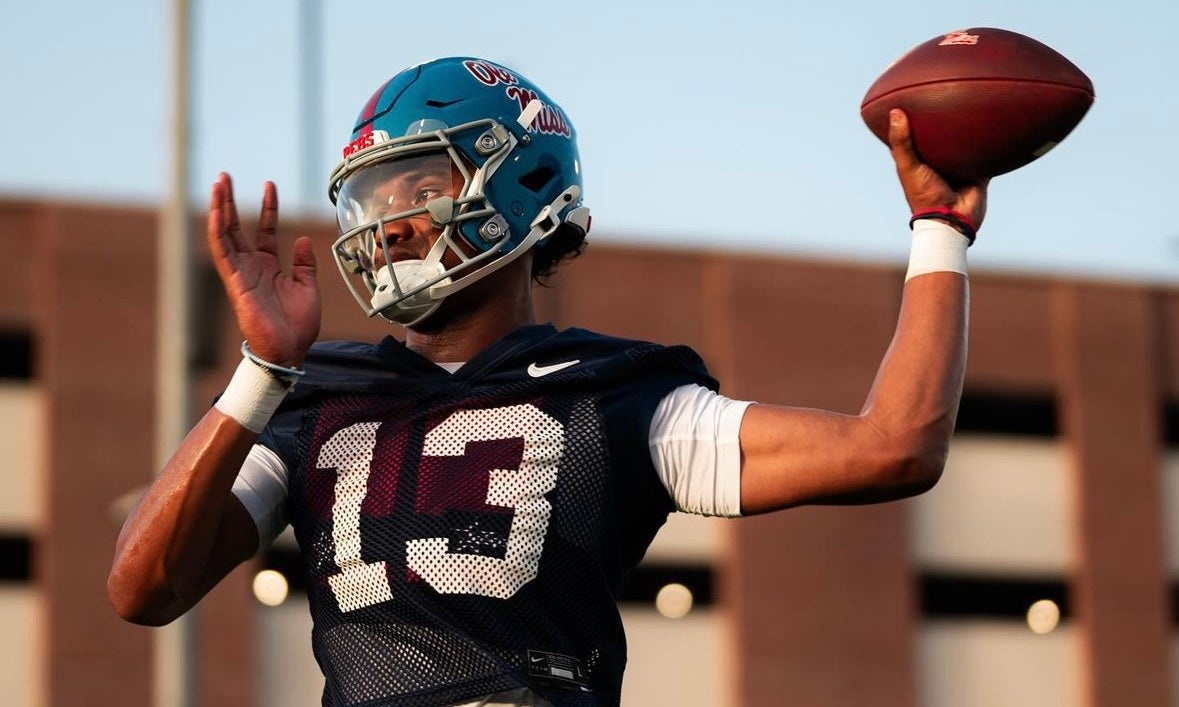
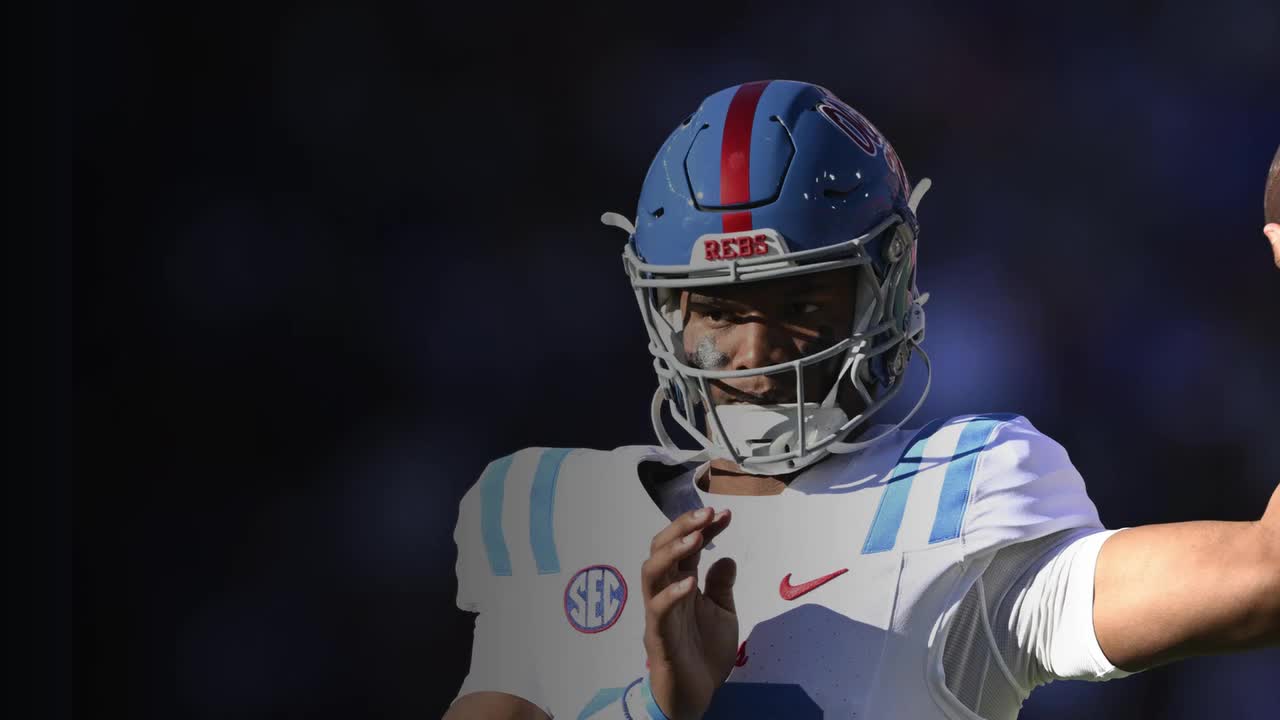
Prior to transferring to Missouri, Simmons played for Ole Miss, where he was originally expected to become the Rebels’ starting quarterback during the 2025 season under then-head coach Lane Kiffin.

At the beginning of that season, Simmons did in fact open the year as Ole Miss’ starting quarterback and held that role during the team’s first two games. However, circumstances soon changed, altering the trajectory of the Rebels’ quarterback situation.
During Ole Miss’ victory over Kentucky in Week 2, Simmons suffered an ankle injury. Although the injury was not necessarily season-ending, it limited his effectiveness and availability throughout much of September.
As Simmons dealt with the injury, another unexpected storyline began to emerge in the Rebels’ quarterback room. Trinidid Chambliss, a player who had transferred to Ole Miss from Division II program Ferris State, stepped into the starting role while Simmons recovered.

Chambliss’ emergence created one of the more surprising developments of that college football season, as the former Division II quarterback suddenly found himself leading an SEC offense.
Meanwhile, Simmons’ injury prevented him from maintaining his hold on the starting job, and the quarterback situation in Oxford evolved in a different direction.
Despite those setbacks, Simmons still possesses a relatively intriguing background for a player his age. Although he turned only 20 years old last November, he has already spent three full seasons in college football.
That unusual timeline is the result of Simmons reclassifying during high school. Originally part of the recruiting class of 2025, he accelerated his academic schedule and joined the 2023 recruiting class instead, allowing him to enroll at Ole Miss earlier than expected.
Physically, Simmons brings an impressive frame to the quarterback position. Standing 6-foot-4 and weighing approximately 215 pounds, the left-handed passer offers both size and arm strength that can be valuable assets in an SEC offense.
During his time at Ole Miss, Simmons appeared in 17 games across three seasons. While he only started two of those contests, the playing time provided him with experience against collegiate defenses.
Across his career so far, Simmons has completed 64 of his 107 pass attempts, which equates to a completion percentage of roughly 60 percent. In those appearances, he accumulated 1,026 passing yards along with six touchdown passes and five interceptions.

His two starts during the 2025 season came against Georgia State and Kentucky. In those games combined, Simmons completed 33 of his 55 pass attempts, again maintaining a completion rate of about 60 percent.
On average, he threw for approximately 288 yards per game during those starts. He also recorded three touchdown passes, although he was intercepted four times during that span.
While those numbers represent a relatively small sample size, they still provide a glimpse of Simmons’ potential as a starting quarterback. Missouri’s coaching staff clearly believes he can develop further and effectively guide the Tigers’ offense moving forward.
Behind Simmons, the Tigers are expected to continue evaluating their options for the backup quarterback role. Matt Zollers appears to be the most likely candidate for the position.
Zollers already gained experience as a true freshman when he started three games for Missouri. That experience could prove valuable if the team needs him to step into action during the upcoming season.
Although the program has not officially announced the full depth chart, many observers believe Zollers will serve as Simmons’ primary backup heading into the year.
Nick Evers will also remain part of the quarterback rotation and compete for playing time. Over the course of his college career, Evers has spent time at several different programs, including Oklahoma, Wisconsin, and most recently UConn.
His experience at multiple schools has allowed him to gain familiarity with different offensive systems and coaching styles. However, based on the current situation, he is widely viewed as a likely emergency or third-string option rather than a direct challenger for the starting role.
For Missouri, the early decision to name Simmons as the starting quarterback may provide the offense with an important advantage heading into the offseason. With the position settled months before the season begins, the team can focus on building chemistry and refining the offensive scheme around its chosen leader.
Rather than splitting repetitions evenly among multiple quarterbacks during fall camp, the coaching staff can now allocate more practice time to Simmons as the primary signal caller. That approach could help the offense develop greater continuity and cohesion before the first game of the season.
Ultimately, Missouri’s coaching staff appears confident that Simmons possesses the combination of talent, experience, and potential necessary to guide the Tigers in 2026. By making the announcement during the spring, the program has eliminated uncertainty at the most important position on the field.
Now, as Missouri transitions from spring practices into the offseason, Simmons will begin preparing to take full command of the offense and lead the Tigers into the upcoming campaign.
READ MORE